Introduction
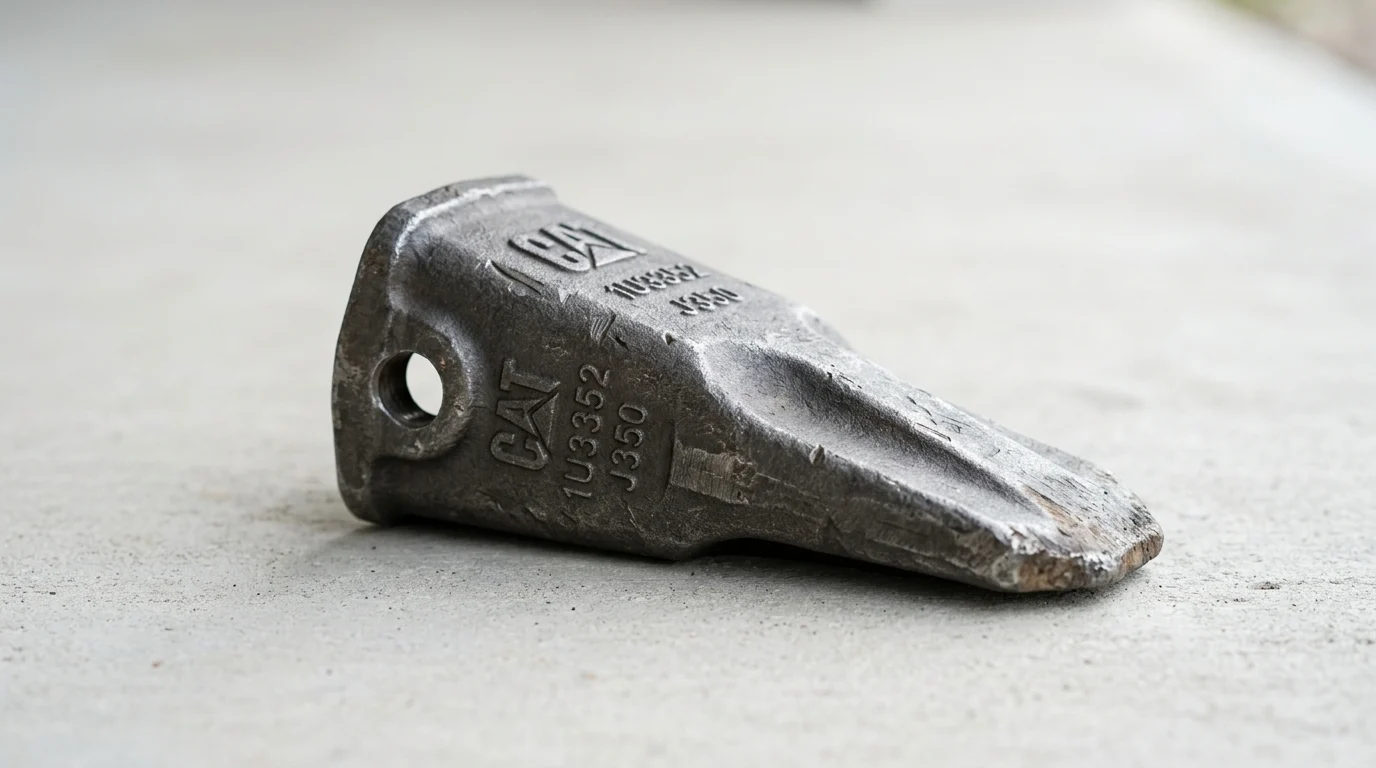
Selecting Caterpillar bucket teeth is not just a parts decision; it directly affects digging efficiency, machine uptime, and total operating cost. Buyers comparing excavator wear parts need to look beyond basic fitment to understand tooth profiles, alloy quality, casting consistency, adapter compatibility, and supplier reliability. This guide explains what separates high-quality casted bucket teeth from lower-grade alternatives, how different applications influence the right choice, and which purchasing criteria matter most in a B2B setting. By the end, you will be better prepared to evaluate suppliers, reduce premature wear and failures, and make more confident sourcing decisions for your fleet, dealership, or equipment business.
Choosing Caterpillar Bucket Teeth and Excavator Wear Parts
If you’ve spent as much time around heavy machinery as I have, you know that keeping your fleet operational comes down to the details. When an excavator goes down because a bucket tooth snapped in the middle of a trenching job, you aren’t just losing the cost of the tooth—you’re bleeding money. Digger downtime costs can easily exceed $150 per hour in lost productivity alone.
That’s exactly why I put together this B2B Buying Guide. We will dive deep into sourcing Caterpillar bucket teeth and other ground engaging tools (GET) so you can make informed, cost-effective purchasing decisions for your fleet or dealership without sacrificing reliability.
Key components and applications
Before we get into the weeds of metallurgy, let’s look at the basic anatomy of these tools. A complete tooth assembly isn’t just the tip; it involves the bucket adapter, the tooth itself, a pin, and a retainer. If any of these components fail, the whole system is compromised.
The application dictates exactly what kind of Excavator Wear Parts you need to stock. For instance, a standard 20-ton excavator working in loose dirt might push around 150 kN of breakout force, which standard teeth handle easily. But if you throw that same machine into a quarry with high-abrasion silica rock, you need heavy-duty penetration components designed to withstand severe impact and friction without shearing off.
Core terms and part classifications
When ordering parts, you will encounter a lot of industry jargon. The most common classification system you will run into is the J-Series Replacement sizing chart, pioneered by Caterpillar. Sizes like J200, J350, and J600 directly correlate to the pin size and adapter fitment. You simply cannot mix and match these sizes across your buckets.
Then there are the profile styles. These include Standard Dirt teeth for general utility, Tiger and Twin Tiger teeth for maximum frost or rock penetration, and Rock Chisel profiles for high-impact durability. Knowing whether your fleet runs side-pin or top-pin assemblies is also a core requirement before you even start looking at supplier catalogs.
Comparing Specifications and Performance
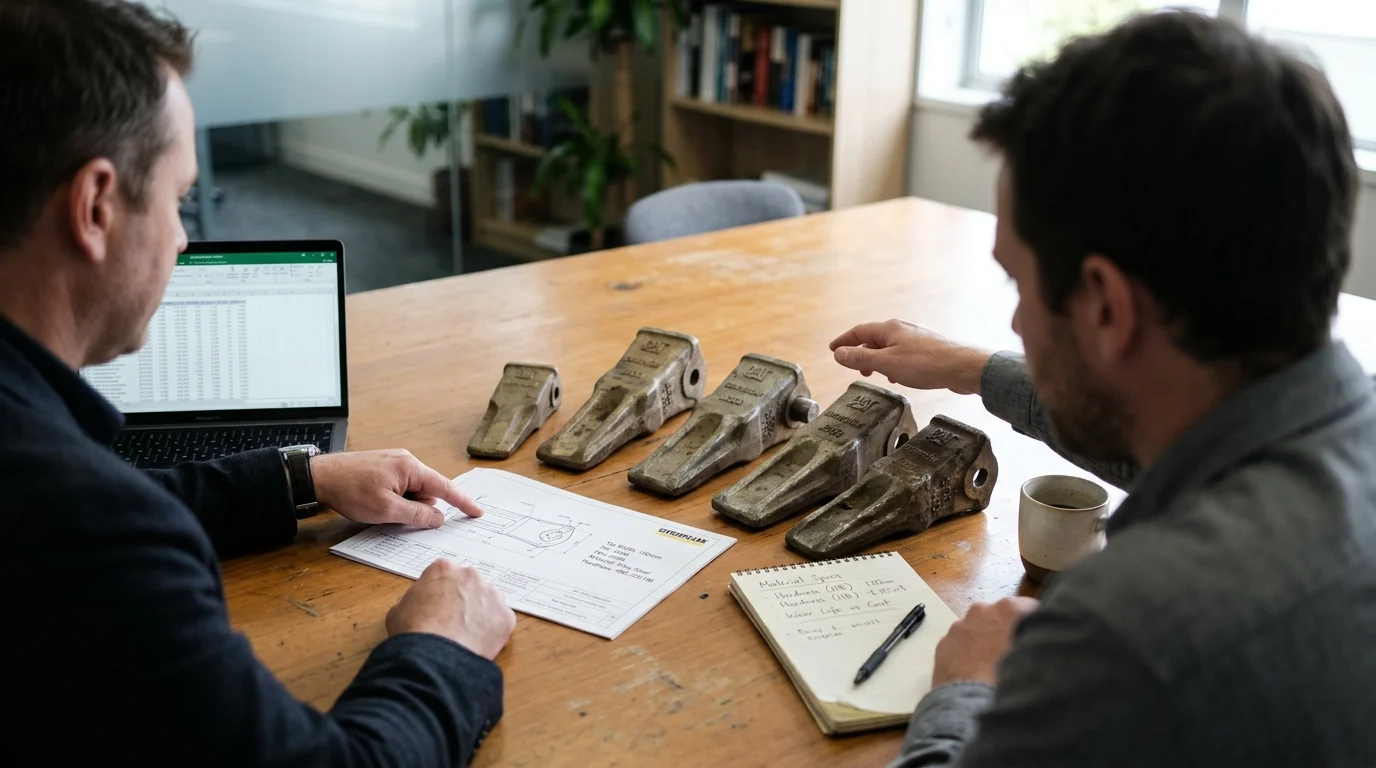
I always tell buyers that looking at a tooth’s shape is only half the battle. What lies inside the metal matters far more. When buying in bulk, you need to understand the technical specifications that separate premium parts from cheap knockoffs.
Technical specs and metallurgy basics
The secret to a long-lasting tooth lies in its heat treatment and steel alloy composition. High-quality Casted Bucket Teeth should consistently hit a Brinell Hardness Number (BHN) between 470 and 530. Anything lower, and the tooth will wear down prematurely in abrasive soil; anything higher, and the metal becomes too brittle, risking catastrophic snapping under load.
You also need to ask your supplier about impact toughness, usually measured by a Charpy V-notch impact test. A solid benchmark to look for is an impact value of >20 Joules at -20°C. This ensures that even in freezing conditions, the teeth can smash into bedrock without shattering.
OEM vs aftermarket comparison
The eternal debate in our industry is whether to stick with OEM parts or transition to aftermarket alternatives. While OEM guarantees a certain peace of mind, premium aftermarket Digger Spare Parts can save you 30% to 40% in unit costs while delivering 95% of the lifespan.
Here is a quick breakdown of how they typically stack up against each other:
| Metric | OEM Parts | Premium Aftermarket | Low-End Aftermarket |
|---|---|---|---|
| Cost Index | 100% (Baseline) | 60% – 70% | 30% – 40% |
| Hardness (BHN) | 500 – 530 | 470 – 520 | < 400 |
| Defect Rate | < 0.1% | < 0.5% | > 2.0% |
| Fitment | Perfect | Excellent | Inconsistent |
The trick is avoiding the low-end aftermarket completely. The initial 60% savings will be instantly wiped out the moment a poorly cast tooth falls off and jams your rock crusher.
Smart Buying Process for Sourcing
Finding the right specifications is great on paper, but actually sourcing these parts at scale across borders is a different beast entirely. A smart buying process protects your supply chain and your bottom line.
How to vet suppliers
When I vet a new foundry or overseas supplier, I don’t just look at their glossy brochures. I ask for their ISO 9001 certifications and detailed quality control workflows. You want to partner with facilities that use advanced investment casting or lost-wax casting rather than outdated sand casting methods.
Financially, you need to align with their Minimum Order Quantities (MOQs). Factory-direct overseas orders typically require an MOQ of 1 to 5 metric tons to make the ocean freight economics work. I highly recommend negotiating a defect rate clause in your contract—anything above a 0.5% failure rate should trigger automatic replacements or credits.
Forecasting demand and testing samples
Never order a full 20-foot container from a new supplier blindly. My rule of thumb is to order a small sample batch of 50 to 100 teeth first. Put them on your most active excavators and test them for 200 to 300 hours in highly abrasive conditions. Afterward, measure the weight loss percentage to see how they truly hold up against your current stock.
Once the samples pass the field test, you need to forecast your demand accurately. Ocean freight can take 45 to 60 days door-to-door. By analyzing your fleet’s historical consumption rates, you can schedule quarterly bulk shipments, completely avoiding the nightmare of paying $5-per-kilo air freight premiums just to keep your diggers running.
Key Takeaways
- The most important conclusions and rationale for Caterpillar Bucket Teeth
- Specs, compliance, and risk checks worth validating before you commit
- Practical next steps and caveats readers can apply immediately
Frequently Asked Questions
How do I choose the right Caterpillar bucket tooth size?
Match the tooth to your adapter and pin system, such as J200, J350, or J600. Do not mix series. Confirm side-pin or top-pin fitment before ordering from suppliers like nbjm-china.com.
What hardness should high-quality casted bucket teeth have?
Look for a Brinell hardness range of 470–530 BHN. Below that, wear is usually too fast; above it, teeth may become brittle and crack under impact.
Are aftermarket Caterpillar bucket teeth worth buying?
Yes, if they are premium-grade. Good aftermarket teeth can cut unit cost by 30%–40% while delivering near-OEM fit and service life. Avoid low-end castings with inconsistent quality.
Which tooth profile works best for rock or quarry jobs?
Use Tiger, Twin Tiger, or Rock Chisel profiles for hard rock and high-abrasion conditions. Standard Dirt teeth are better for general excavation in softer soil.
What should I ask a wear parts supplier before bulk purchase?
Ask for BHN hardness, Charpy impact test data, alloy and heat-treatment details, fitment tolerances, and defect rates. On nbjm-china.com, check product and technology pages for these specifications.
Post time: May-26-2026