
Selecting the right CAT bucket teeth is crucial for maximizing efficiency and reducing wear across diverse job sites. Correct tooth selection ensures optimal performance. For instance, proper tooth choice can boost operational efficiency by approximately 12% compared to standard options. The correct tooth choice directly impacts productivity and operational costs when working with materials like rock, sand, or soil. An appropriate Rock bucket tooth CAT or Sand bucket CAT teeth prevents issues like reduced fuel efficiency and increased operator fatigue.
Key Takeaways
- Choose the right CAT bucket teeth for each job. Different teeth work best for rock, sand, or soil.
- Matching teeth to the material helps your machine work better. It also makes the teeth last longer.
- Using the correct CAT Advansys system can make digging easier. It also helps you finish jobs faster.
Recommended CAT Bucket Teeth for Rock Work
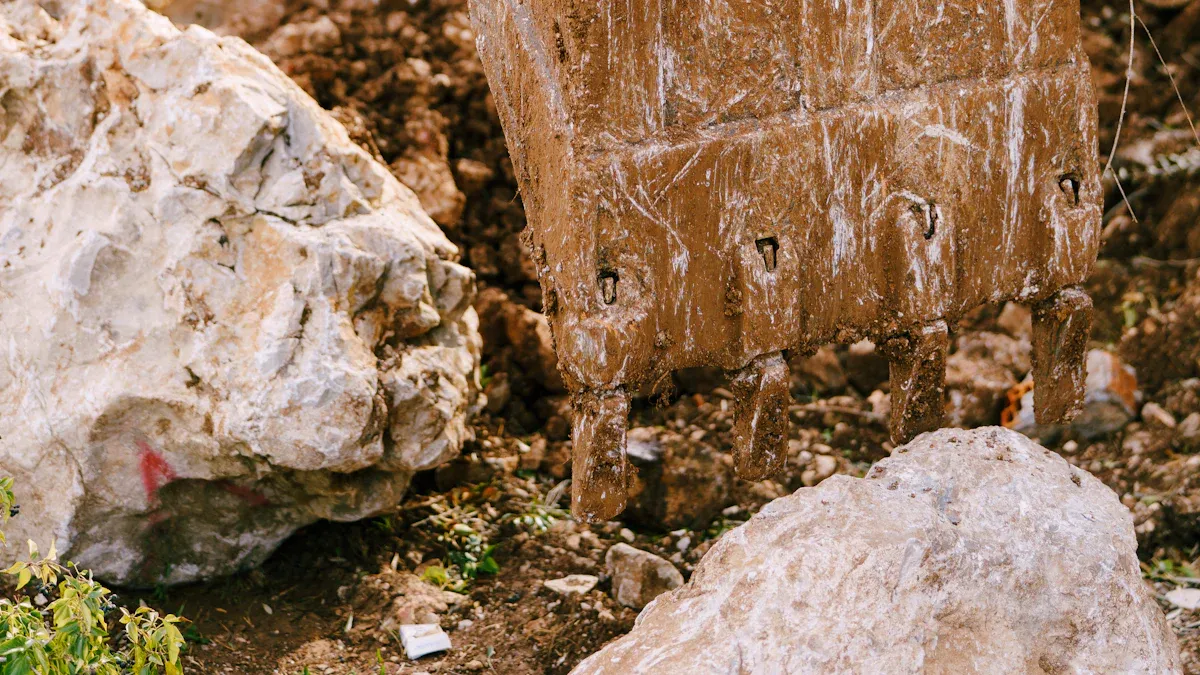
Working with rock demands specialized tools. Choosing the correct Rock bucket tooth CAT significantly boosts efficiency and extends equipment life. These teeth are engineered to withstand extreme forces and abrasive conditions. They ensure your machinery performs optimally in the toughest environments.
Rock Bucket Tooth CAT for Heavy-Duty Penetration
For breaking through hard rock, operators need teeth designed for maximum penetration. These specialized teeth feature a sharp spade design. This design allows them to slice into dense material effectively. They also boast approximately 120% more material in high wear areas. This extra material provides superior durability. The leading edge has 70% less cross-sectional area compared to Heavy Duty Abrasion tips. This slimmer profile improves penetration. Manufacturers craft these teeth from high-strength materials. Hardened steel or tungsten carbide are common choices. An aggressive leading edge design further enhances their ability to dig deep. They also offer greater nose strength and extended fatigue life. These features make them ideal for challenging rock excavation.
Rock Bucket Tooth CAT for High Impact and Abrasion
Rock work often involves both high impact and severe abrasion. For these conditions, the material composition of the Rock bucket tooth CAT is critical. Alloy steel is the preferred material for these teeth. It offers stable quality, longer wear life, and better reliability. This high wear-resistant material ensures the teeth endure constant pounding and scraping. Black Cat Direct Replacement Teeth, for example, use high spec alloy steel. They also undergo precise heat treatment. This process creates parts with both wear-resistant and impact-resistant properties. High-quality alloy steels provide longer wear life and greater impact resistance. This makes them perfect for environments where teeth face continuous abuse.
Specialized Rock Bucket Tooth CAT for Quarry Applications
Quarry operations present some of the most demanding conditions for bucket teeth. Specialized CAT bucket teeth, like the CAT ADVANSYS™ SYSTEM and CAT HEAVY DUTY J TIPS, excel here. They offer maximum penetration and superior wear life. These systems use proprietary alloys and heat treatments. This achieves superior wear and impact resistance. The Cat Advansys System provides an improved adapter-to-tip wear life ratio. It also offers an enhanced wear life ratio for demanding conditions. This means the teeth last longer in very abrasive materials.
| Tooth Type | Penetration | Impact | Wear Life |
|---|---|---|---|
| CAT ADVANSYS™ SYSTEM | Maximum | High | Improved adapter-to-tip wear life ratio, enhanced wear life ratio |
| CAT HEAVY DUTY J TIPS | Maximum | High | Excellent (in abrasive conditions) |
Some Komatsu tooth types, such as Twin Tiger and Single Tiger, offer high penetration and impact resistance. However, they show lower wear life in high-impact applications like rock quarrying. Choosing the right Rock bucket tooth CAT for quarry work ensures maximum productivity and reduced downtime.
Top CAT Bucket Teeth for Sand Work
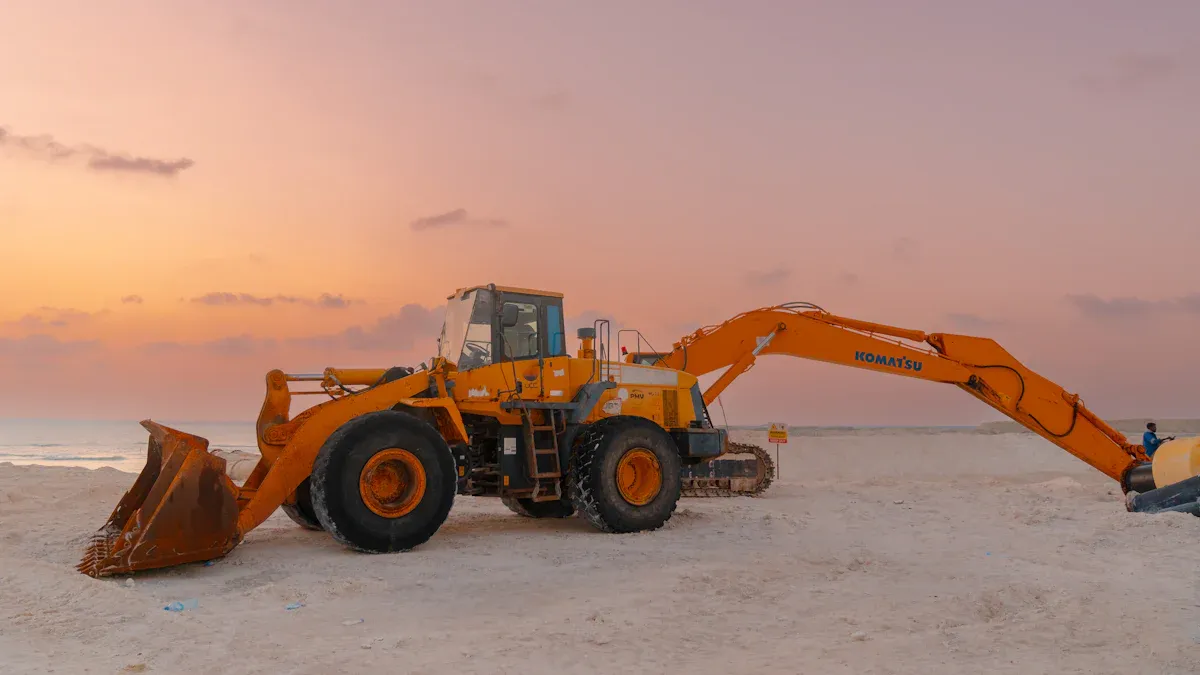
Working with sand presents unique challenges. Sand, especially abrasive types, can quickly wear down standard bucket teeth. Choosing the right CAT bucket teeth for sand ensures maximum efficiency and extends the lifespan of your equipment. These specialized teeth help operators move more material faster, reducing operational costs.
General Purpose CAT Teeth for Abrasive Sand
For diverse sand applications, general purpose CAT teeth offer a reliable solution. These teeth strike a balance between penetration and wear resistance. They feature a robust design, allowing them to handle various sand types effectively. Operators find these teeth versatile for everyday digging and loading tasks. Their moderate sharpness provides good penetration into compacted sand. At the same time, their durable construction resists the abrasive nature of sand. Choosing these teeth means you get consistent performance across different job site conditions. They provide a solid foundation for many sand-moving operations.
Wide CAT Teeth for Enhanced Loading in Sand
When moving large volumes of sand, wide CAT teeth significantly boost productivity. Their broader profile allows the bucket to scoop more material with each pass. This increased capacity translates directly into faster cycle times. Operators complete tasks more quickly, enhancing overall efficiency. These teeth minimize the number of passes required to move a specific volume of sand. This reduces fuel consumption and machine wear. Wide teeth are particularly beneficial in loose, free-flowing sand where maximum fill is achievable. They help operators achieve higher production targets, making them an excellent choice for high-volume sand work.
Tip: Wide CAT teeth can increase bucket fill by up to 15% in loose sand, leading to substantial time and cost savings on large projects.
Abrasion Resistant CAT Teeth for Fine Sand
Fine sand, often highly abrasive, demands teeth built for extreme wear resistance. Specialized abrasion-resistant CAT teeth feature advanced material compositions. Manufacturers craft these teeth from hardened alloys, specifically designed to withstand constant friction. Their design often includes thicker wear areas and self-sharpening properties. These features ensure the teeth maintain their effectiveness over a longer period. Operators experience less downtime for tooth replacement. This reduces maintenance costs and keeps machines working longer. Choosing these teeth provides superior durability in the most abrasive fine sand environments. They offer a smart investment for long-term operational efficiency.
| Tooth Type | Primary Benefit | Ideal Sand Type | Key Feature |
|---|---|---|---|
| General Purpose | Versatility | Abrasive Sand | Balanced design |
| Wide | High Volume Loading | Loose Sand | Broader profile |
| Abrasion Resistant | Extended Wear Life | Fine, Abrasive Sand | Hardened alloys |
Ideal CAT Bucket Teeth for Soil Work
Choosing the right CAT bucket teeth for soil work significantly improves efficiency and productivity. Different soil types and tasks demand specific tooth designs. Selecting the correct teeth ensures optimal digging performance and reduces wear on your equipment. This strategic choice helps operators complete jobs faster and more effectively.
Standard CAT Teeth for General Soil Digging
For everyday excavation tasks, standard CAT teeth offer reliable performance. These teeth provide excellent versatility across various soil conditions. Operators often choose standard buckets, also known as digging buckets, for general excavation. They feature short, blunt teeth. This design enhances their adaptability. These buckets excel in materials such as dirt, sand, topsoil, and clay. They also handle soil containing small stones effectively.
General Purpose Buckets are available with Bolt-On Teeth. This configuration offers convenience and flexibility. CAT provides these buckets in various sizes. Operators can find them in 1576 mm (62 in), 1730 mm (68 in), 1883 mm (74 in), 2036 mm (80 in), and 2188 mm (86 in) options. General Duty buckets are specifically designed for universal loading and material moving. They perform best in materials like dirt, loam, and fine gravel. These buckets utilize a Cat Advansys 70 adapter size. They also feature a Straight edge type. This combination ensures robust performance for common soil tasks.
Twin Tiger CAT Teeth for Deep Penetration in Soil
When facing compacted soil or requiring deep cuts, Twin Tiger CAT teeth are the superior choice. These teeth deliver exceptional penetration and increased breakout force. Twin Tiger Teeth feature a two-pronged profile. This design provides dual penetration points. It concentrates force effectively. This unique structure makes them highly effective for breaking through extremely hard surfaces. Operators recommend them for use in compacted soil. They also prove invaluable for tasks such as digging ditches and narrow trenches. Furthermore, they offer precision trenching around utilities. Their aggressive design allows the bucket to slice through tough ground with minimal effort. This reduces strain on the machine and boosts overall digging power.
Sharp CAT Teeth for Trenching and Looser Soils
For precision trenching and working with softer, looser soils, sharp CAT teeth provide optimal results. Their pointed design allows for clean, precise cuts. This minimizes soil disturbance. Operators find these teeth ideal for creating neat trenches for pipes or cables. They also perform exceptionally well in topsoil or sandy loam. The sharp profile reduces resistance during digging. This allows the machine to work more efficiently. It also conserves fuel. These teeth ensure a smooth finish. They also prevent excessive material spillage. This makes them a preferred choice for detailed earthmoving projects.
| Tooth Type | Primary Application | Key Benefit | Soil Conditions |
|---|---|---|---|
| Standard | General Digging | Versatility | Dirt, Sand, Clay |
| Twin Tiger | Deep Penetration | High Breakout Force | Compacted Soil, Hard Surfaces |
| Sharp | Trenching | Clean Cuts, Efficiency | Looser Soils, Topsoil |
Understanding CAT Advansys Bucket Teeth
CAT Advansys bucket teeth represent a significant advancement in ground engaging tools. This innovative system offers superior performance and reliability for various applications. Operators choose Advansys for its ability to enhance productivity and reduce operational costs across diverse job sites.
Benefits of CAT Advansys for Versatile Work
The CAT Advansys system provides the most productive solution available. Its exclusive adapter and tip features deliver enhanced reliability. Operators experience less downtime because of robust adapters. The system simplifies installation with integrated retention components, eliminating the need for retainers or pins. This hammerless removal and installation uses a 3/4″ retainer lock, requiring no special tools. This design makes tip changes quick and safe. Advansys adapters fit into the same space as K Series adapters, making upgrading and retrofitting easy. Stronger adapter noses reduce stress by 50%, extending adapter life. New, optimized tip shapes place wear material where it is most needed, ensuring longer product life. These features help achieve higher production in demanding applications, easier penetration, and faster cycle times.
Switching Between Hard-Digging and Smooth-Finish Digging
CAT Advansys systems offer exceptional versatility, allowing easy transitions between different digging applications. Operators can quickly switch from hard-digging tasks to smooth-finish digging. This adaptability makes the system ideal for mixed fleets, as Advansys systems fit any industry bucket. The hammerless pin system, with its integrated retention components, enhances safety during installation and replacement. This design ensures a secure fit with CapSure™ retention. This flexibility allows operators to optimize their equipment for specific job requirements, maximizing efficiency and productivity on every project.
Key Factors for Selecting the Right CAT Bucket Teeth
Choosing the correct CAT bucket teeth significantly impacts your machine’s performance and lifespan. Operators must consider several key factors. These factors ensure maximum efficiency and cost-effectiveness on every job.
Material Abrasiveness and Impact Resistance Needs
The ground material dictates the best tooth choice. Different materials require specific tooth designs and compositions. For instance, chisel teeth offer good resistance to abrasive terrain. They work well for general hauling and trenching in loose soil. Rock chisel teeth provide superior penetration and durability in rocky ground. They often feature a ribbed design for extra strength. Single tiger teeth have a spike design for high penetration. They excel at breaking through compacted or rocky terrain. However, their narrow edge wears faster. Twin tiger teeth offer double the penetration with their two-pronged design. They suit challenging surfaces like rock or frost.
Heavy-duty teeth use advanced alloy steels like Hardox 400 or AR500. These materials offer a Brinell hardness of 400-500. They are 15-20mm thick. This makes them ideal for high impact and severe abrasion in rocky mining or demolition. Standard teeth use high manganese steel. They are 8-12mm thick. Manganese steel work-hardens from 240 HV to over 670 HV in worn areas. This makes it suitable for high-impact and abrasive conditions. Tungsten carbide-tipped teeth provide the highest wear resistance for specialized, highly abrasive tasks.
| Property | Heavy-Duty Teeth | Standard Teeth |
|---|---|---|
| Material | Advanced alloy steels | High manganese steel |
| Hardness | 400-500 HBW | Work-hardens to over 670 HV |
| Thickness | 15-20mm | 8-12mm |
| Conditions | High impact, severe abrasion | Less demanding tasks |
Tooth Profile and Shape for Specific Applications
The tooth’s profile and shape directly affect its performance. Excavator abrasion teeth have extra wear material. They suit extreme digging in abrasive materials like sand or limestone. General purpose excavator teeth balance penetration, weight, and abrasion tolerance. They are versatile for changing conditions. Excavator penetration teeth are longer and thinner. They dig well into compacted dirt. Heavy-duty excavator teeth have extra wear material for hard digging, including rock. Twin tiger excavator teeth are two-pronged. They effectively penetrate and dig ditches. Loader abrasion teeth have extra material on the bottom. This handles the increased abrasion loaders face. General purpose loader teeth offer good all-around performance.
Machine Size and Type Compatibility
Matching the tooth to the machine is crucial for safety and efficiency. Different CAT machines require specific tooth series and sizes. For example, the K80 (220-9081) is an extra-duty tip for excavators. The K90 (220-9099) is a general wheel loader bucket tooth tip. The K100 (220-9101) is an extra-duty long tip for excavators. The K170 (264-2172) is a heavy-duty penetration tip for excavators.
CAT’s J-Series models also guide selection based on machine tonnage. A J200 tooth suits 0-7 ton machines like wheel loaders (910E, 910F) and backhoe loaders. A J300 tooth fits 15-20 ton excavators. Larger machines, like 90-120 ton extra-large excavators, use a J800 tooth. This ensures the Rock bucket tooth CAT or any other tooth type matches the machine’s power and application.
| J-Series Model | Tonnage Class (tons) | Machine Types & Examples |
|---|---|---|
| J200 | 0-7 | Wheel Loaders, Backhoe Loaders |
| J300 | 15-20 | Excavators |
| J800 | 90-120 | Extra-large Excavators |
Maximizing Performance and Durability of CAT Bucket Teeth
Operators can significantly extend the life and performance of CAT bucket teeth. Proper practices ensure maximum efficiency and reduce operational costs. Following key guidelines for installation, operation, and inspection helps achieve these goals.
Proper Installation and Maintenance Practices
Correct installation is crucial for tooth longevity. Always prioritize safety. Operators must wear personal protective equipment (PPE) like safety gloves, glasses, and steel-capped boots. Implement a lockout procedure to prevent accidental machine startup. Position the bucket facing upwards with teeth parallel to the ground. Ensure the bucket is empty and use secondary supports. Clean the tooth and adapter thoroughly. Apply silastic to the retainer’s back, then position it in the adapter’s recess. Place the tooth onto the adapter, keeping the retainer in place. Insert the pin, recess end first, through the tooth and adapter. Hammer the pin until its recess engages and locks with the retainer. Regularly inspect all wear parts for premature or irregular wear and damage. Proactively address problem areas with fit-for-purpose replacement parts.
Operating Techniques to Reduce Wear
Skilled operation directly impacts tooth lifespan. Operators significantly reduce wear by adjusting entry angles, controlling impact force, and managing load frequency during digging. Regularly replacing or rotating bucket teeth once wear appears ensures even wear distribution. This extends the overall lifespan of the bucket. Proactive wear monitoring uses tools like thickness gauges or laser distance meters. Maintaining a wear log allows for timely maintenance and replacement scheduling. Selecting the appropriate bucket type for the specific work environment also prevents overloading and reduces wear. For example, use standard buckets for soil and reinforced buckets for rocks.
Regular Inspection for Timely Replacement
Timely replacement prevents further damage and maintains efficiency. Inspect for excessive wear; replace tips worn through on the bottom or cracked in the pocket area. Look for uneven wear, such as scalloping between teeth. Check for cracks on base edges, around adapters, or on welds. Replace teeth if wear extends into the outer adapter and sidebar welds. Address loose or missing pins promptly; replace them if they move easily. A decline in bucket tooth sharpness increases fuel consumption. Worn-down teeth become shorter, reducing penetration and straining the hydraulic system. Inspect adapters for wear or damage. The Cat BucketPro app tracks wear trends and provides instant reports, helping operators make informed replacement decisions.
Operators must match CAT bucket teeth to the material type. This ensures operational success. The right teeth boost productivity. They extend equipment lifespan and reduce downtime. For example, a specialized Rock bucket tooth CAT performs best in quarries. Consult CAT experts. They provide tailored recommendations for your project.

Post time: Dec-22-2025