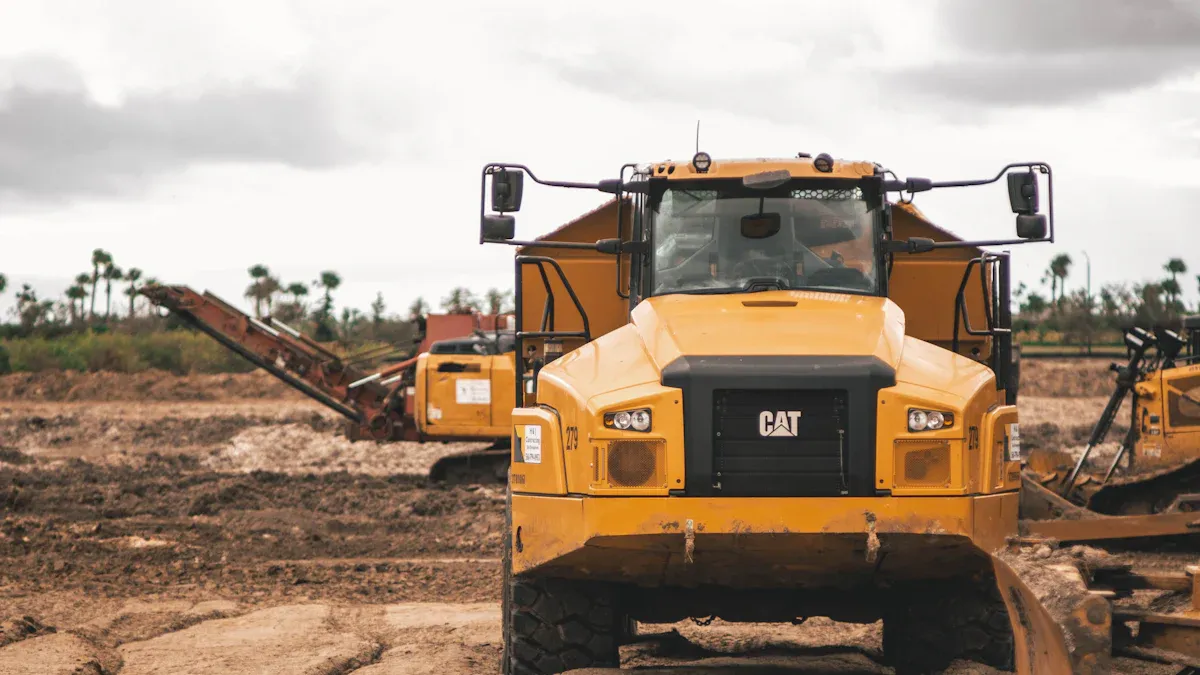
Heavy-duty and standard CAT bucket teeth exhibit distinct characteristics. Their material composition, design for impact resistance, and intended applications vary significantly. These differences directly influence their durability and overall performance across diverse digging conditions. Understanding these distinctions is crucial for optimal equipment operation. Which tooth type for hard rock? This depends on these core differences, especially when comparing standard CAT bucket teeth to their heavy-duty counterparts.
Key Takeaways
- Standard CAT bucket teeth work best for general tasks like digging soft soil. Heavy-duty teeth are for tough jobs like breaking rocks.
- Heavy-duty teeth cost more at first. They last longer and save money over time because they do not need changing as often.
- Pick the right teeth for your job. This helps your machine work better and last longer.
Understanding CAT Bucket Teeth
What Are CAT Bucket Teeth?
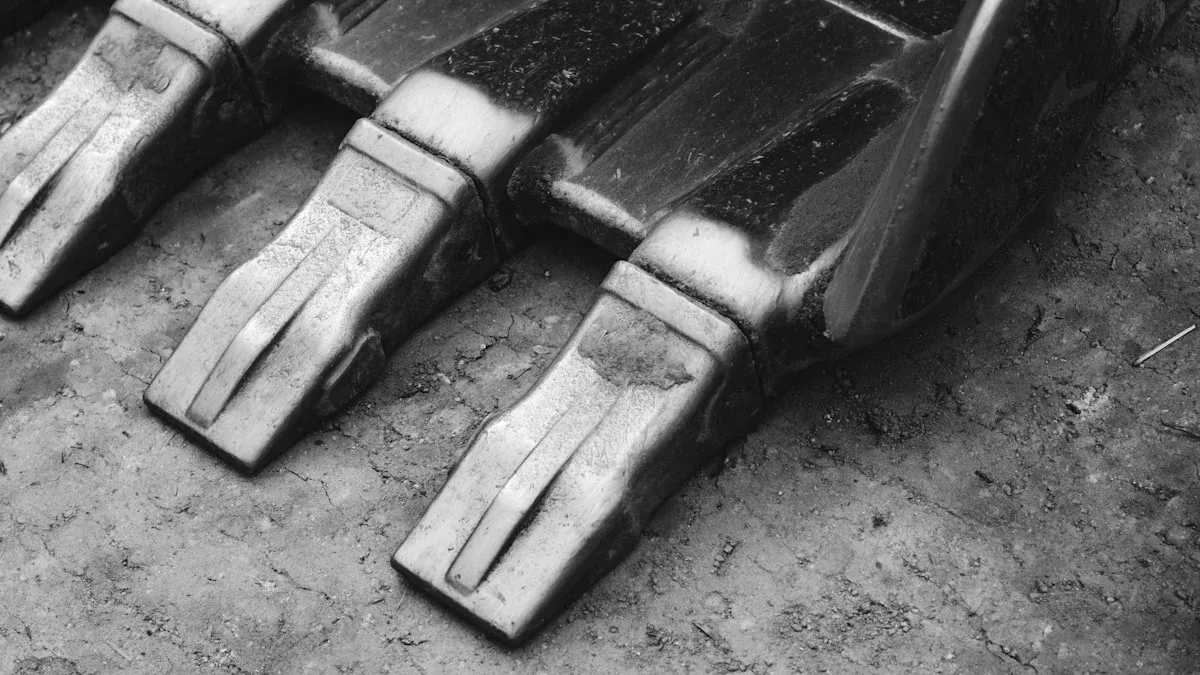
CAT bucket teeth are critical components attached to the leading edge of an excavator or loader bucket. They serve as the primary point of contact with the material being excavated or loaded. These teeth significantly enhance digging capability. They concentrate the machine’s power into smaller contact points, allowing for more effective penetration of hard surfaces. This design improves the machine’s ability to break through compacted soil, rocky terrain, and frozen ground. Furthermore, bucket teeth protect the main bucket structure. They act as sacrificial components, absorbing abrasive forces and impacts. This preservation extends the bucket’s structural integrity and overall lifespan. They also facilitate better material flow during loading operations, reducing sticking and material build-up, especially in cohesive or wet conditions.
Why Different Types Matter
Different types of CAT bucket teeth matter because various digging environments and materials demand specific tool characteristics. A single tooth design cannot optimally handle all conditions. For instance, a tooth designed for soft soil needs to penetrate quickly, reducing resistance and increasing excavation volume. Conversely, working in hard rock or abrasive materials requires teeth with increased contact area and superior wear resistance to distribute force and protect the bucket. Choosing the correct tooth type directly impacts efficiency, durability, and operational costs. Using the appropriate teeth, such as Standard CAT Bucket Teeth for general applications or specialized teeth for extreme conditions, ensures optimal performance and longevity for the equipment. This strategic selection prevents premature wear and maximizes productivity.
Standard CAT Bucket Teeth: Design and Applications
Material and Construction
Standard CAT Bucket Teeth typically feature robust material compositions. Manufacturers often use high manganese steel. This material offers good toughness and work hardening properties, which improves wear resistance under impact loads. It sees wide application in earthmoving and mining. Another common material is alloy steel. This steel contains elements like chromium, molybdenum, and vanadium. These additions enhance strength, hardness, and overall wear resistance. Such teeth suit applications involving high-hardness, abrasive materials. High strength wear-resistant steel also forms a part of their construction. This steel optimizes chemical composition and heat treatment, improving hardness and wear resistance while maintaining toughness. Some designs even incorporate composite materials. These combine different material properties, such as metal matrix composites with ceramic particles or fibers, to achieve comprehensive strength, hardness, and wear resistance.
Ideal Operating Conditions
Standard CAT Bucket Teeth excel in general construction and excavation tasks. They perform optimally in softer soils, loose gravel, and less abrasive materials. These teeth provide efficient penetration and material handling in environments without extreme impact or severe abrasion. Operators often choose them for digging trenches, loading sand, or moving topsoil. Their design balances durability with cost-effectiveness for everyday operations. They offer reliable performance in conditions where heavy-duty teeth would be overkill.
Expected Lifespan and Wear
The lifespan of Standard CAT Bucket Teeth varies based on usage and material abrasiveness. These teeth typically start losing effectiveness after about 6 weeks of regular use. Highly abrasive soil can reduce this lifespan by half. On average, they last between 400 and 800 operating hours. For general construction, this range proves quite suitable. Excavator bucket teeth generally require replacement every 500-1,000 operating hours. However, factors like operator habits and maintenance also influence actual longevity.
| Feature | Cat Bucket Teeth |
|---|---|
| Average Lifespan* | 400-800 hours |
| Best Use Case | General construction |
| Replacement Frequency | Moderate |
| *Actual lifespan depends on material type, operator habits, and maintenance. |
Heavy Duty CAT Bucket Teeth: Design and Applications
Enhanced Material and Reinforcement
Heavy-duty CAT bucket teeth feature superior material compositions and structural reinforcement. Manufacturers use advanced alloys to achieve greater strength and durability. For instance, alloy steel, with elements like chromium and molybdenum, significantly enhances hardness and wear resistance. Manganese steel, known for its work-hardening properties, becomes extremely hard under impact. This makes it ideal for high-impact and abrasive conditions. Nickel-chromium-molybdenum steel offers an excellent balance of high strength, toughness, and wear resistance. Some designs also incorporate tungsten carbide inserts. These inserts provide superior abrasion resistance in highly abrasive conditions. These material choices ensure the teeth withstand extreme forces.
Optimal Operating Conditions
Heavy-duty CAT bucket teeth thrive in the most demanding environments. They are specifically designed for severe duty applications. These include rock quarries, heavy excavation, and demolition work. Operators use them for handling shot rock and highly abrasive materials. Their robust construction allows them to penetrate hard and rocky surfaces effectively. They also perform well in compacted soil and gravel. These teeth are essential for mining operations and other tasks involving extreme impact and prolonged wear.
Increased Durability and Wear Resistance
The enhanced materials and robust design of heavy-duty CAT bucket teeth lead to significantly increased durability. They offer superior wear resistance compared to standard teeth. This allows them to endure high levels of abrasion and impact without premature failure. Their reinforced structure minimizes wear and prevents damage. This extended lifespan reduces replacement frequency. It also lowers overall operational costs in challenging work environments.
Key Differences: Heavy Duty vs. Standard CAT Bucket Teeth
Material Strength and Hardness
Heavy-duty and Standard CAT Bucket Teeth exhibit significant differences in material strength and hardness. Manufacturers engineer heavy-duty teeth for extreme conditions. They use advanced alloy steels such as Hardox 400 and AR500. These materials provide a Brinell hardness of 400-500. This composition ensures superior wear resistance. Heavy-duty teeth are also thicker, typically ranging from 15-20mm. In contrast, standard teeth are 8-12mm thick.
| Property | Hardox Steel | AR400 Steel |
|---|---|---|
| Hardness | Up to 600 HBW | Up to 500 HBW |
This table illustrates the high hardness of materials used in heavy-duty applications. Standard CAT Bucket Teeth often utilize high manganese steel or alloy steel. Manganese steel has a unique work-hardening property. Its hardness increases with use, from approximately 240 HV to over 670 HV in worn areas. Ultra-high-strength martensitic steels also contribute to high hardness, approaching 500 HB. Forged CAT bucket teeth, designed for optimal performance, maintain a hardness range of 48-52 HRC. This specific hardness level balances wear resistance with material integrity, preventing fragility.
Impact vs. Abrasion Resistance
The material differences directly influence impact and abrasion resistance. Heavy-duty CAT bucket teeth excel in environments with high impact and severe abrasion. Their robust construction and superior hardness allow them to withstand repeated blows and grinding forces. This makes them ideal for rocky mining environments and demolition. Standard CAT Bucket Teeth offer good resistance for general applications. However, they cannot match the extreme durability of heavy-duty teeth in highly abrasive or high-impact conditions. Their design prioritizes a balance of performance and cost for less demanding tasks.
Weight and Machine Performance
The increased material and reinforcement in heavy-duty bucket teeth result in greater weight. This added weight can affect machine performance. Heavier buckets, including those equipped with heavy-duty teeth, may slow cycle times. They can also increase fuel consumption. An oversized or excessively heavy bucket can reduce swing speeds. It can also shorten the lifespan of hydraulic components. Therefore, operators must balance the need for durability with the potential impact on operational efficiency. The strongest bucket is not always the heaviest; smart reinforcement can improve service life without sacrificing cycle time.
Cost: Initial vs. Long-Term Value
Initial costs for heavy-duty CAT bucket teeth are typically higher than for Standard CAT Bucket Teeth. However, their long-term value often outweighs this initial investment. Heavy-duty teeth offer prolonged tool life. They protect vital machine parts from wear and damage. This reduces operating costs and minimizes downtime. Caterpillar excavator teeth provide excellent value due to their robust construction and extended service life. This minimizes maintenance costs and maximizes profitability over time. Cat Ground Engaging Tools (GET), including bucket teeth, protect essential machine components. This results in lower operating costs.
- Prolonged tool life and protection of essential machine components result in lower operating costs.
- Optimized tip shapes and stronger adapter noses enhance durability.
- Simplified installation/removal processes reduce maintenance time and increase operational uptime.
Using buckets with harder, thicker plate material, high-quality edges, side cutters, and teeth leads to significant long-term cost savings. Cat heavy-duty tips, made with Abrasion Resistant Material, can double wear life.
Maintenance and Replacement Frequency
Heavy-duty CAT bucket teeth require less frequent maintenance and replacement compared to standard teeth. Their increased durability and wear resistance mean they last longer in harsh conditions. This reduces the need for frequent inspections and changes. Less frequent replacement translates directly to reduced downtime for equipment. It also lowers labor costs associated with maintenance. Standard teeth, while effective in their intended applications, will wear out faster in demanding environments. This necessitates more frequent monitoring and replacement. Choosing the right tooth type directly impacts operational continuity and maintenance schedules.
Choosing the Right CAT Bucket Teeth for Your Job
Assessing Material Type and Environment
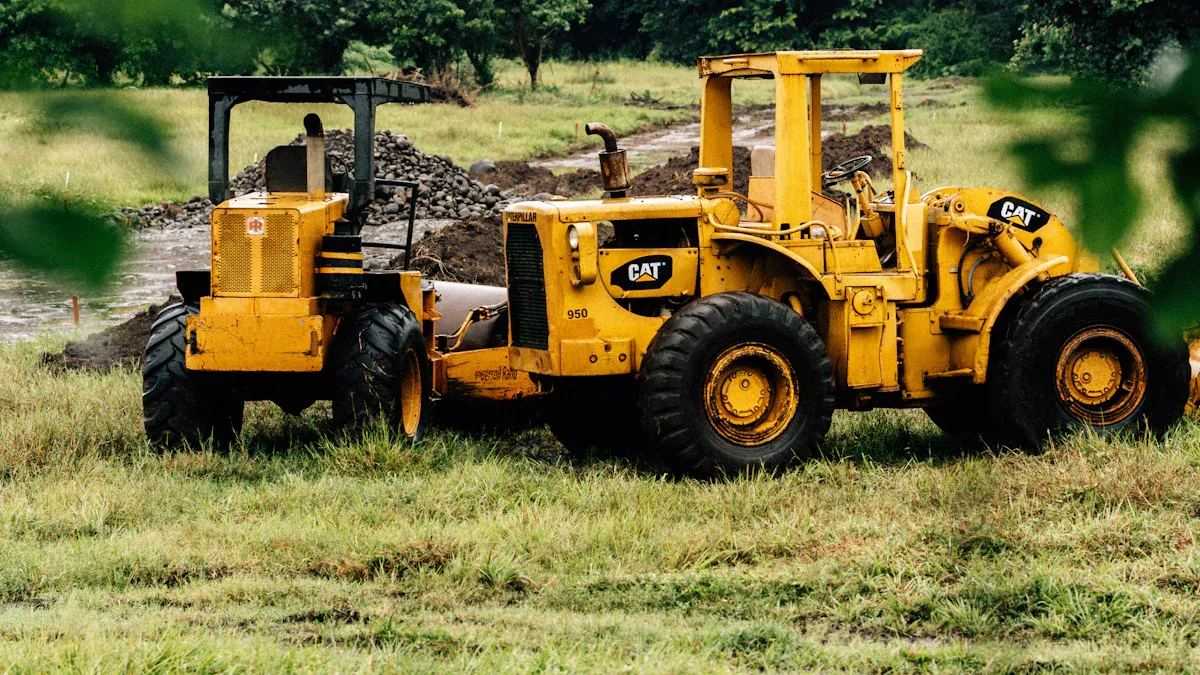
Selecting the correct CAT bucket teeth begins with a thorough assessment of the material type and the working environment. The abrasiveness of the soil or materials directly influences the lifespan of bucket teeth. Highly abrasive conditions, such as those found when working with rocks, compacted clay, or mixed aggregates, drastically reduce the operational life of teeth. These conditions can cut the lifespan of even robust teeth in half. Heavy-duty bucket teeth are specifically engineered for these challenging, abrasive materials. Their design features a wider and more robust profile. This enhances wear resistance in demanding operational environments, particularly in construction and mining sectors. Choosing the right tooth type for the specific material ensures maximum efficiency and prevents premature wear.
Considering Machine Type and Power
The type and power of the machine also play a crucial role in selecting appropriate bucket teeth. A powerful excavator or loader requires teeth that can withstand the machine’s full force without breaking or deforming. Conversely, a less powerful machine might struggle with overly heavy or large teeth, leading to reduced efficiency and increased fuel consumption. The weight of heavy-duty teeth, with their enhanced material and reinforcement, can impact machine performance. Heavier buckets may slow cycle times and increase fuel consumption. An oversized bucket can also reduce swing speeds and shorten the lifespan of hydraulic components. Operators must balance the need for durability with the potential impact on operational efficiency. The strongest bucket is not always the heaviest; smart reinforcement can improve service life without sacrificing cycle time.
Balancing Cost, Performance, and Lifespan
Achieving an optimal balance between initial cost, performance, and expected lifespan is essential for cost-effective operations. Heavy-duty CAT bucket teeth typically have a higher initial cost. However, their long-term value often outweighs this investment. Worn teeth significantly decrease productivity. They reduce the material scooped per cycle and increase fuel consumption because the machine must exert more force. Inefficient cutting and filling also accelerate machine wear, putting extra strain on components like the boom, linkage, hydraulics, and undercarriage. This can shorten the entire machine’s lifespan.
For general construction applications, materials like alloy steel and high manganese steel offer a balanced combination of toughness and wear resistance. These materials strike a good balance between hardness (resistance to indentation) and toughness (ability to absorb energy without fracturing). This prevents premature wear or breakage. While tungsten carbide-tipped teeth offer the highest wear resistance, their higher initial cost makes them more suitable for highly abrasive, specialized applications rather than general construction.
Proper maintenance is crucial for extending the lifespan of bucket teeth. Routine inspections, timely replacements, and cleaning prevent accelerated wear and reduce the risk of equipment failure. Operators should monitor tooth wear and replace teeth before performance drops, ideally when they have lost about 50% of their original length. This maintains efficiency and protects the bucket. Using OEM-specified teeth ensures precise fit, harmonious operation with the bucket design, and high-quality materials. Periodically rotating bucket teeth, especially corner teeth which wear faster, distributes wear evenly. This extends the life of individual teeth and maintains consistent bucket performance. Leveraging smart telematics systems can also monitor digging efficiency and predict wear impacts. High-quality, durable teeth, despite a higher initial cost, lead to long-term cost savings through extended lifespan and reduced need for frequent replacements.
Choosing between heavy-duty and standard CAT bucket teeth involves careful consideration. Operators must assess specific operational needs, material conditions, and the desired balance of durability versus cost-effectiveness. Making the correct selection ensures optimal equipment performance and extends its longevity. This strategic decision directly impacts operational efficiency and long-term profitability.
FAQ
What happens if I use standard teeth in heavy-duty conditions?
Using standard teeth in heavy-duty conditions causes rapid wear. It leads to frequent replacements and increased downtime. This also reduces digging efficiency and can damage the bucket.
How do I know when to replace my bucket teeth?
Replace bucket teeth when they show significant wear. Look for reduced length, blunted tips, or cracks. Worn teeth decrease penetration and increase fuel consumption.
Can I mix heavy-duty and standard teeth on one bucket?
Mixing teeth types is not recommended. It creates uneven wear patterns. This can compromise digging performance and bucket balance. Use a consistent tooth type for optimal results.

Post time: Dec-05-2025