Introduction
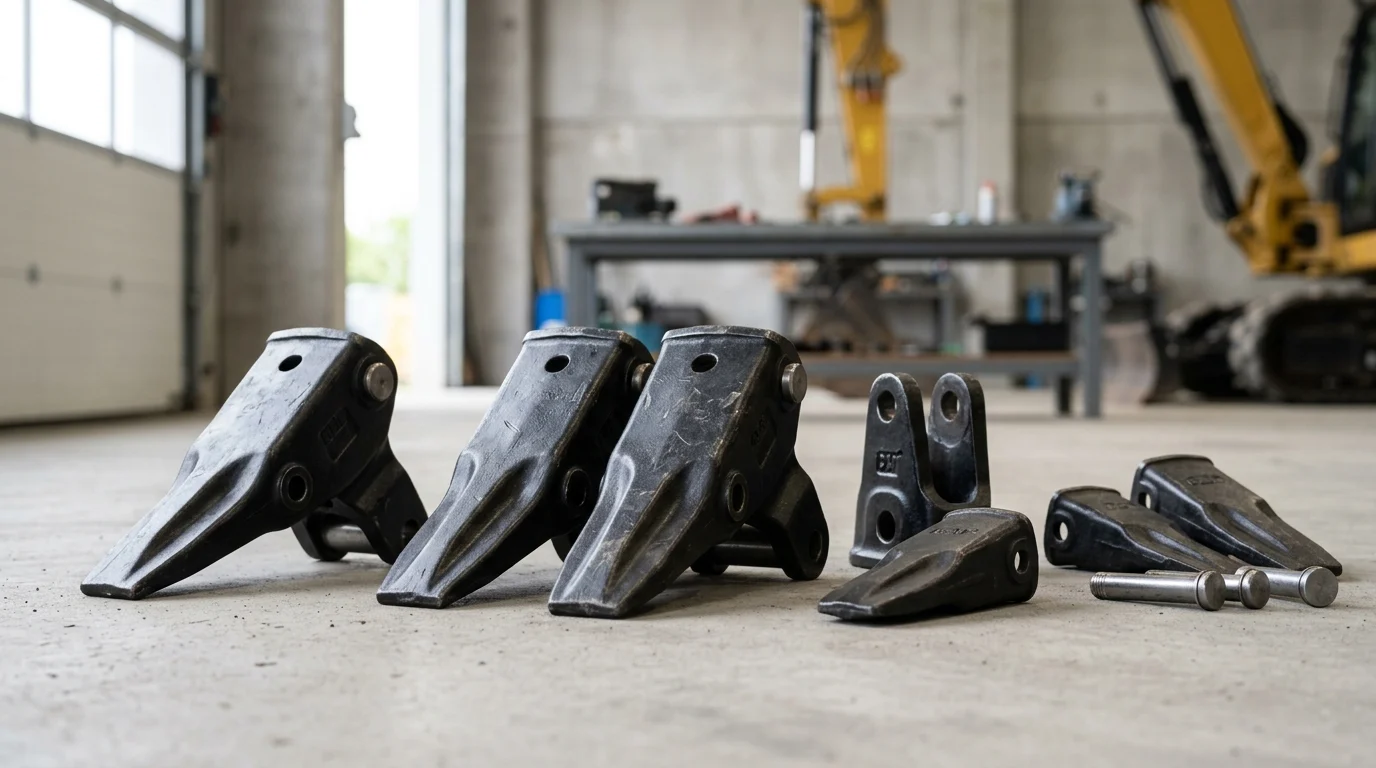
In 2026, shifting global steel prices are forcing Caterpillar bucket teeth makers to rethink how they control cost without sacrificing wear life. This article examines how raw-material volatility influences alloy choice, heat treatment, and hardness targets for high-hardness teeth used in abrasive digging conditions. It also shows why premium performance still depends on tightly managed chemistry and process control, even when manufacturers face pressure to source cheaper inputs. By the end, readers will understand the main trade-offs shaping production decisions and why small changes in steel quality can have a large impact on field durability and replacement cycles.
How Will Global Steel Prices Reshape Caterpillar Bucket Teeth Manufactur
How Do Steel Grades, Hardness Targets, and Process Choices Affect
Buyers might wonder why manufacturers do not simply switch to cheaper steel grades to offset rising costs. The short answer is that durability cannot be compromised when an excavator is tearing through abrasive rock. The interplay between alloy selection and heat treatment is exactly what keeps these machines running profitably.
What trade-offs should I explain between alloy chemistry and
casting?
The most critical trade-off in manufacturing is balancing extreme surface hardness with internal impact toughness. If a tooth is too hard, it becomes brittle and shatters upon hitting a solid boulder. If it is too soft, it wears out prematurely. For premium High-Hardness applications, the target is a Rockwell Hardness (HRC) of 48 to 52, while maintaining an impact toughness (AKV) of greater than 20 Joules. Hitting these exact numbers requires precise chemistry, injecting specific ratios of boron, nickel, and manganese during the melt. Whether pouring a massive 150KG mining tooth or a smaller 0.1KG standard adapter, chemical integrity must be flawless to prevent field failures.
Which process steps and spec comparison table best show
the differences?
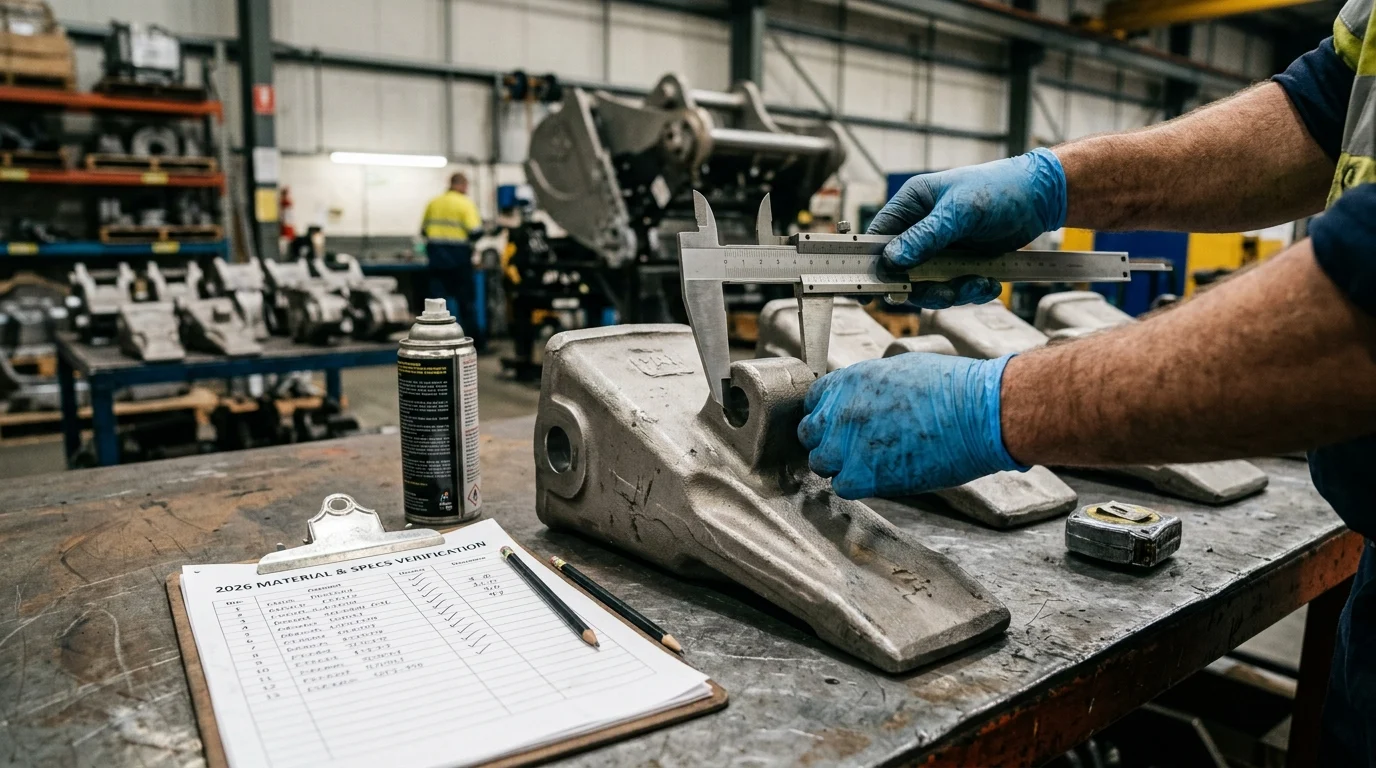
The actual Manufacturing process is where these properties are finalized. After the initial casting, the parts undergo a rigorous quenching and tempering cycle. The steel is heated to over 900°C before being rapidly cooled, then reheated to a lower temperature to relieve internal stress. This multi-step process is non-negotiable for high-wear environments.
| Specification | Standard Carbon Steel | High-Hardness Alloy Steel |
|---|---|---|
| Hardness (HRC) | 38 – 42 | 48 – 52 |
| Impact Value (AKV) | < 15J | > 20J |
| Typical Wear Life | 300 – 400 Hours | 600 – 800 Hours |
| Ideal Application | Loose dirt, sand | Fractured rock, slag |
By strictly controlling the heat treatment parameters, manufacturers ensure that every J-Series, K-Series, or custom tooth meets the demanding specifications required by European and global markets.
How Should Buyers and Manufacturers Respond to 2026 Steel Volatility
Knowing that costs are shifting and technical specs remain as strict as ever, navigating this market requires preparation. Strategic partnerships and proactive planning are the best defenses against ongoing volatility in the global Ground Engaging Tools (G.E.T.) market.
What sourcing, logistics, compliance, and channel decisions matt
er most?
Sourcing and logistics will require significantly more proactive planning in 2026. Buyers should rethink their Minimum Order Quantities (MOQs). Instead of relying on just-in-time inventory, locking in 5-ton to 10-ton MOQs can help hedge against sudden mid-quarter price hikes. Lead times are also shifting; buyers should factor in 45 to 60 days for production and ocean transit, up from the historical 30-day window. On the compliance side, ensuring a supplier strictly adheres to ISO quality standards is critical. When material costs rise, unverified foundries often cut corners on expensive alloy chemistry. Staying compliant ensures parts will not fail prematurely and cause catastrophic downtime on the job site.
What decision guidance should the conclusion give on supplier
selection?
When making a final supplier decision, buyers must look far beyond the initial quote and evaluate the total cost of ownership. Factoring in wear life, reduced downtime, and consistent alloy quality will ultimately determine the true value of the bucket teeth over their operational lifespan.
Key Takeaways
- The most important conclusions and rationale for Caterpillar Bucket Teeth
- Specs, compliance, and risk checks worth validating before you commit
- Practical next steps and caveats readers can apply immediately
Frequently Asked Questions
Why will global steel prices affect Caterpillar bucket teeth in 2026?
Because raw steel and alloying metals are the biggest cost inputs. If chromium, nickel, or molybdenum rise, the unit cost of bucket teeth increases quickly.
What cost component will matter most for high-hardness bucket teeth?
Raw steel and alloys. In 2026, they may account for up to 55% of total manufacturing cost, making material sourcing the key pricing factor.
Can manufacturers switch to cheaper steel grades to save money?
Usually not for heavy wear use. Cheaper steel lowers toughness or hardness, which shortens wear life and raises failure risk in rock and abrasive jobs.
What hardness target is typical for high-hardness Caterpillar bucket teeth?
A common target is HRC 48–52 with impact toughness above 20J, balancing wear resistance and resistance to cracking.
How can buyers respond to steel price volatility in 2026?
Use flexible pricing, update forecasts more often, and confirm specs early with suppliers like nbjm-china.com to avoid delays and margin surprises.
Post time: May-14-2026