How Caterpillar Bucket Teeth Reduce Mining Downtime Costs
For B2B wholesale buyers and distributors, selling or sourcing these components means understanding the ripple effect of equipment failure. A single hour of unplanned downtime in a copper or coal mine can cost tens of thousands of dollars in lost productivity. By treating these wear parts as strategic assets rather than disposable commodities, procurement teams can drastically reduce overall operating expenses. I always advise my clients to look past the initial purchase price. The true value of high-quality bucket teeth lies in their ability to stay on the machine longer and dig more efficiently, directly protecting your bottom line from the hidden costs of unexpected equipment failures. Uptime is the holy grail of mining operations. When bucket teeth maintain their sharpness and structural integrity, the excavator penetrates the earth with less resistance. This improves cycle times—meaning the machine moves more dirt in less time—and reduces fuel consumption. Ultimately, this efficiency directly lowers the cost per ton of material moved. I’ve seen operations shave significant percentages off their operational costs simply by upgrading their G.E.T. profiles. We need to stop thinking of bucket teeth as mere consumables and start categorizing them as downtime-control mechanisms. If a tooth snaps or a pin shears off, the machine must be stopped, locked out, and repaired in the field. Worse, if a broken tooth ends up in a crusher, it can cause catastrophic damage to downstream processing equipment. High-quality teeth with reliable retention systems act as an insurance policy against these multi-million-dollar headaches. When I sit down with procurement managers, we don’t just talk about unit price. We look at Cost Per Hour (CPH) and Cost Per Ton (CPT). Buyers also evaluate supplier reliability metrics, such as Order Defect Rate (ODR) and On-Time Delivery (OTD). A cheap bucket tooth that requires frequent changeouts or arrives a month late will ruin your CPH metrics, making supplier consistency just as important as the steel itself. To genuinely reduce downtime, you have to know exactly what kind of steel you are putting into the dirt. Not all aftermarket bucket teeth are created equal, and comparing performance specifications is where a savvy buyer earns their keep. Sourcing teams must dive deep into metallurgical reports and design schematics to ensure the parts they import can withstand the brutal environments of open-pit mining. I always tell distributors that understanding these specs is your best sales tool. When you can explain to a mine manager exactly why your heavy duty tips will outlast the competitor’s, the conversation shifts from price to value. Below is a breakdown of the critical specifications you need to evaluate before placing a bulk order. The foundation of a great bucket tooth is its metallurgical composition. You want a sweet spot between Brinell hardness (to resist abrasive wear) and impact toughness (to prevent snapping against solid rock). High-quality suppliers use advanced alloy steels fortified with molybdenum and nickel. If a factory cannot provide a spectrometer report detailing their steel’s chemical composition, I walk away. A tooth is only as good as its fit. If the cavity of the tooth does not perfectly match the adapter nose, it will rattle. That microscopic movement causes internal wear and eventually shears the retention pin. We always check for precise fit accuracy and reliable locking systems (like side-pin or top-pin designs) that make field replacements fast while ensuring the tooth stays put during heavy digging. Choosing the right profile is critical. Standard-duty teeth are fine for loose dirt, but put them in a quarry and they will vanish in days. Heavy-duty tips carry more wear material and are structurally reinforced for high-impact environments. Abrasion-resistant options feature extra plating or specific tungsten carbide integrations to survive high-silica environments like sand or granite. Unplanned maintenance is the enemy of profitable mining. Every time a mechanic has to drive a service truck out to an excavator in the middle of a shift, you are bleeding money. Premium wear-resistant teeth are engineered specifically to stretch the intervals between these maintenance events, keeping the machine working uninterrupted for longer periods. I have tracked the maintenance logs of several large fleets, and the data is always clear: fleets that invest in high-quality aftermarket or OEM bucket teeth experience drastically fewer mid-shift failures. The goal is to align G.E.T. replacement with scheduled engine maintenance so that the machine only stops when you plan for it to stop. By focusing on retention reliability and predictable wear patterns, procurement teams can shift their operations from a reactive, “fix-it-when-it-breaks” model to a proactive, highly efficient maintenance schedule. When a bucket tooth fits the adapter flawlessly, the stress of digging is transferred evenly through the adapter and into the bucket lip, rather than concentrating on the retention pin. This secure fit means pins don’t snap, and teeth don’t fall off in the pile. Consequently, field mechanics spend less time doing emergency changeouts in dangerous, dusty conditions. Predictability is just as valuable as durability. If I know a set of teeth will reliably last 400 hours in a specific pit, I can schedule the replacement during a routine oil change. This longer, predictable wear life also allows procurement to lean out their inventory, ordering exactly what they need, when they need it, rather than hoarding safety stock for unpredictable breakages. To prove the ROI of premium teeth, you have to track the replacement cycles. I recommend running a trial on one machine, logging the exact hours the teeth survive, and comparing it to the baseline. Calculate the labor cost of the changeout, the lost production time, and the part cost. Usually, the downtime savings far outweigh the slight premium paid for higher-grade steel. China has become the global hub for G.E.T. manufacturing, but navigating the supplier landscape requires serious due diligence. I’ve toured dozens of foundries, and the variance in quality is staggering. However, when you partner with the right manufacturer, you can secure OEM-level quality at highly competitive wholesale prices. Take Ningbo Yinzhou Join Machinery Co., Ltd., for example. Founded in 2006, they operate as a joint venture of three specialized firms. They have built immense experience supplying mining equipment parts and have cooperated with world-leading brands like BYG, JCB, and NBLF. This is the exact type of pedigree you look for: integrated foundries with a proven track record of international B2B partnerships. When sourcing from China, you aren’t just buying steel; you are buying into the supplier’s quality management system, their export experience, and their ability to scale with your business. The best suppliers own their foundries. This vertical integration allows them to control the melting, casting, and heat-treatment processes. Experienced manufacturers understand the nuances of lost-wax casting or sand casting for heavy machinery parts. I always prioritize suppliers who have been in the G.E.T. game for over a decade, as they have already ironed out the metallurgical inconsistencies that plague newer factories. For distributors, flexibility is key. A good factory will offer reasonable Minimum Order Quantities (MOQs)—often around 1 to 3 tons for mixed models. Lead times typically run 30 to 45 days. Furthermore, top-tier Chinese manufacturers offer private labeling, allowing you to cast your own brand’s logo directly onto the teeth, and they provide robust packaging suitable for rough ocean transit. When you scale up to large-volume, multi-container programs, experienced manufacturers become true partners. They offer tooling support for custom profiles, hold buffer stock to smooth out supply chain hiccups, and provide flexible payment terms (like LC at sight or favorable T/T terms) to help manage cash flow for massive procurement contracts. Trust is good, but in B2B procurement, verification is mandatory. You cannot afford to ship a container of bucket teeth across the ocean only to find out they are brittle. Implementing a strict quality control (QC) protocol is the only way to protect your brand and your customers’ machinery. Whenever I set up a new supply agreement, I build specific QC checkpoints into the contract. This ensures the factory knows exactly what standards they are being held to before the first batch of steel is even poured. From pre-shipment inspections to independent lab testing, robust QC is the bridge between a good price and a great product. Every batch must come with a material test report (MTR) confirming the chemical composition. I also mandate dimensional inspections using specialized gauges to ensure the tooth cavity perfectly matches the adapter. Hardness testing (usually Rockwell or Brinell) confirms the heat treatment was successful. Finally, batch numbers cast into the teeth ensure full traceability if a field failure occurs. Ocean freight is harsh. If teeth aren’t properly coated in anti-rust oil, they will arrive looking like scrap metal. We require heavy-duty, fumigated wooden pallets or steel crates, tightly strapped and shrink-wrapped. The packaging must withstand forklift abuse at the port, during transit, and in the distributor’s warehouse. Procurement is always a balancing act. You might find a supplier offering teeth 15% cheaper, but if their defect rate is 5% higher and they refuse to offer a replacement warranty for premature breakages, that “discount” will cost you dearly. I always negotiate clear warranty terms that cover structural failures, ensuring the factory shares the risk of field performance. Moving heavy steel across the globe requires precise logistics. Bucket teeth are incredibly dense, meaning you will almost always hit a shipping container’s weight limit long before you run out of physical space. Efficient inventory planning ensures you don’t pay for empty air and that you never run out of critical stock. For distributors handling excavator bucket spares, managing the lead time from a Chinese foundry to a local warehouse is the most challenging part of the business. You have to account for production time, port congestion, ocean transit, and customs clearance. Chart: Typical 120-Day Supply Chain Cycle for G.E.T. Imports Because G.E.T. parts are heavy, a standard 20-foot container usually maxes out at around 20 to 26 tons depending on local road weight limits. I calculate reorder points based on a 90-to-120-day lead time. Maintaining a 60-day safety stock of high-turnover items (like standard J-series teeth) ensures you never lose a sale to a stockout. Depending on your end-user, packaging needs vary. Large mining operations might want bulk steel crates dumped right in the maintenance yard. Distributors usually prefer neatly boxed sets on wooden pallets for easy picking and retail display. Discussing these specific packaging formats with your manufacturer upfront prevents massive repacking headaches down the line. There are different ways to structure your supply chain. Direct import to the mine site is the cheapest but requires massive volume and long-term planning. For most mid-sized operations, relying on a distributor who stocks inventory locally is safer. As a distributor, your competitive advantage is holding the inventory risk so the end-user doesn’t have to. I always prepare a standardized vetting questionnaire. This forces the factory to commit to specific service levels in writing. If a supplier is evasive about their warranty process or their tooling costs, I consider it a massive red flag. Always calculate your landed cost (inclusive of freight, tariffs, and insurance), not just the FOB price. Ask about payment terms—can you move to Net 30 after a year of successful orders? If you need a custom tooth profile, ask if they will subsidize the tooling costs based on volume commitments. Lastly, clarify their after-sales response: if a tooth breaks, what evidence do they need to issue a credit? Never buy a full container without a trial. I recommend ordering a mixed pallet of your highest-volume teeth. Put them on a machine working in known conditions and measure their lifespan against your current brand. This real-world validation is the only way to truly confirm the factory’s heat-treatment quality. Ultimately, ask the supplier how their specific product reduces downtime. Do they use a proprietary pin design that reduces changeout time by 10 minutes? Does their steel alloy retain its sharpness longer, improving fuel efficiency? A great supplier understands that they are selling uptime, not just chunks of metal. I recommend reviewing wear data quarterly. Mining conditions change—a pit might hit a layer of highly abrasive rock, drastically altering the lifespan of your bucket teeth. By reviewing the data every three months, procurement can adjust inventory levels and prevent unexpected stockouts. For a reputable Chinese foundry, a realistic MOQ is usually 1 to 3 tons per order, often with a minimum of 100 pieces per specific tooth model. Standard lead times are 30 to 45 days for production, plus ocean freight time. Expect longer lead times if you require new custom molds. Distributors win by offering reliability and technical expertise. You strengthen your channel by holding strategic safety stock, offering private-label premium lines, and educating your buyers on Cost Per Hour rather than just unit price. Partnering with a proven manufacturer like Ningbo Yinzhou Join Machinery ensures you have the consistent quality needed to back up your sales claims. Related reading: Caterpillar bucket teeth
Why Caterpillar Bucket Teeth Matter for Mining Downtime Costs
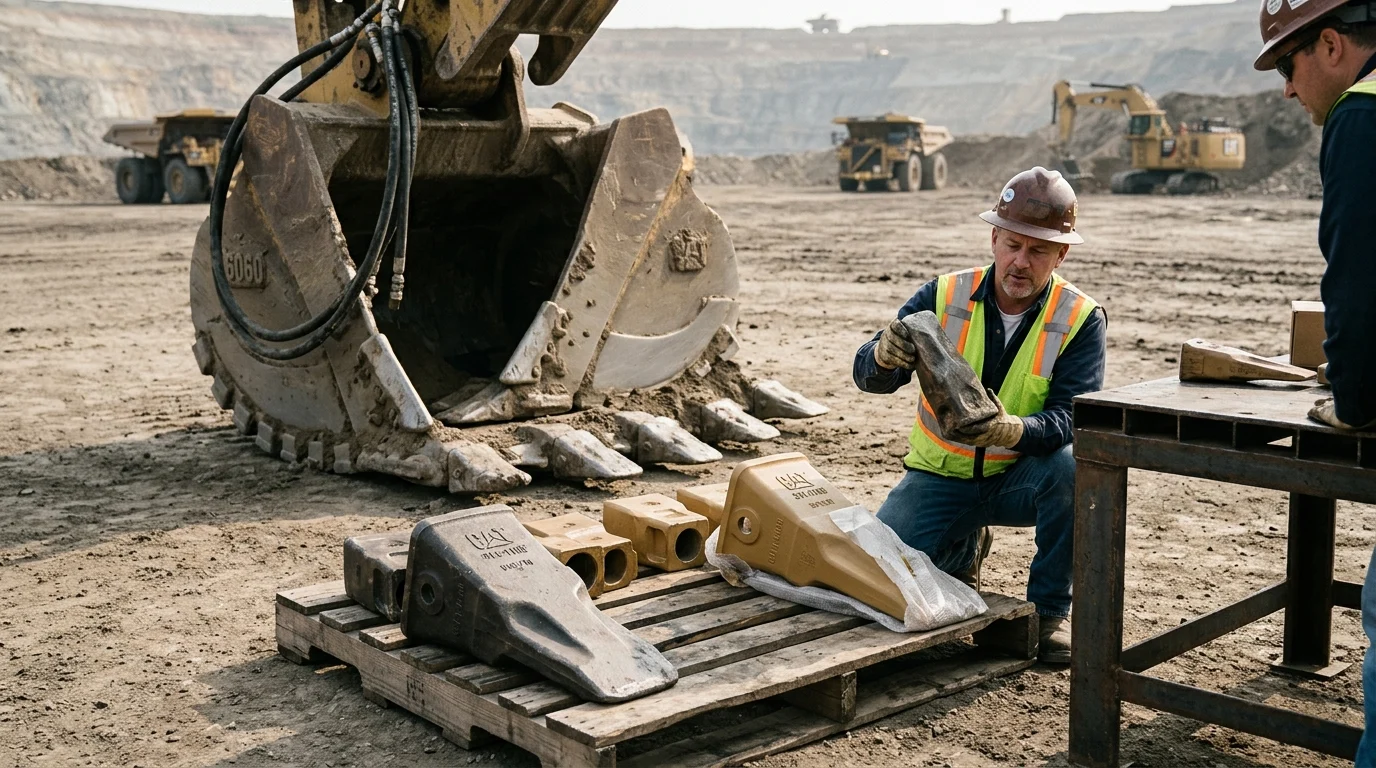
Impact on uptime, cycle efficiency, and cost per ton
Why bucket teeth are a downtime-control category
Key metrics buyers use to evaluate supply programs
Performance Specs to Compare in Caterpillar Bucket Teeth
Profile Type
Material Focus
Ideal Application
Expected Wear Life Impact
Standard Duty
Balanced alloy steel
Dirt, loam, general excavation
Baseline standard
Heavy Duty
High impact resistance
Blasted rock, hardpack
+30% to 50% vs Standard
Abrasion Resistant
High Brinell hardness
Sand, gravel, high-silica rock
+60% in abrasive conditions
Material grade, hardness, impact resistance, and wear life
Tooth profile, adapter compatibility, locking system, and fit accuracy
Standard-duty vs heavy-duty vs abrasion-resistant options
How Caterpillar Bucket Teeth Reduce Unplanned Maintenance
How secure fit and retention reduce field changeouts
How longer wear life improves shutdown planning and inventory control
How to evaluate replacement cycles and downtime savings
Sourcing Caterpillar Bucket Teeth from China
Supplier capability, foundry integration, and production experience
MOQ, lead time, packaging, private labeling, and mixed-model flexibility
How experienced G.E.T. manufacturers support large-volume programs
Quality Control Checks for Caterpillar Bucket Teeth
Material reports, dimensional inspection, hardness testing, and traceability
Export packaging, corrosion protection, and pallet standards
Balancing price, warranty, defect rate, and field performance
Logistics and Inventory Planning for Caterpillar Bucket Teeth
Container planning, safety stock, and reorder timing
Carton, pallet, bulk, and customer-specific packaging formats
Local warehousing vs direct import vs distributor stocking
Questions to Ask Before Signing a Supply Agreement
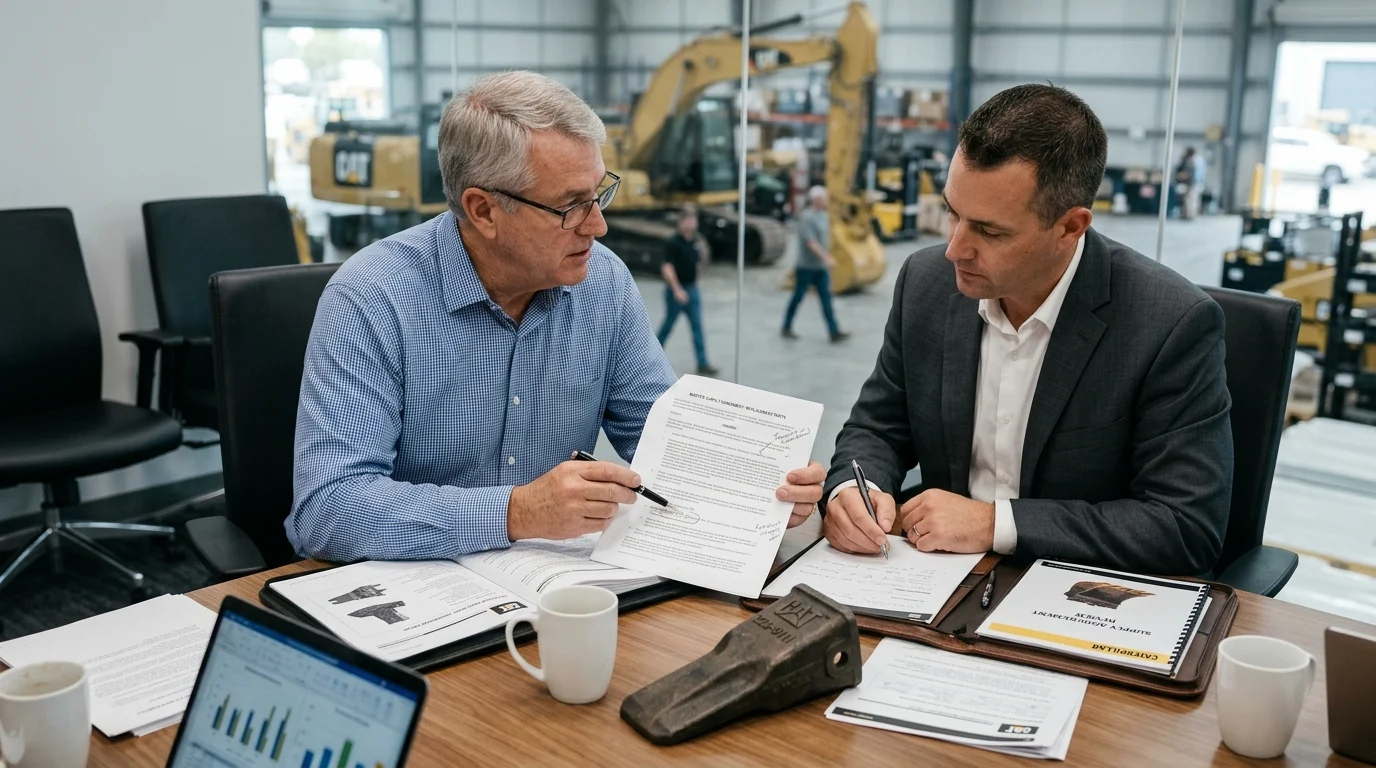
Landed cost, payment terms, tooling support, and after-sales response
Trial-order steps to validate wear performance
Practical criteria for reducing mining downtime costs
FAQ: Caterpillar Bucket Teeth Sourcing and Downtime Reduction
How often should buyers review wear data and replacement schedules?
What MOQ and lead time terms are realistic for mixed-model orders?
How can distributors strengthen channel competitiveness?
Key Takeaways
Post time: Apr-14-2026