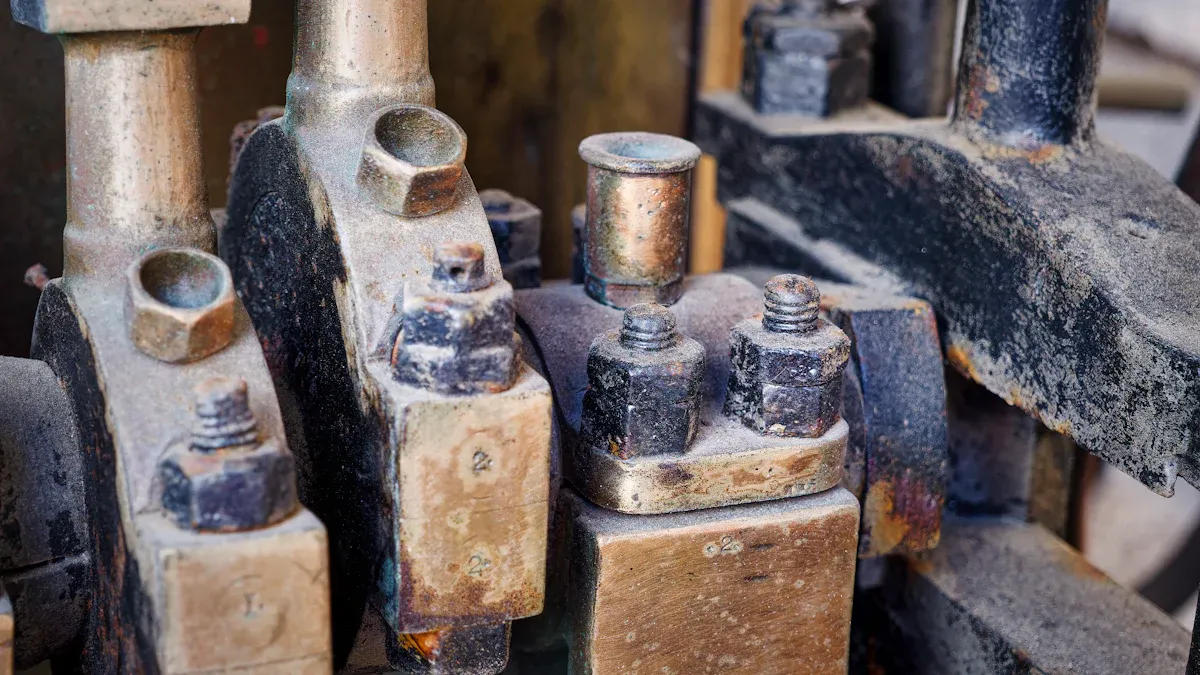
CAT bucket teeth experience rapid wear in harsh conditions. Intense abrasive forces, high impact stresses, and various environmental factors accelerate material degradation. Understanding these specific challenges is crucial. It helps extend the lifespan of these critical components. This understanding also optimizes overall equipment performance.
Key Takeaways
- CAT bucket teeth wear out fast due to abrasive materials, strong impacts, and harsh weather.
- Proper digging, regular checks, and matching teeth to the job help teeth last longer.
- CAT bucket teeth are made from special steel to resist wear and impact.
Abrasive Wear: The Primary Culprit for CAT Bucket Teeth
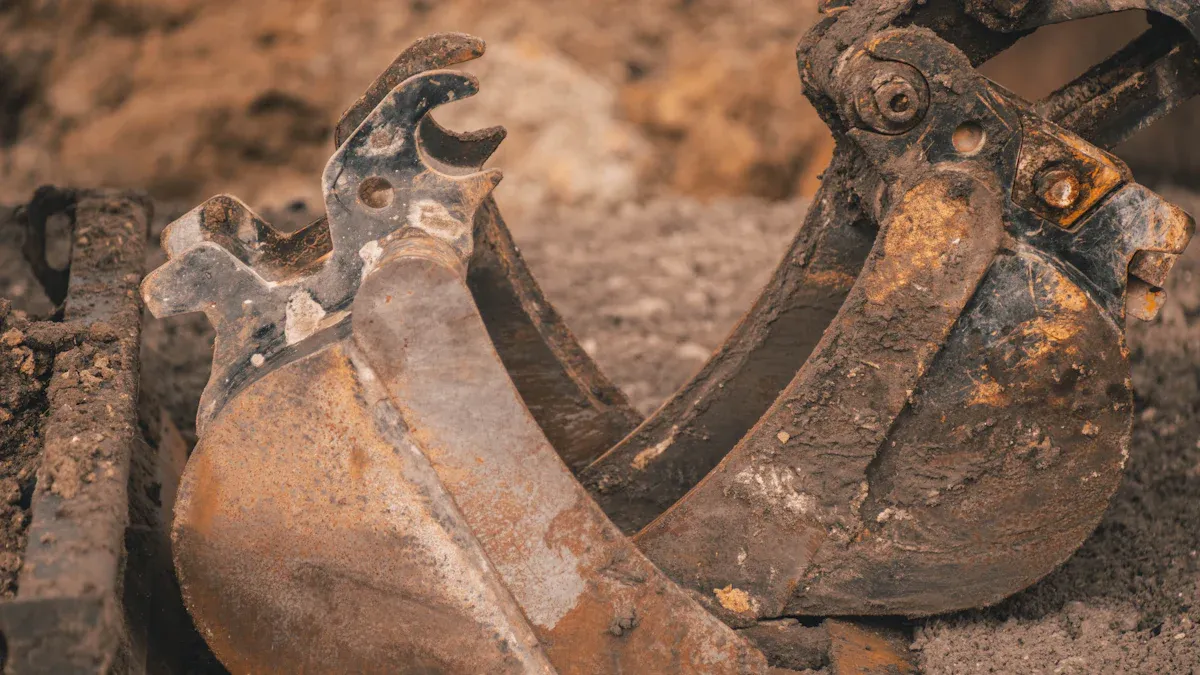
Abrasive wear stands as the most significant factor in the rapid degradation of CAT bucket teeth. This process involves the removal of material from the tooth surface through the cutting, plowing, or rubbing action of harder particles. Equipment operators frequently encounter highly abrasive environments, which constantly challenge the durability of these critical components. Understanding the characteristics of these abrasive materials and the mechanics of their interaction with the teeth helps explain this accelerated wear.
The Nature of Abrasive Materials
CAT bucket teeth regularly encounter a wide array of abrasive materials in mining and construction operations. These materials include hard rock, shale, and frozen ground, all known for their aggressive wear properties. Sand and gravel also contribute significantly to abrasive wear, as do various types of ore. Furthermore, abrasive soil, compact soil, and rocky material present constant challenges. Extremely hard surfaces and other hard, compacted materials consistently abrade the tooth surfaces. Each of these materials possesses unique characteristics that contribute to the wear process, from sharp edges that cut into the metal to fine particles that polish it away.
Contact Pressure and Friction Intensifying Wear
High contact pressure and friction significantly intensify abrasive wear on CAT bucket teeth. When a bucket tooth engages the ground, it concentrates the entire force of the machine onto a small surface area. This concentration creates immense contact pressure at the point of interaction. As the tooth moves through the material, friction develops between the tooth surface and the abrasive particles. This friction generates heat and causes microscopic particles to detach from the tooth. The combination of high pressure and constant rubbing action effectively grinds away the tooth material, accelerating its erosion.
Material Hardness Versus Abrasive Hardness
The relative hardness between the CAT bucket teeth material and the abrasive materials dictates the rate of wear. Hardness measures a material’s resistance to permanent deformation. When the abrasive particles are harder than the tooth material, they easily cut or scratch the tooth surface. Conversely, if the tooth material is significantly harder than the abrasive particles, it resists wear more effectively. Manufacturers design CAT bucket teeth with a specific hardness to balance wear resistance and toughness. However, extremely hard abrasive materials, such as quartz in sand or certain types of rock, often exceed the hardness of the tooth, leading to rapid material loss.
Impact and Fatigue: Stress on CAT Bucket Teeth
Beyond abrasive wear, impact and fatigue significantly stress CAT bucket teeth, leading to premature failure. These forces arise from the dynamic and often violent interactions between the bucket and the working material. Understanding these stressors helps explain why teeth degrade rapidly in demanding environments.
High Impact Forces During Operation
CAT bucket teeth frequently encounter high impact forces during operation. An excavator’s bucket teeth strike hard or unbreakable surfaces, creating sudden, intense forces. This impact wear causes chipping, cracking, or even fracturing of the teeth. For instance, when a bucket hits solid rock or concrete, the sudden shock can exceed the material’s elastic limit. Genuine CAT bucket teeth are engineered with specific high-grade steel alloys and precise heat treatment processes. This engineering creates exceptional hardness and strength. This material composition ensures effective resistance to wear and impact. It also reduces the likelihood of sudden breakage during heavy digging. In contrast, aftermarket teeth often use variable material quality. They are more susceptible to impact damage, leading to fracturing or chipping.
Cyclic Loading and Material Fatigue
CAT bucket teeth also endure cyclic loading, which leads to material fatigue. Every digging cycle subjects the teeth to repeated stress applications and releases. This constant fluctuation in stress, even below the material’s yield strength, gradually weakens the metal structure. Over time, microscopic cracks initiate and propagate within the tooth material. These cracks grow with each subsequent load cycle. Eventually, the tooth fails due to fatigue, even without a single, catastrophic impact event. This process makes the teeth vulnerable to sudden breakage, especially after prolonged use in harsh conditions.
Chipping and Breakage of CAT Bucket Teeth
Chipping and breakage represent common failure modes for CAT bucket teeth, often resulting from a combination of impact and fatigue. Several factors contribute to these failures. A worn adaptor nose is a highly probable cause. This occurs especially with a poor fit and excessive movement between the tooth and the adaptor. Inappropriate digging conditions also increase the likelihood of breakages. For example, using general-purpose teeth in extremely rocky terrain puts undue stress on the components. Operator skill plays a crucial role; aggressive or incorrect digging techniques can subject teeth to unnecessary impacts. Finally, an unsuitable tooth profile increases the chance of breakages. The profile must match the machine and the specific digging conditions for optimal performance and durability.
Environmental Factors Affecting CAT Bucket Teeth
Environmental conditions significantly influence the wear rate of CAT bucket teeth. Exposure to moisture, chemicals, and extreme temperatures directly impacts material integrity. Accumulation of dust and debris also accelerates degradation. Understanding these factors helps predict and mitigate wear.
Moisture and Chemical Exposure
Moisture and various chemicals found on job sites accelerate the degradation of bucket teeth. Oxygen, a common element, contributes to oxide chip formation during fretting wear. These chips then act as abrasives, increasing wear and fatigue. Elements from sand and gravel, such as calcium (Ca), oxygen (O), potassium (K), sodium (Na), silicon (Si), and aluminum (Al), can penetrate the bucket teeth material. This penetration alters the original composition of the alloy. The change makes the alloy less wear-resistant, leading to faster wear rates and reduced tool life.
Temperature Extremes and Material Properties
Extreme temperatures directly affect the mechanical properties of bucket teeth materials. High temperatures can soften the metal, reducing its hardness and wear resistance. Conversely, very low temperatures can make some materials brittle. However, Caterpillar engineers optimize their bucket teeth materials for low-temperature toughness. The core of the bucket tooth maintains excellent toughness. It resists brittle cracking even in temperatures as cold as -30°C. This design ensures reliability in diverse climates.
Dust and Debris Accumulation
Dust and debris accumulation significantly contribute to abrasive wear. This often involves three-body wear, where abrasive particles become trapped between two surfaces. These particles cause wear on one or both surfaces. During unloading, minimal contact between materials and bucket teeth leads to three-body rolling friction wear. Surface investigations of worn teeth reveal grooves and plastic deformation. Accumulated minerals like Ca, O, K, Na, Si, and Al alter the alloy’s composition. This reduces wear resistance and accelerates wear. Researchers like Burwell classified abrasive wear into two-body and three-body types. Misra and Finnie further refined this classification. Laboratory tests, such as the dry sand rubber wheel test (DSRWT), effectively evaluate this three-body wear resistance.
Operational Practices Impacting CAT Bucket Teeth Lifespan
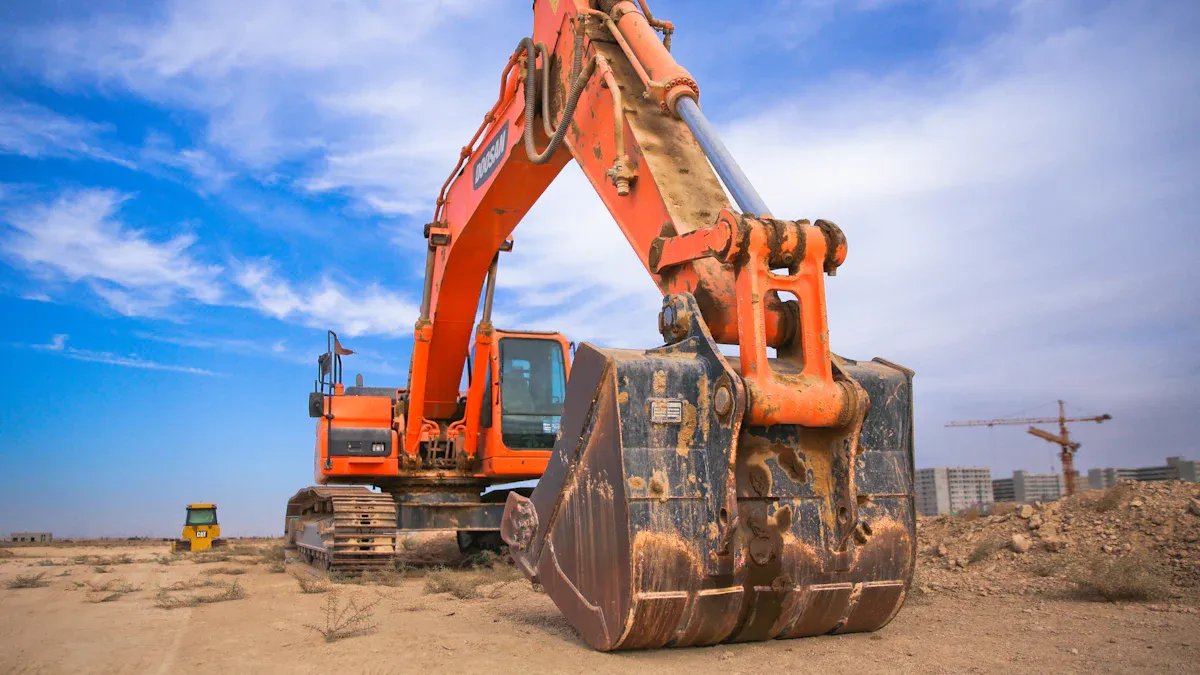
Operational practices significantly influence the lifespan of CAT bucket teeth. The way operators use the equipment directly affects how quickly these critical components wear down. Poor techniques can accelerate wear, even with high-quality teeth.
Aggressive Digging Techniques
Aggressive digging techniques place immense stress on bucket teeth. Operators who force the bucket into material or use excessive downforce cause unnecessary impact and abrasion. This can lead to premature chipping, cracking, and rapid material loss. Smooth, controlled digging motions help distribute forces more evenly, reducing localized stress on the teeth.
Improper Angle of Attack
An improper angle of attack also increases wear on bucket teeth. A low ‘angle of attack’ leads to increased wear, often seen as ‘under-scouring.’ This happens when the bottom of the tooth wears away faster than the top. This indicates a high-abrasion environment. Operators must maintain the correct angle to ensure efficient material penetration and minimize uneven wear patterns.
Lack of Regular Inspection and Maintenance
A lack of regular inspection and maintenance severely shortens the lifespan of CAT bucket teeth. Operators must regularly inspect the bucket, teeth, pins, and bushings for wear or looseness. This inspection takes only about two minutes. Regular monitoring of wear, sharpness, length, and adapter condition helps determine when replacement is necessary. Timely replacement of long-used teeth, even if not fully worn, maintains efficiency and safety. Operators can also rotate symmetric teeth to extend their overall lifespan. Proactive maintenance ensures optimal performance and minimizes downtime.
Material Science and Design Limitations of CAT Bucket Teeth
Material science and design choices significantly influence the lifespan of CAT bucket teeth. Manufacturers face inherent limitations when creating these components. They must balance conflicting material properties and design for complex stress patterns.
Hardness-Toughness Trade-off in CAT Bucket Teeth
Engineers designing CAT bucket teeth must balance hardness and toughness. Hardness provides wear resistance, but excessive hardness can make the material brittle. Brittle teeth are more susceptible to cracking and fracturing upon impact. This highlights the critical need to balance these properties. For example, forged CAT bucket teeth typically have a hardness of 48-52 HRC. Other materials, like Hardox 400, range from 400-500 Brinell. This balance ensures the teeth resist wear without breaking easily.
Design Geometry and Stress Concentration
The design geometry of CAT bucket teeth directly affects stress concentration. Stress concentrations occur at locations with abrupt geometric changes or discontinuities. Features like small radii and sharp corners within a load path are common sites for high stress. The magnitude of stress concentration increases with more abrupt changes. CAT rock tips, however, incorporate a smooth transition from the tip to the main body. This specific geometric feature facilitates smooth force transfer. It reduces stress concentration at the junction, preventing premature failure.
Limitations of Alloy Composition
The alloy composition of bucket teeth also presents limitations. Manufacturers use proprietary hardened alloy steel. They forge and heat-treat this steel to achieve superior wear and impact resistance. Alloying elements play a crucial role. Molybdenum improves hardenability and strength. It also helps minimize pitting corrosion. Nickel increases strength and toughness. It also helps prevent corrosion. Despite these advancements, no single alloy can perfectly resist all types of wear and impact in every harsh condition.
Rapid wear of CAT Bucket Teeth in harsh conditions stems from abrasive forces, impact stresses, environmental factors, and operational practices. Addressing these challenges through improved operational techniques, diligent maintenance, and advanced tooth designs is essential. Proactive management of these factors significantly reduces downtime and operational costs.
FAQ
Why do CAT Bucket Teeth wear out quickly?
Harsh conditions cause rapid wear. Abrasive materials, high impact, and environmental factors degrade the metal. Poor operational practices also contribute to faster wear.
How can operators extend the lifespan of bucket teeth?
Operators should use proper digging techniques. They must perform regular inspections and maintenance. Matching the tooth profile to conditions also helps.
What materials are bucket teeth made from?
Manufacturers use proprietary hardened alloy steel. They forge and heat-treat this steel. This process achieves superior wear and impact resistance.

Post time: Dec-25-2025