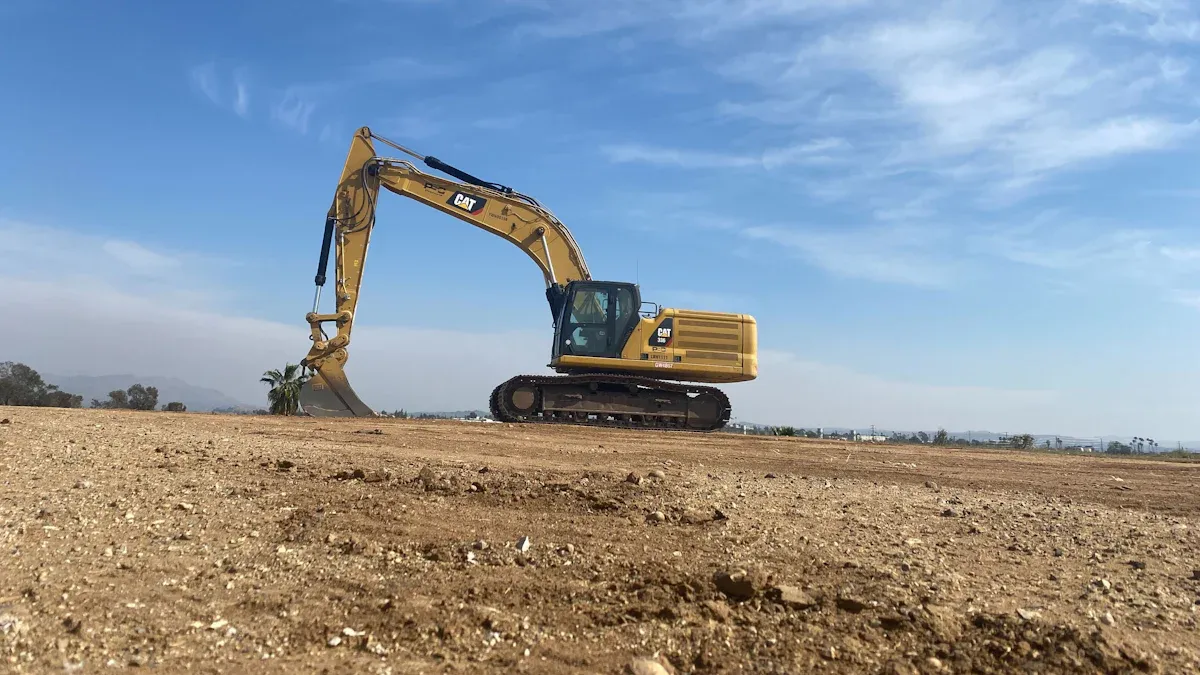
Caterpillar 350 and 330 excavators primarily use J-Series and K-Series tooth systems. These systems offer specific sizes. The 350 excavator typically employs J400 or K150 teeth. The 330 excavator commonly uses J350 or K130 teeth. Selecting the correct CAT 330 bucket teeth is crucial. The J300 J350 matching system provides versatility.
Key Takeaways
- Caterpillar 350 and 330 excavators use J-Series, K-Series, or Advansys teeth. Each system offers different benefits for digging.
- Choose teeth based on your excavator model, the type of work you do, and your bucket. This ensures the best performance.
- Always check manufacturer guides and part numbers. This helps you pick the right teeth and keeps your excavator working well.
Understanding Caterpillar Tooth Systems for 350 and 330 Excavators
The J-Series System: Compatibility and Features
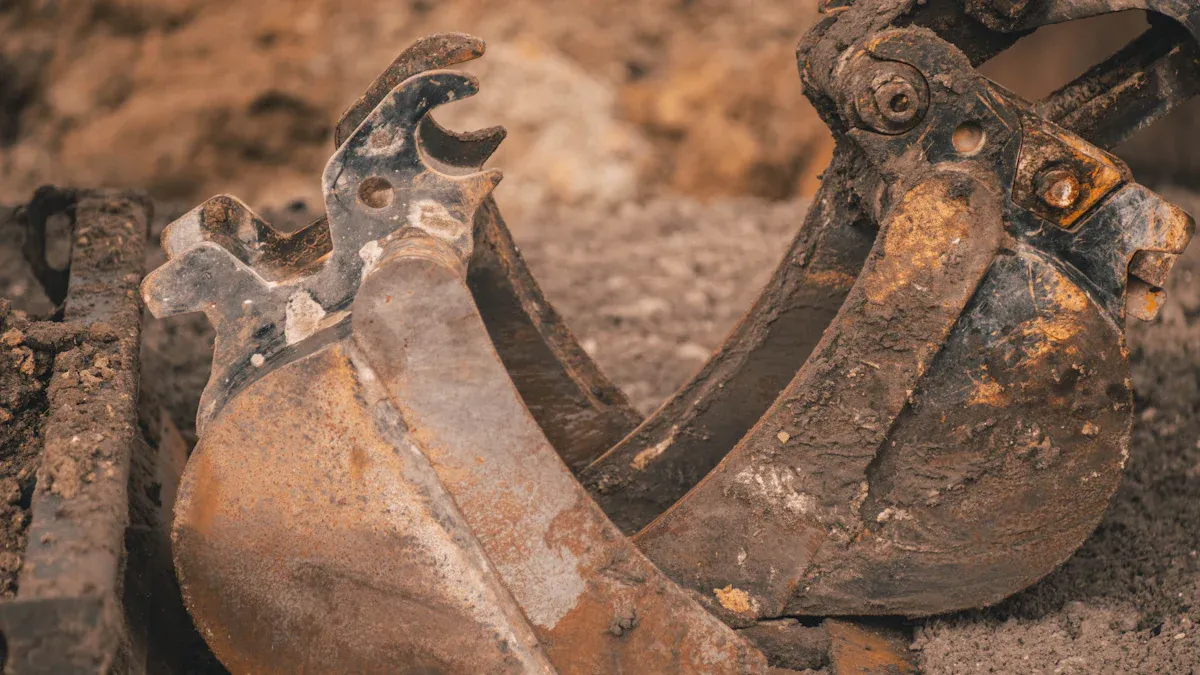
The Caterpillar J-Series system is a foundational choice for many excavators. It features precision-engineered teeth for Cat equipment. This design ensures a secure fit and optimized digging geometry. The system also provides a tighter fit, which reduces tooth movement and loss during operation. J-Series teeth offer enhanced digging efficiency due to their aerodynamic profile. They also boast superior wear resistance, achieved through advanced heat treatment. Caterpillar designs these teeth as OEM parts for seamless integration with Cat machinery. Manufacturers construct them from premium alloy steel for strength and durability. Advanced manufacturing technology ensures high quality and longevity. These teeth offer excellent fit and functionality, maximizing efficiency and safety. They also withstand extreme temperatures, making them suitable for heavy-duty operations.
The K-Series System: Enhanced Performance and Retention
The K-Series system represents an evolution in tooth design, offering enhanced performance and retention. Cat K Series adapters provide increased flexibility for demanding and specialized applications. Three distinct adapter options optimize performance for specific tasks. The flush-mount option creates a smooth surface. This helps maintain clean quarry floors and reduces potential tire damage. An optional cover protects the adapter and welds in high-abrasion environments. The two-strap option features a lower profile. This leads to improved penetration and increased productivity. The bolt-on option offers versatility. Operators can switch between a cutting edge or teeth, providing greater penetration when needed, such as in frozen material. This system improves the overall efficiency of CAT 330 bucket teeth.
Advansys and Other Systems for Modern Excavators
Caterpillar’s Advansys system represents a next-generation ground engaging tool (GET) solution. It distinguishes itself from J-Series and K-Series with a hammerless quick tip removal mechanism. This system requires no special tools, simplifying the process and enhancing safety. Advansys is suitable for demanding applications. It significantly enhances productivity and extends tip life by up to 30%. It also extends adapter life by up to 50%. While J-Series uses a side pin retention mechanism and K-Series has an integrated hammerless system, Advansys prioritizes ease of use and performance. The Advansys system can also retrofit to K-Series adapters, offering a modern upgrade path for existing equipment.
Specific Caterpillar Teeth for 350 Excavators
J400 Teeth: Standard for 350 Excavator Applications
Caterpillar J400 teeth serve as a standard choice for 350 excavators. These teeth offer reliable performance across various digging conditions. Operators often select J400 teeth for general-purpose excavation, such as digging dirt, clay, and loose aggregates. The J-Series design ensures a secure fit on the bucket adapter. This secure fit minimizes tooth loss during operation. J400 teeth feature a robust construction. Manufacturers use high-quality alloy steel to produce them. This material provides excellent wear resistance and durability. The design of J400 teeth promotes efficient material penetration. This efficiency helps maintain productivity on job sites. Many contractors find J400 teeth a cost-effective solution for their 350 excavators. They balance performance with affordability.
K150 Teeth: Robust Options for 350 Excavators
K150 teeth provide a more robust option for Caterpillar 350 excavators. These teeth excel in demanding applications. Operators choose K150 teeth for tough digging conditions. Such conditions include compacted soil, rock, and abrasive materials. The K-Series system offers enhanced retention. This system reduces the risk of tooth detachment. K150 teeth feature a stronger profile and increased material thickness. These characteristics contribute to their extended lifespan. The design of K150 teeth improves penetration. This improved penetration leads to greater productivity in challenging environments. Caterpillar engineers K150 teeth for superior impact resistance. This resistance makes them suitable for heavy-duty tasks. Many users report longer service intervals with K150 teeth. This reduces downtime and maintenance costs.
Tip: Consider K150 teeth for quarry work or demolition projects where impact and abrasion are significant concerns.
Advansys A150: Next-Generation Teeth for 350 Excavators
Advansys A150 teeth represent Caterpillar’s next-generation solution for 350 excavators. This system offers significant advancements over traditional designs. The primary benefit of Advansys A150 is its hammerless tip removal and installation. This feature enhances safety for ground crews. It also speeds up tooth changes. Advansys A150 teeth provide superior penetration. Their optimized shape reduces digging forces. This reduction can lead to lower fuel consumption. The design also extends tip life. Users can experience up to 30% longer tip life compared to older systems. Advansys A150 teeth also improve adapter life. They can extend adapter life by up to 50%. This system is ideal for operators seeking maximum productivity and reduced maintenance. It offers a modern upgrade path for 350 excavators.
| Tooth System | Key Feature | Best Application |
|---|---|---|
| J400 | Standard fit, cost-effective | General excavation, dirt, clay |
| K150 | Robust, enhanced retention | Rock, compacted soil, abrasive materials |
| Advansys A150 | Hammerless, extended life | High productivity, demanding conditions |
Specific Caterpillar Teeth for 330 Excavators
J350 Teeth: Common Choice for CAT 330 Bucket Teeth
J350 teeth are a frequent selection for Caterpillar 330 excavators. These teeth offer reliable performance for various digging tasks. Operators often choose J350 teeth for general excavation work. This includes digging dirt, clay, and loose aggregates. The J-Series design ensures a secure fit on the bucket adapter. This secure fit minimizes tooth loss during operation. J350 teeth feature robust construction. Manufacturers use high-quality alloy steel to produce them. This material provides excellent wear resistance and durability.
J350 teeth are specifically designed for 20-25 ton machines, a range that includes Caterpillar 330 excavators. They prove effective in high-intensity operations. They perform well in large foundation pit excavation. They are also suitable for open-pit mining. J350 series teeth are recommended for highly abrasive materials. These materials include granite or basalt. Their reinforced, abrasion-resistant, heavy-duty construction makes them ideal for such conditions. The design of J350 teeth promotes efficient material penetration. This efficiency helps maintain productivity on job sites. Many contractors find J350 teeth a cost-effective solution for their CAT 330 bucket teeth. They balance performance with affordability.
K130 Teeth: Performance Upgrade for CAT 330 Bucket Teeth
K130 teeth offer a performance upgrade for Caterpillar 330 excavators. These teeth excel in more demanding applications. Operators choose K130 teeth for tough digging conditions. Such conditions include compacted soil, rock, and abrasive materials. The K-Series system provides enhanced retention. This system reduces the risk of tooth detachment. K130 teeth feature a stronger profile and increased material thickness. These characteristics contribute to their extended lifespan. The design of K130 teeth improves penetration. This improved penetration leads to greater productivity in challenging environments. Caterpillar engineers K130 teeth for superior impact resistance. This resistance makes them suitable for heavy-duty tasks. Many users report longer service intervals with K130 teeth. This reduces downtime and maintenance costs for CAT 330 bucket teeth.
Tip: Consider K130 teeth for quarry work or demolition projects. These applications involve significant impact and abrasion.
Advansys A130: Advanced Options for CAT 330 Bucket Teeth
Advansys A130 teeth represent Caterpillar’s next-generation solution for 330 excavators. This system offers significant advancements over traditional designs. The primary benefit of Advansys A130 is its hammerless tip removal and installation. This feature enhances safety for ground crews. It also speeds up tooth changes. Advansys A130 teeth provide superior penetration. Their optimized shape reduces digging forces. This reduction can lead to lower fuel consumption. The design also extends tip life. Users can experience up to 30% longer tip life compared to older systems. Advansys A130 teeth also improve adapter life. They can extend adapter life by up to 50%. This system is ideal for operators seeking maximum productivity and reduced maintenance. It offers a modern upgrade path for 330 excavators.
| Tooth System | Key Feature | Best Application |
|---|---|---|
| J350 | Standard fit, cost-effective | General excavation, dirt, clay, abrasive materials |
| K130 | Robust, enhanced retention | Rock, compacted soil, abrasive materials |
| Advansys A130 | Hammerless, extended life | High productivity, demanding conditions |
Key Factors for Choosing the Right Teeth for Your 350 or 330 Excavator

Selecting the correct teeth for your excavator ensures optimal performance and longevity. Several critical factors guide this decision.
Matching Teeth to Excavator Model and Size
Properly matching teeth to your excavator model and size is essential. Bucket teeth must match the bucket size for safety and efficiency. Large excavators often use 500–600 mm teeth. Mid-size models typically use 400–450 mm teeth. Incompatible teeth reduce efficiency or damage the bucket. Consider the excavator’s operating weight and hydraulic output. The bucket’s capacity must synchronize with the machine’s power for sufficient breakout force and stability. Material density also impacts bucket choice. Lighter materials allow for larger buckets. Dense materials require smaller, more robust options to prevent overloading. Evaluate material grade, looking for alloy steels with hardness ratings of 45–55 HRC. Forged teeth offer higher toughness and a denser grain structure than cast versions. Shank diameter and length must precisely match the adapter bore size to prevent rapid wear. Proper pin hole alignment is crucial for correct seating and to avoid shear stress on pins.
Application-Specific Tooth Types
Different applications require specific tooth types. For example, twin tiger teeth offer dual penetration for digging ditches or breaking hard surfaces. Heavy-duty teeth provide extra wear material for rock excavation, mining, or quarrying. Flare teeth have a wider design for softer soils and handling loose material. Tiger teeth penetrate compact soil, frozen ground, and hard materials. Heavy-duty or rock chisel teeth suit rocky material. Standard chisel teeth work well in soft soil. General-purpose teeth are suitable for mixed conditions. Excavator penetration teeth are longer and thinner, excellent for compacted dirt. Excavator chisel teeth offer a narrow tip for penetration with more material for increased lifespan.
| Tooth Type | Primary Benefit | Ideal Application |
|---|---|---|
| Twin Tiger | Dual penetration | Ditches, narrow trenches, hard surfaces |
| Heavy-Duty | Extra wear material | Rock excavation, mining, abrasive soil |
| Flare | Increased surface area, clean finish | Softer soils, loose material, flat-bottomed surfaces |
| Tiger | Maximum penetration | Compacted soils, frozen ground, hard materials |
| Chisel | Good penetration, extended lifespan | Rocky material, tougher conditions |
| General-Purpose | Balanced performance | Mixed conditions, varied digging |
Bucket Compatibility and Shank Size
Ensuring compatibility between the bucket teeth and the excavator bucket is crucial. Incompatible teeth, whether too large or too small, negatively impact work efficiency and mechanical performance. Each tooth design is engineered for particular bucket systems and mounting configurations. The adapter or mounting point on the bucket dictates which tooth styles properly fit and function. Using incompatible teeth compromises the secure attachment necessary for safe and efficient operation. The specific model and age of excavator equipment significantly influence tooth selection. Older machines often use J-Series adapters, making J-Series teeth a compatible replacement. Newer models might feature K-Series adapters or offer easy conversion options. Operators must verify the existing adapter system on their bucket to ensure seamless integration and optimal performance. This directly affects installation ease and overall performance for CAT 330 bucket teeth.
Consulting Manufacturer Specifications and Part Numbers
Always consult manufacturer specifications and part numbers. This ensures you select the correct teeth for your specific excavator model and bucket. Manufacturers provide detailed guides for their ground engaging tools. These guides include compatibility charts and recommended applications. Checking existing tooth part numbers or measuring shank dimensions helps identify the current system. This information prevents errors and ensures proper fitment.
Identifying Your Current Tooth System on 350 and 330 Excavators
Identifying the existing tooth system on a 350 or 330 excavator is crucial for correct replacement. Operators can determine the system through visual inspection and by locating part numbers. This process ensures compatibility and optimal performance.
Visual Cues for J-Series Teeth
J-Series teeth feature a distinct side pin retention system. Operators will observe a pin inserted horizontally through the adapter and the tooth. A rubber or plastic retainer often secures this pin. The tooth itself typically has a more traditional, robust shape. The adapter also shows a clear slot for the pin. This design is a hallmark of the J-Series.
Recognizing K-Series Teeth Features
K-Series teeth present a different retention mechanism. They utilize an integrated hammerless system. This means no visible side pin. Instead, a vertical pin or a wedge-style retainer secures the tooth from the top or bottom. K-Series teeth often have a more streamlined profile. Their adapters also appear more integrated with the tooth. This design facilitates quicker and safer changes.
Locating Part Numbers on Existing Teeth
Manufacturers stamp part numbers directly onto the teeth. Operators should look for these numbers on the side or top surface of the tooth. The part number provides an exact identification of the tooth type and size. For example, a J350 tooth will likely have “J350″ or a similar code. K-Series teeth will show “K130″ or “K150″ designations. This number is the most reliable way to confirm the current system.
Tip: Always clean the tooth thoroughly before searching for part numbers. Dirt and debris can obscure the markings.
Installation and Maintenance Tips for Caterpillar Teeth
Proper installation and consistent maintenance significantly extend the life and efficiency of excavator teeth. Following recommended procedures prevents premature wear and ensures safe operation.
Proper Installation for J-Series and K-Series
Operators must prioritize safety during tooth installation. They wear personal protective equipment (PPE) like safety gloves, glasses, and steel-capped boots. A lockout procedure prevents accidental machine starts. This involves removing keys and placing a “MAINTENANCE IN PROGRESS – DO NOT OPERATE” sign on the dashboard. Position the bucket facing upwards with teeth parallel to the ground. Use jack stands or wooden blocks for secondary bucket support. For J-Series and K-Series teeth, the process involves specific steps. First, install the retainer. Apply silastic to its back face and position it into the adapter’s recess. Next, position the tooth onto the adapter, preventing the retainer from falling out. Then, insert the pin, recess end first, through the tooth and adapter. Finally, hammer the pin until its recess engages and locks with the retainer.
Regular Inspection and Replacement for Optimal Performance
Routine inspections identify wear and tear on excavator bucket teeth early. Operators should inspect excavator bucket teeth daily before each shift. This regular inspection routine helps monitor digging performance. It also helps identify visible signs of wear, such as rounded edges, cracks, or uneven surfaces. Measure the current tooth size against original specifications. Prompt replacement of worn or damaged teeth prevents further damage to the bucket and adapter. Ignoring early signs of wear can escalate minor issues into major problems.
Maximizing Tooth Lifespan and Efficiency
Several practices maximize tooth lifespan and efficiency. Regularly clean and lubricate adapters using a stiff brush or compressed air. Apply a high-quality lubricant to contact points. Ensure proper alignment of adapters by positioning them flush with the bucket edge. Check for loose bolts, corrosion, and adapter alignment during routine inspections. Inspect adapters for rust or discoloration and apply anti-corrosion spray. Use proper bolt tightening techniques with calibrated torque wrenches. Clean threads, apply lubrication, and follow manufacturer’s torque specifications. Replace worn bolts that show signs of wear, corrosion, or deformation. Always use genuine, compatible parts.
Selecting the correct Caterpillar teeth for 350 or 330 excavators maximizes performance, efficiency, and longevity. Operators understand J-Series, K-Series, and Advansys systems. They carefully consider the excavator model, application, and bucket type for informed decisions. Operators always prioritize manufacturer guidelines and regular maintenance. This ensures safe, productive operation.
FAQ
What is the main difference between J-Series and K-Series teeth?
J-Series teeth use a side pin retention system. K-Series teeth feature an integrated hammerless system. This provides enhanced performance and retention.
Why choose Advansys teeth for excavators?
Advansys teeth offer hammerless tip removal. They provide superior penetration and extended tip life. This system enhances safety and productivity.
How do I know which teeth fit my excavator?
Operators check their excavator model and bucket type. They consult manufacturer specifications. They look for part numbers on existing teeth. This ensures correct fitment.
Post time: Jan-06-2026