
Caterpillar J Series teeth have a specific design. They exclusively work with Caterpillar J Series adapters. This system ensures proper fit and function for heavy equipment. Each CAT J series tooth adapter is engineered for a secure connection. Understanding these specific requirements, including various J350 adapter types, is crucial for optimal performance.
Key Takeaways
- Caterpillar J Series teeth only work with J Series adapters. This design ensures a secure fit and safe operation.
- Always match the J Series size and bucket lip thickness when choosing an adapter. This prevents wear and keeps workers safe.
- Using the correct J Series adapter improves digging performance and makes your equipment last longer.
Understanding the Caterpillar J Series System
The “J Series” Designation Explained
Caterpillar uses the “J Series” designation for a specific line of ground engagement tools. This label identifies a system of teeth and adapters designed to work together. The J Series system offers significant advantages for heavy equipment. It provides enhanced digging performance, making excavation and material handling more efficient. These durable tools also have an extended lifespan. This means fewer replacements and lower maintenance costs for equipment owners. Workers use J Series components in many different applications, from construction sites to mining operations.
Exclusive Design for Caterpillar J Series Compatibility
Caterpillar J Series components feature an exclusive design. This design ensures they only work with other J Series parts. This precise fit is crucial for safety and performance. The system relies on a traditional side-pin retention mechanism. This mechanism uses a horizontal pin and a retainer. It securely attaches the tooth to the CAT J series tooth adapter. This unique pin and retainer system keeps the teeth firmly in place during tough operations. This design prevents teeth from coming loose, which increases safety on the job site. Other series, like the K-Series, use different attachment methods. This difference highlights why J Series parts are not interchangeable with other systems.
Identifying the Correct CAT J Series Tooth Adapter
Choosing the correct CAT J series tooth adapter is essential for equipment performance and safety. Operators must consider specific factors. These factors include the J Series size and the adapter’s compatibility with the machine’s bucket lip.
Matching J Series Sizes (e.g., J200, J300, J400)
Caterpillar assigns numbers like J200, J300, and J400 to its J Series teeth and adapters. These numbers indicate the size and weight class of the ground engagement system. A larger number means a larger, heavier-duty system. For example, J200 systems are for smaller machines. J400 systems suit larger excavators and loaders.
Operators must match the tooth size directly to the adapter size. A J300 tooth requires a J300 adapter. They cannot use a J200 tooth with a J300 adapter. Mismatched sizes lead to several problems. The tooth will not fit securely. This causes movement and premature wear. It also increases the risk of the tooth breaking or falling off during operation. This creates a significant safety hazard. Always verify the J Series number on both the tooth and the adapter before installation.
Adapter Lip Thickness and Machine Compatibility
The adapter connects to the bucket’s cutting edge, also known as the lip. The thickness of this bucket lip varies greatly between different machines and bucket types. A CAT J series tooth adapter is designed for a specific lip thickness.
Operators must measure the bucket lip thickness accurately. They then select an adapter that matches this measurement. An adapter too wide for the lip will fit loosely. This causes movement and premature wear. An adapter too narrow will not fit at all. Different machines, such as backhoes, excavators, and loaders, often have distinct bucket lip designs. Some adapters are universal for a size range. Others are specific to certain machine models or bucket styles. Always consult the machine’s specifications or the adapter’s product information. This ensures proper fit and secure attachment. A correct fit distributes digging forces evenly. This extends the life of both the adapter and the bucket.
Types of CAT J Series Tooth Adapter Designs
Caterpillar offers various J Series tooth adapter designs. Each design serves specific purposes and attachment methods. Understanding these types helps operators choose the best option for their equipment and tasks.
Weld-On J Series Adapters
Weld-on J Series adapters attach directly to the bucket lip. Workers permanently weld these adapters onto the bucket’s cutting edge. This method creates a very strong and secure connection. Weld-on adapters are ideal for heavy-duty applications. They provide maximum stability and durability. Equipment like large excavators and loaders often use them. Once welded, the adapter becomes an integral part of the bucket structure. This design ensures the adapter can withstand extreme digging forces.
Pin-On J Series Adapters
Pin-on J Series adapters offer more flexibility than weld-on types. They attach to the bucket using pins. This design allows for easier removal and replacement of the adapter. Operators can quickly change adapters if they become worn or if the job requires a different configuration. Pin-on adapters are common on backhoes and smaller excavators. They provide a secure fit while allowing for convenient maintenance. A strong pin holds the adapter firmly in place during operation.
Flush-Mount J Series Adapters
Flush-mount J Series adapters have a unique profile. They sit flush with the bucket’s cutting edge. This design minimizes resistance when the bucket moves through material. It helps create a smoother bucket floor. Flush-mount adapters are often used in grading or finishing applications. They reduce material buildup on the adapter itself. This design helps maintain a clean cut and efficient material handling. A CAT J series tooth adapter with a flush-mount design can improve productivity in certain tasks.
Center and Corner Adapters for Specific Applications
Buckets often use different adapters based on their position. Center adapters sit in the middle sections of the bucket. They handle the main digging forces. Most buckets have several center adapters. Corner adapters, however, go on the outer edges of the bucket. They protect the bucket corners from wear and tear. Corner adapters often have a different shape. This shape helps them cut into the ground at the bucket’s edge. It also provides extra protection for the bucket’s side walls. Using the correct combination of center and corner adapters extends the bucket’s life. It also improves digging efficiency.
Why Only CAT J Series Tooth Adapter Works
Unique Pin and Retainer System
The Caterpillar J Series system uses a distinct pin and retainer design. This system secures the tooth to the adapter. It features a traditional side-pin retention mechanism. A horizontal pin and a retainer hold the tooth firmly. Workers typically use a hammer for installation and removal. This process can take time. It also presents a safety risk due to the use of heavy tools. This side-pin design makes J-Series teeth unique. It differs from newer hammerless systems like the K-Series or Advansys. A J-Series pin will not fit securely into an Advansys system. This incompatibility can lead to issues such as premature wear and component failure.
Incompatibility with Non-J Series Adapters
Caterpillar designed its J Series components for exclusive compatibility. This means J Series teeth only work with J Series adapters. Other Caterpillar systems, like the K-Series or Advansys, have different attachment methods. Their pin and retainer systems are not interchangeable. For example, a K-Series tooth will not fit a J-Series adapter. This specific design prevents mixing parts from different series. It ensures the integrity and performance of the ground engagement tools.
Risks of Using Incorrect Adapters
Using the wrong adapter creates significant problems. An incorrect adapter will not provide a secure fit. This leads to movement and excessive wear on both the tooth and the adapter. Components can fail prematurely. This increases maintenance costs and downtime. More importantly, using mismatched parts poses a serious safety hazard. A loose or failing tooth can detach during operation. This endangers workers and damages equipment. It also reduces digging efficiency. The machine cannot perform its job effectively.
Always use the correct CAT J series tooth adapter for optimal safety and efficiency.
Selecting the Right CAT J Series Tooth Adapter for Your Equipment
Adapters for Backhoes, Excavators, Loaders, and Skid Steers
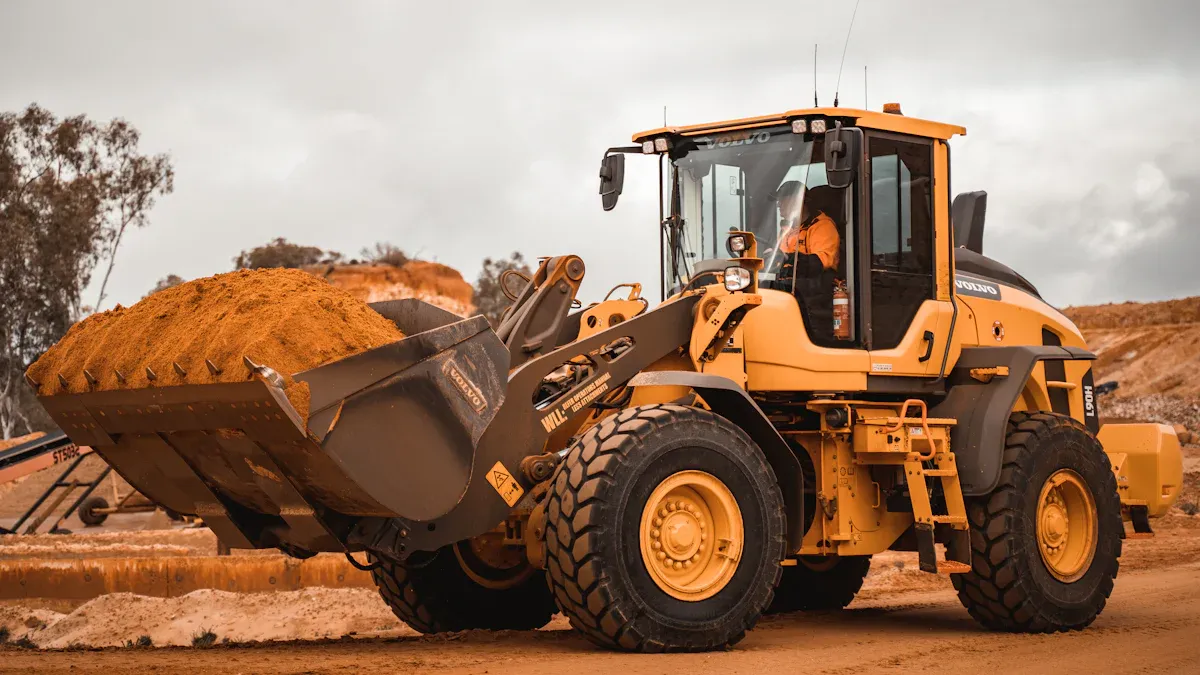
Selecting the correct J Series adapter depends on the specific machine and its intended use. Caterpillar offers various adapters for backhoes, excavators, loaders, and skid steers. Each machine type has different digging forces and bucket designs. For instance, smaller equipment like backhoes and skid steers often use J200 series adapters. The 4T1204 is a common J200 replacement adapter. This specific CAT J series tooth adapter works with Caterpillar Backhoe Loaders like the 416C, 416D, and 420D. It also fits Integrated Tool Carriers such as the IT12B and IT14G. This 2KG adapter is a flush-mount, weld-on type. It is designed for a 1/2-inch to 1-inch lip thickness. It helps improve performance and extends the lifespan of the machine and bucket. Larger excavators and loaders require heavier-duty J Series adapters, such as the J300 or J400 series, to handle greater stress.
Compatibility with Other Machinery Brands (Komatsu, Hitachi, JCB, Volvo)
Caterpillar designed its J Series adapters primarily for Caterpillar equipment. They do not directly fit buckets from other machinery brands like Komatsu, Hitachi, JCB, or Volvo. Each manufacturer often uses its own proprietary ground engagement system. This means a J Series adapter will not securely attach to a bucket designed for a Komatsu tooth system. The bucket lip thickness and mounting points vary significantly between brands. Trying to force a fit can damage the bucket or the adapter. It also creates operational inefficiencies and potential safety risks. Always ensure the adapter matches both the tooth series and the machine’s bucket design. Consult the equipment manufacturer’s specifications or a trusted supplier. This ensures proper fit and safe operation.
Genuine vs. Aftermarket CAT J Series Tooth Adapter Options
Benefits of Genuine Caterpillar Adapters
Genuine Caterpillar adapters offer specific advantages. Their designs provide more usable wear material. This helps maintain the tip’s profile throughout its lifespan. This leads to better performance and productivity. The adapter’s design also guides material flow over the adapter strap. This can make both the adapter and the overall bucket last longer. J Series teeth are known for their strong and sturdy profile. This gives them excellent breakout force.
Choosing High-Quality Aftermarket J Series Adapters
Aftermarket options can save money. However, choosing high-quality aftermarket J Series adapters is important. Not all aftermarket parts are equal. Look for suppliers who focus on quality and durability.
What to Look for in Aftermarket CAT J Series Tooth Adapter
When selecting an aftermarket CAT J series tooth adapter, check several factors. Material specifications are key. The adapter’s hardness should be HRC36-44. Its impact strength at room temperature should be at least 20J.
Manufacturing processes also matter. Look for suppliers using a lost-wax process. They should perform two heat treatments. Quality control is vital. Good suppliers conduct impact testing, spectrograph analysis, tensile testing, and hardness testing. They also use ultrasonic flaw detection for each part. This ensures the adapter meets high standards.
| Specification/Standard | Detail |
|---|---|
| Material Specifications | |
| Hardness (Adapter) | HRC36-44 |
| Impact Strength (Adapter, room temperature) | ≥20J |
| Manufacturing Processes | |
| Production Process Steps | Mould Design, Mould Processing, Wax Model Making, Tree Assembly, Shell Building, Pouring, Sprue Removal, Heat Treatment, Product Testing, Painting, Package |
| Testing Standards/Quality Control | |
| Quality Management | Impact Testing, Spectrograph, Tensile Testing, Hardness Testing |
Always pair Caterpillar J Series teeth with their specific J Series adapters. This ensures optimal performance and safety. Correct adapter selection is crucial for equipment longevity. Consult specifications or experts. They help ensure the right size and type for your application.
FAQ
Can I use a K-Series tooth with a J-Series adapter?
No, you cannot. Caterpillar designed J-Series and K-Series systems differently. They have unique pin and retainer mechanisms. This makes them incompatible.
What happens if I use the wrong size J-Series adapter?
Using the wrong size adapter causes problems. The tooth will not fit securely. This leads to premature wear and potential failure. It also creates a safety hazard.
Do J-Series adapters fit other machinery brands like Komatsu or Volvo?
No, J-Series adapters are for Caterpillar equipment. Other brands use their own specific ground engagement systems. These systems are not interchangeable.
Post time: Jan-16-2026