Introduction
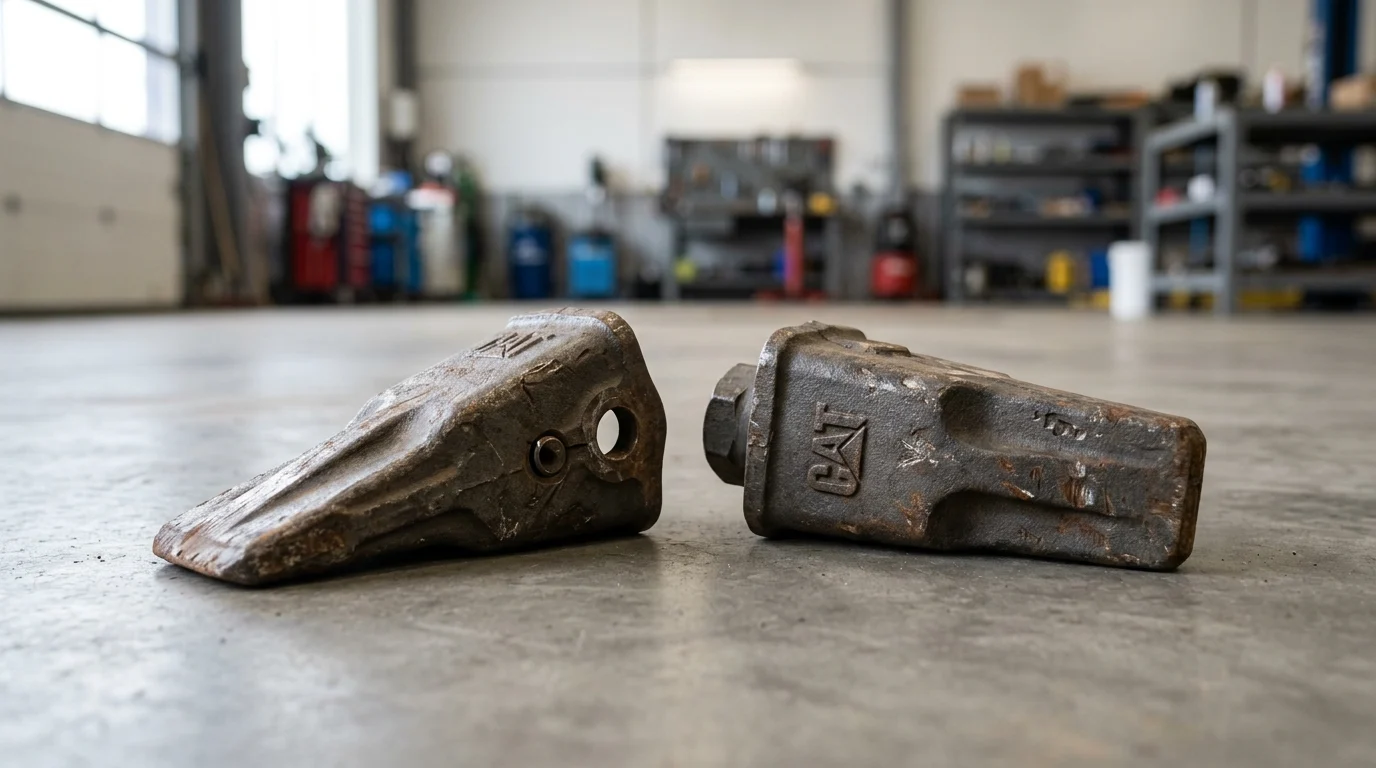
Mining companies are rethinking Caterpillar bucket teeth not just as wear parts, but as a practical lever for reducing emissions across excavation operations. A growing shift toward eco-friendly alloy production is changing how these components are cast, heat-treated, and sourced, with recycled inputs and cleaner furnace technologies becoming more relevant to procurement decisions. This article explains the market forces behind that transition, how sustainable alloys affect wear life and cost per hour, and why manufacturers and fleet managers are weighing environmental performance alongside durability. From production methods to operational trade-offs, the discussion sets up what matters most when evaluating greener bucket tooth options.
Why Sustainable Mining Trends Are Reshaping Caterpillar Bucket Teeth
As the heavy mining industry evolves, one of the most fascinating shifts isn’t happening under the hoods of haul trucks—it’s at the digging edge. Sustainable mining trends are reshaping how manufacturers produce and deploy Caterpillar Style Bucket Teeth. Historically, fleet managers prioritized raw hardness and rock-bottom pricing. Now, as environmental regulations tighten, the carbon footprint of consumable ground engaging tools is under intense scrutiny. The industry is witnessing a massive push toward eco-friendly alloys that lower emissions without compromising the reliable performance expected in high-abrasion earthmoving.
Eco-friendly alloys: cost and wear-life impact
Eco-friendly alloys consist of high-grade steel produced using advanced induction furnaces, often incorporating up to 85% high-quality recycled scrap metal. Assuming this green approach sacrifices wear life is a costly misconception. While the initial procurement cost of these sustainable Alloy Steel Bucket Teeth can run 5% to 8% higher than traditional coal-fired foundry products, the wear-life impact remains virtually identical. Thanks to advanced heat treatment processes, these eco-alloys consistently hit the crucial sweet spot of durability, keeping cost-per-hour stable even as supply chain emissions drop.
Market pressures driving sustainable bucket teeth
This industry-wide shift is aggressively driven by hard market pressures. Top-tier mining operations now strictly audit their Scope 3 emissions, which explicitly include the carbon embedded in daily consumables. With carbon taxes in several global mining regions crossing the $50-per-ton threshold, miners are forcing component suppliers to adapt. If a foundry cannot prove a verifiable 15% to 20% reduction in its manufacturing carbon footprint, it risks being locked out of major multi-year contracts. This top-down pressure makes sustainable bucket teeth the new industry baseline rather than a niche premium alternative.
How to Evaluate Eco-Friendly Alloys for Caterpillar Bucket Teeth
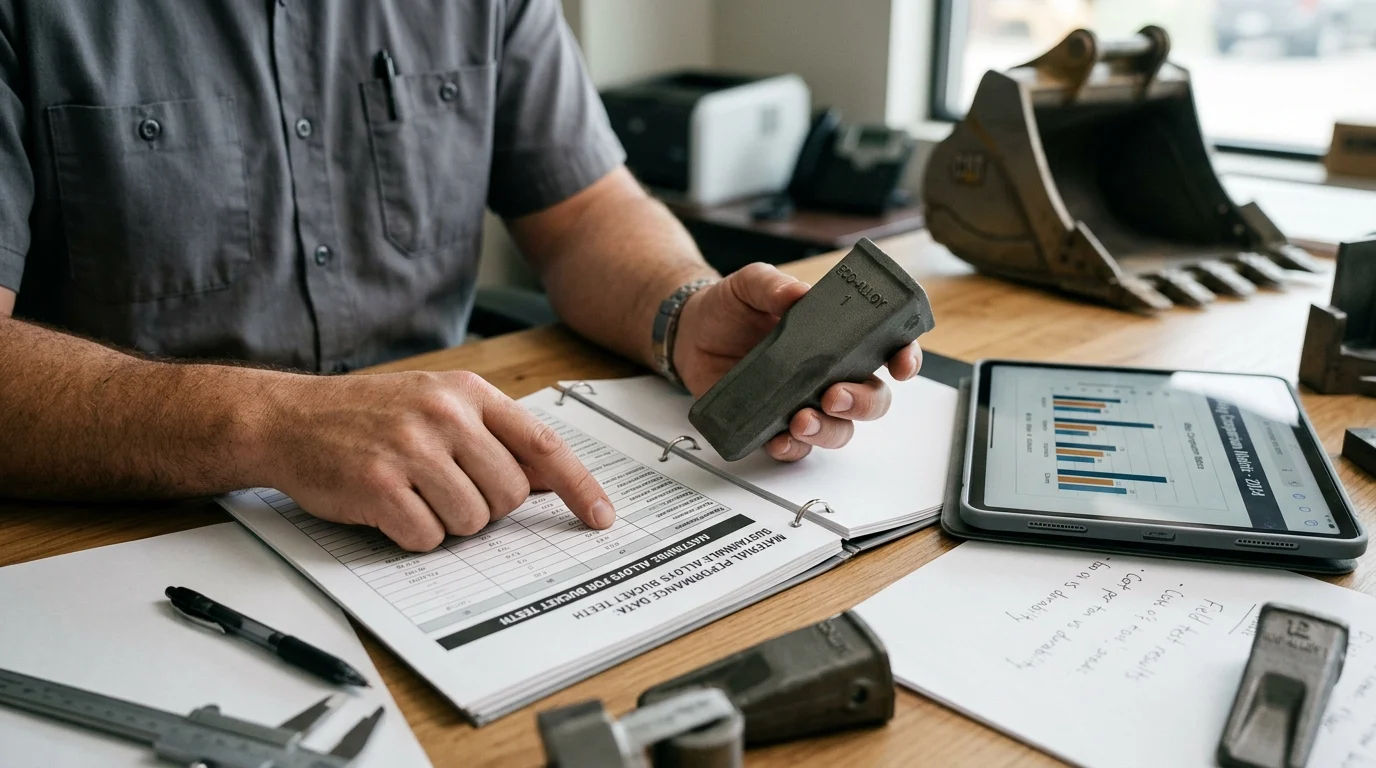
Vetting these greener options without risking catastrophic equipment failures at the rock face is critical. Evaluating eco-friendly alloys requires looking past marketing brochures and digging directly into metallurgical facts. Buyers need absolute certainty that the Wear Resistant Teeth they purchase can handle severe abrasion and high-impact shocks just as effectively as legacy cast parts.
Material, process, and quality-control criteria
The criteria for evaluating sustainable parts should not deviate from the most stringent quality controls. A high-quality eco-alloy must consistently deliver a surface hardness ranging from 48 to 52 HRC, alongside an impact toughness exceeding 20 Joules at -20°C. If a foundry cuts corners on its recycled scrap mix, it will immediately show up as a failure to meet these baseline numbers. Procurement teams should demand complete spectrometry reports and ultrasonic testing data for every batch. The manufacturing process should leverage modern induction melting rather than outdated cupola furnaces to ensure tight chemical control without generating massive energy waste.
Trade-offs versus conventional alloys
There are practical trade-offs when transitioning a fleet, mostly related to supply chain logistics rather than field performance. Because sustainable batching requires stricter scrap sorting and specialized energy sourcing, buyers might face slightly longer production lead times.
| Metric | Conventional Alloys | Eco-Friendly Alloys |
|---|---|---|
| Scrap Utilization | 30% – 50% | 75% – 85% |
| Average Hardness | 48 – 52 HRC | 48 – 52 HRC |
| Typical Lead Time | 30 – 35 days | 40 – 45 days |
| Carbon Emissions | Baseline (High) | 15% – 20% Lower |
| Initial Cost | Baseline | +5% to +8% |
As the breakdown shows, physical properties remain identical, but operations must plan their inventory of Earthmoving Equipment Parts further out. Accommodating the 40- to 45-day lead times typical of sustainable production ensures fleets never face unexpected downtime.
How to Source Caterpillar Bucket Teeth From Sustainable Suppliers
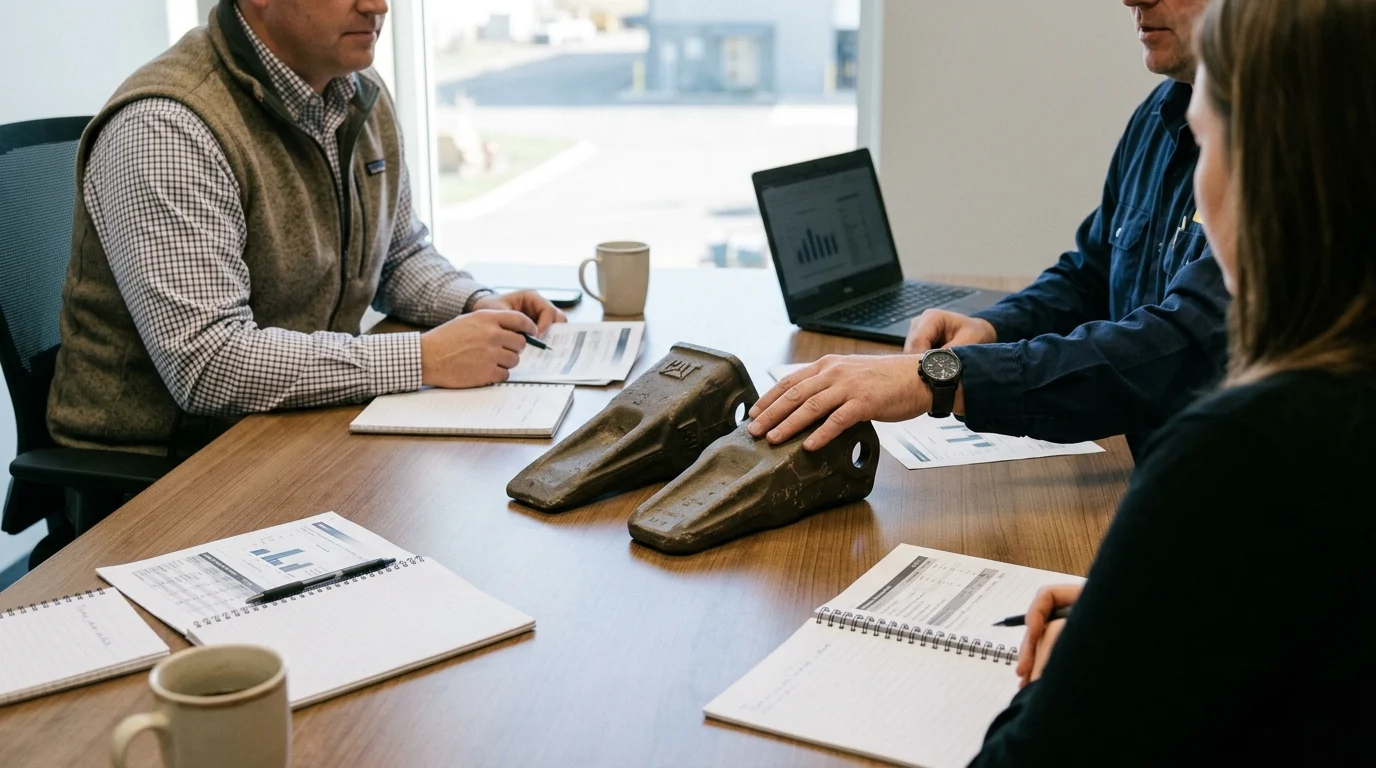
Knowing what specs to look for is only half the battle; finding a reliable foundry that can deliver them consistently is the real challenge. Sourcing sustainable bucket teeth means partnering with suppliers who have deep industry roots and modernized casting facilities. Total transparency at the factory level is the best defense against greenwashing.
Supplier screening for alloy integrity
When screening a potential supplier for alloy integrity, closely examine its operational history and internal quality assurance infrastructure. For example, established operations—such as the joint venture combining the manufacturing strengths of Ningbo Yinzhou Join Machinery Co., Ltd., Ningbo Qiuzhi Machinery, and Ningbo Huanan Casting—have been refining G.E.T. production since 2006. An integrated setup means maintaining total control from initial scrap selection through final heat treatment. Buyers should demand that their supplier maintains a strict defect rate under 0.5% and holds active ISO 14001 environmental certifications. A proven track record of supplying world-leading companies like BYG, JCB, or NBLF is a strong indicator that a foundry possesses the rigorous quality control necessary to produce reliable eco-alloys.
Decision factors for sustainable sourcing
Final decision factors must carefully balance corporate environmental goals with practical purchasing realities. Minimum Order Quantities (MOQs) for specialized eco-friendly pours can be slightly higher, often starting around the 2,000 kg mark, because foundries need to run dedicated, energy-efficient furnace cycles. It is also necessary to verify that the supplier offers a comprehensive range of fitments, such as highly demanded J-Series Bucket Teeth, to guarantee compatibility with existing fleets. Ultimately, a truly sustainable supplier is a strategic partner who delivers consistent, high-impact wear parts on time, helping lower the operational carbon footprint without slowing down production.
Key Takeaways
- The most important conclusions and rationale for Caterpillar Bucket Teeth
- Specs, compliance, and risk checks worth validating before you commit
- Practical next steps and caveats readers can apply immediately
Frequently Asked Questions
Do eco-friendly Caterpillar bucket teeth wear out faster?
No. When properly heat-treated, eco-alloys typically keep the same 48–52 HRC hardness and similar wear life as conventional teeth.
What specs should buyers request before ordering?
Ask for spectrometry reports, ultrasonic testing data, hardness results of 48–52 HRC, and impact toughness above 20 J at -20°C.
Why are sustainable bucket teeth slightly more expensive?
They often cost 5%–8% more because of stricter scrap sorting, induction melting, and tighter process control.
How should I plan lead times for sustainable bucket teeth?
Plan inventory earlier. Eco-friendly production commonly needs about 40–45 days instead of 30–35 days.
How can nbjm-china.com help verify sustainable bucket teeth quality?
Review the product and technology pages for alloy details, heat-treatment capability, and available testing records before placing bulk orders.
Post time: Apr-28-2026