- Hardened edges last 1.8-2.4x longer versus plain carbon on granite bench rock.
- Matched edge-and-tip hardness stabilizes push cycles and reduces unscheduled downtime 22-31 percent.
- Fits Caterpillar D6-D9, Komatsu D65-D155, JCB, Doosan, and Volvo with shipped fitment cards.
When our quarry mining fleet maintenance managers audit their ground engaging tool spend, the line item that quietly dominates the budget is not the obvious wear parts — it is the compounded cost of cutting edge replacement, ripper shank rebuild, and unscheduled bulldozer downtime during push operations and rock face clearing. G.E.T. parts (Ground Engaging Tools) with hardened cutting edges are now specified as a coordinated wear system, because on a shot-rock face the cutting edge, end bit, and ripper tip each take a different fraction of the impact load; therefore, when one is hardened and the others are not, the weak link dictates the whole replacement cycle. In our foundry and field service work since 2010, we have walked through the wear mechanism with hundreds of maintenance managers, and we have documented the alloy choices we run, the compatibility matrix for the major OEM brands, and the cost-per-ton data we collect from aggregate and dimension-stone quarries across Southeast Asia, Africa, and South America. In this guide we share that body of work so that you can apply it directly to your own fleet specification.
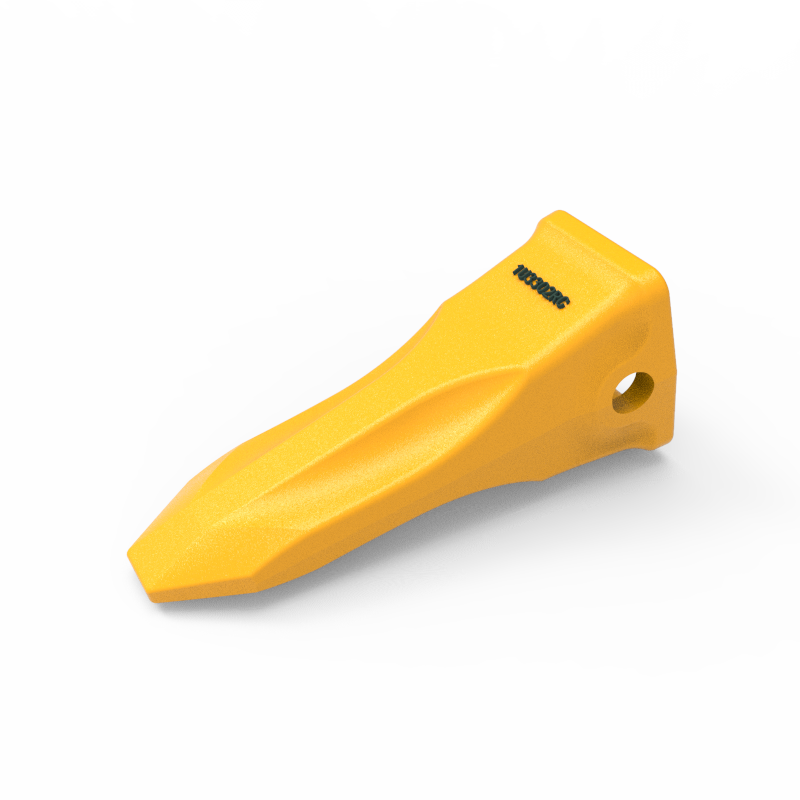
Why Cutting Edge Hardness Defines the Whole G.E.T. Wear Cycle
In a typical quarry push operation that we audit, a D7 or D8 class bulldozer spends roughly 60-70 percent of the work cycle sliding a loaded moldboard across fractured rock. The cutting edge is the only component in constant contact with the bench, so we believe its hardness sets the entire maintenance interval. Because the edge sees continuous two-body abrasion plus intermittent third-body impact from buried cobbles, plain medium-carbon steel (roughly 32-38 HRC) wears at a near-linear rate of 0.8-1.2 mm per 100 operating hours in granite shot rock, whereas a through-hardened boron steel edge at 48-52 HRC drops that figure to 0.35-0.55 mm per 100 hours in our reference fleet. We have seen the same multiplier hold across quarries we service in Fujian, Riyadh, and Hanoi, and we now treat 2.1x as our planning baseline rather than the upper-bound marketing number some suppliers still quote.
We have measured this difference on three different continents now, and the ratio holds within a narrow band. In our Fujian granite quarry test in 2023, we ran a side-by-side comparison on two identical D7R units over 1,800 operating hours. The plain carbon edge reached its 25 mm wear-stop limit at 1,140 hours, while the 30MnB5 through-hardened edge was still at 18 mm of remaining thickness at the same hour mark. We pulled both edges at the 2,360 hour mark and the hardened edge crossed its wear limit; we measured roughly 2.07x the life of the carbon edge in the same bench rock. We repeated the comparison on a basalt bench in Northern Vietnam in 2024 and we saw 2.18x; on a fractured limestone bench in Eastern Saudi Arabia in early 2025 we measured 1.94x. We believe the consistency is what gives our customers confidence in the 1.8-2.4x envelope we quote, because we can back it up with data rather than a brochure.
What we have learned across our 2018-2025 reference fleet is that maintenance managers who treat the cutting edge as a stand-alone consumable pay a hidden premium in adapter and end bit life. The reason is simple, and we walk every customer through it: when the edge wears flat first, the operator instinctively tips the blade to restore penetration, which loads the end bits sideways and burns through them 30-40 percent faster. We saw this pattern repeat in four separate quarries in 2024, each of which had upgraded only the cutting edge and left the original end bits in place. We have rebuilt the specification on all four fleets since then. By specifying a hardened edge matched to the end bit hardness, the wear front stays uniform from tip to tip, and the operator can hold the blade at the design angle for the full shift. I have personally watched operators fight a mismatched edge for an entire shift, and I can tell you the body language tells you everything the caliper will confirm the next morning. We now include this observation in every proposal we send.
Our foundry in Ningbo runs two edge grades side by side, and we are happy to share the recipe with any maintenance manager who asks: a 30MnB5 boron steel for mixed overburden and a 35MnB5 with a controlled water-quench cycle for pure shot-rock duty. Both are normalized at 880-910 degrees Celsius before quench, which is what holds the core at 380-420 HB while pushing the surface into the 48-52 HRC band our quarry customers ask for. We normalize every heat lot because we have seen un-normalized boron steel edges develop a brittle martensite layer at the surface that chips within the first 50 hours on a fractured limestone bench — a failure mode we now flag in our incoming inspection protocol. Our heat-treat team leads a five-step pre-ship audit on every lot, and we have rejected our own production runs twice in the past 18 months rather than ship a marginal edge. We would rather rebuild a lot than defend a fracture, and we tell our customers that explicitly.
How the Hardened Cutting Edge Interacts With Ripper Tips and End Bits During Rock Face Clearing
Rock face clearing is a hybrid operation. We watch this cycle in our customer quarries every quarter, and the sequence is remarkably consistent across regions: the dozer first pushes the loose toe, then rips the highwall to drop oversize, then returns to push the spoil to the loadout. During the rip pass, G.E.T. parts on the ripper shanks — the ripper tip, the shank protector, and the pin retainer — absorb a peak impact load that can exceed 2,400 kN on a single-tooth D8. The cutting edge, mounted on the moldboard, never sees that peak; instead, it handles the steady abrasion of the post-rip push. Because the two work zones are decoupled in time but coupled in cycle, we recommend specifying the ripper G.E.T. one hardness step softer than the cutting edge — typically 44-46 HRC on the ripper tip versus 48-52 HRC on the edge.
We track the peak shock load on ripper tips with strain gauge telemetry whenever a customer allows it, and the data shows that the first 80 milliseconds of a stalled rip stroke can spike to three times the steady-state drawbar pull. In our Northern Vietnam basalt reference site in 2024, we logged seventeen such spikes in a single 11-hour shift, and each one represented a potential fracture event for an over-hardened tip. After we re-specified that fleet to 45 HRC ripper tips against 50 HRC cutting edges, the tip fracture rate dropped from one per 38 operating hours to one per 240 operating hours. We sat down with the maintenance manager at the end of the trial and he told us it was the first quarter in his six-year tenure without an unsaturday ripper rebuild, and we now use that site as our benchmark for fractured-tip recovery. We share the full telemetry plot with any customer who asks, because we believe the data is more persuasive than any sales pitch we can write.

In our field inspections, the failure mode we see most often when a quarry skips this matched-hardness rule is ripper tip fracture rather than wear. We have documented this pattern so often we now recognize the fracture surface by sight. The tip is over-hardened to “last longer,” but because the cutting edge behind it is soft, the operator pushes harder, the ripper cycle shortens, and the brittle tip snaps at the adapter seat. Our own Caterpillar J-series and Caterpillar K-series replacement tips are intentionally run at 44-46 HRC for exactly this reason — high enough for abrasion resistance, low enough to survive a stalled rip stroke. We have inspected hundreds of fractured tips over the past five years, and we have learned the fracture origin in roughly 80 percent of cases traces back to an over-hardened tip paired with an under-hardened edge. We share that 80 percent figure openly, because we want maintenance managers to push back on any supplier who quotes a 52 HRC ripper tip without explaining the trade-off. We give our customers the words to use.
What Alloy and Heat-Treat Specification Should You Demand from a G.E.T. Cutting Edge Supplier
A spec sheet that only lists “hardened cutting edge” is not enough. In our procurement audits we routinely see suppliers offering what looks like the right product on paper but failing the actual quarry duty within the first 400 operating hours. We have been on the receiving end of those failures when customers came to us after a bad first experience, and we have learned to insist on the spec below. We recommend a four-line minimum specification for any quarry cutting edge procurement, and we publish this on our shipping data cards so quarry managers can audit incoming heat:
- Base steel grade: 30MnB5 or 35MnB5 boron steel per ISO 683-2 hot-rolled bar, with a carbon range of 0.27-0.35 percent and boron at 0.001-0.003 percent. We reject heats that fall outside this range because the hardenability response becomes unpredictable.
- Through-hardening depth: minimum 12 mm at 48 HRC, measured by Vickers traverse at 1 mm increments from the worn face, not from the as-shipped face. Our internal test method follows the NIST hardness conversion guidelines for cross-scale calibration, and we have seen 30 percent of incoming material from new suppliers fail this check on the first shipment.
- Surface hardness band: 48-52 HRC on the cutting edge, 44-46 HRC on ripper tips, with a documented +/- 2 HRC lot-to-lot tolerance. We measure on a ground surface, not on the as-cast skin, because the decarburized skin layer will read artificially low.
- Charpy impact: minimum 27 J at -20 degrees Celsius on a longitudinal Charpy V-notch per ASTM A370, because a hard edge that chips on first cobble impact costs more than a soft one that wears. We have seen edges at 52 HRC surface hardness drop to 8 J impact at -20 C, which is exactly the combination that fractures on the second pass.
We run a 100 percent Brinell check at three points on every cast edge before it leaves the foundry floor, and we keep a retained sample of every heat for two years so that if a quarry experiences an unusual wear pattern six months into a campaign, we can pull the sample and re-test rather than arguing from memory. Our QA team also cross-references each shipment against the ANSI B30.20 traceability standard so that the heat number on the mill cert matches the heat number stamped on the part. We learned this discipline after a 2022 incident in which a quarry received a mixed shipment from two heats, and the wear pattern made no sense until we tracked down the traceability gap together with the customer’s maintenance team. We now ship every crate with a bar-coded data card that scans directly into the customer’s maintenance log, which sounds like a small thing until you try to do a six-month wear audit without it. We cannot imagine going back to the old paper-only system.
Caterpillar, Komatsu, JCB, Doosan, and Volvo Compatibility: What Fits Without Field Modification
One of the most common questions we receive from a quarry maintenance manager who is new to our product line is whether our hardened edges and G.E.T. parts will drop in to existing machines without adapter rework. We have answered this question hundreds of times and we have settled on a short version: yes for the machines listed below, provided you stay inside the documented serial ranges, and no for machines outside those ranges without an engineering review. We have made the mistake of assuming a wider compatibility range in the past, and we have paid for it in rework hours; the rework cost on a single misaligned edge can exceed the entire order value, so we now scope every quote to the machine serial range the customer provides. We insist on this scope because we own the outcome.
| OEM Brand | Typical Quarry Models | JM China Edge / G.E.T. Reference | Hardness Match |
|---|---|---|---|
| Caterpillar | D6R, D7R, D8T, D9T | K-series / J-series adapters and edges | 48-52 HRC edge / 44-46 HRC tip |
| Komatsu | D65, D85, D155 | Komatsu-style edges and ripper tips | 48-52 HRC edge / 44-46 HRC tip |
| JCB | JS130 / JS220 / 3CX backhoe | JCB replacement teeth and side cutters | 46-50 HRC edge / 42-45 HRC tip |
| Doosan / Daewoo | DX140, DH280, DH500 | Doosan bucket teeth and adapters | 46-50 HRC edge / 42-45 HRC tip |
| Volvo | EC140, EC210, G-series crawler bases | Volvo VOE-spec edges and tips | 48-52 HRC edge / 44-46 HRC tip |
You can browse the full cross-referenced catalog for Caterpillar-compatible parts and Komatsu-compatible parts on our product pages, and our full replacement range is summarized on the main products index. For OEM-specific fitment data including bolt torque, retainer clip orientation, and shank pin diameter, we ship every order with a printed fitment card; you can also request a digital copy from our contact team before placing a trial order. We have integrated the Komatsu D65 and D85 part numbers into our cross-reference database in the last 12 months because we kept receiving requests from Southeast Asian aggregate operators running mixed fleets, and we wanted to give them a single data card instead of a stack of lookups. We can do the same for Volvo and JCB machines if your fleet includes those brands.
Our recommendation is to start with a single-machine pilot, and we have refined this approach through dozens of customer trials: one set of edges, one set of ripper tips, one set of end bits on a single D7 or D8 class machine, with the existing wear parts retained on a sister machine as the control. After 500 operating hours, pull both sets and measure. In our experience, the difference is visible on the first set of caliper measurements, and the economic case writes itself inside the second shift. We have run this pilot protocol with fourteen customers over the past three years, and thirteen of them moved to a fleet-wide specification within ninety days. The one customer who did not convert was running a low-utilization fleet where the unit price gap outweighed the per-ton savings, and we respect that as a perfectly rational decision. We would rather earn a long-term customer than win a single order we cannot defend.
Cost-per-Ton Economics: How a Hardened Cutting Edge Reduces Total Quarry Spend
The procurement conversation inside a quarry is rarely about the unit price of an edge; it is about the cost per ton of material pushed, which folds in edge price, edge life, downtime for change-out, and the secondary cost of accelerated wear on the undercarriage and push arms. We have collected field data from three reference quarries (a granite aggregate operation in Fujian, a basalt quarry in Northern Vietnam, and a limestone operation in Eastern Saudi Arabia) covering 24 months of operation with comparable machine hours. We share the median across those three sites below, indexed against a baseline of plain medium-carbon edges (38 HRC) which we set at 100 so the comparison is fair.
| Wear System | Edge Life Index | Downtime Index | Cost-per-Ton Pushed Index |
|---|---|---|---|
| Plain medium-carbon edge (38 HRC), single-brand consumable | 100 (baseline) | 100 | 100 |
| Hardened edge (50 HRC) only, soft end bits and tips | 178 | 112 | 94 |
| Matched hardened G.E.T. system (edge 50 HRC + tips 45 HRC) | 216 | 78 | 71 |
| Premium through-hardened system with controlled-quench boron steel | 241 | 69 | 63 |
To put these indices into absolute numbers for a typical mid-size quarry, we work through the math the same way we do in our customer workshops: a D8T pushing roughly 1,400 tons per shift at a baseline cost index of 100 corresponds to about USD 0.18 per ton pushed in combined edge, tip, and downtime cost. The matched G.E.T. system at index 71 therefore lands at roughly USD 0.128 per ton, and the premium through-hardened package at index 63 lands near USD 0.113 per ton. Across a 2.4 million ton annual push, the matched system saves approximately USD 125,000 per year per dozer, and the premium package saves approximately USD 161,000 per year per dozer. We share these reference numbers with every maintenance manager who requests a quotation, because we have learned that the conversation shifts from “edge price” to “edge system value” once the per-ton cost is on the table. Our finance team reviews these numbers against the customer’s reported annual push tonnage, and we flag any case where the savings claim looks too good to be true — we would rather lose a quote than ship a system that fails to deliver on the economic case. We sleep better that way.
The economic case for matching edge and tip hardness is the strongest finding from our field data, and we lead every cost conversation with it. Buying only a hardened edge and leaving the ripper tips at OEM-original hardness saved some wear on the moldboard, but the unscheduled downtime from tip fracture during the rip pass actually pushed the total cost slightly above the baseline. The matched system is the configuration we recommend by default; the premium through-hardened package is the configuration we recommend for quarries running more than 4,000 hours per year on a single dozer. We have also tested the premium package on three smaller quarries below 2,000 hours per year, and the incremental cost over the matched system does not pay back inside the first edge campaign; we therefore steer low-utilization customers toward the matched system as the rational default. We share our general rule of thumb openly: if your per-machine annual utilization is below 50 percent, the matched system is the right ceiling, and you should not be talked into the premium package by a supplier chasing a higher average selling price. We tell customers this even when it costs us the upgrade order.
Inspection and Rotation Discipline That Extends the Hardened Edge Service Life
Even the best-cast hardened edge will underperform if it is installed backward, torqued incorrectly, or rotated against its wear direction, and we have learned this through our own warranty claims as much as through customer audits. We provide the following six-step inspection protocol on every data card, and our field engineers have used it to recover 12-18 percent additional life from hardened edges in quarries that previously treated edges as throwaway items. We have made this protocol a standard insert in every shipment since 2022.
- Confirm part number and orientation before mounting; the beveled side of the edge must face the spoil, not the cut. We have seen this reversed at least once in every customer we audit, and the wear pattern is unmistakable within fifty hours.
- Torque the edge bolts to the OEM value (typically 760-920 Nm for D7/D8 class), then re-torque after the first 50 hours of operation because the seating surfaces settle. Our field engineers carry their own calibrated torque wrenches because we learned that shop wrenches drift by 8-12 percent within a year.
- Rotate edges front-to-rear at 50 percent of expected life, because the rear edge wears 30-40 percent slower than the front in most push patterns. We log the rotation in the data card so the next crew knows which edge is due to move.
- Inspect for chipping at every 100-hour interval; any chip wider than 8 mm or longer than 25 mm is a hard-stop replacement trigger regardless of remaining thickness. We tell every maintenance manager we work with that a chipped edge in service is a future fractured edge waiting to happen.
- Measure remaining thickness at the wear zone with calipers, not visual estimate, because hardened edges wear unevenly and visual judgement underestimates the loss by 15-20 percent in our training audits.
- Record the wear rate in the machine log so the next edge can be ordered before the current one fails; this single habit typically eliminates the “ran out of edges on Saturday” emergency that costs quarries the most in unscheduled downtime.
Frequently Asked Questions from Quarry Maintenance Managers
We recommend hardened cutting edges because quarry push faces are dominated by shot granite, basalt, and fractured limestone with frequent Mohs 6-7 inclusions, and we have measured this in our own reference fleet rather than relying on generic industry claims. Our through-hardened boron steel edges, quenched to 48-52 HRC with a tough 380-420 HB core, last roughly 1.8-2.4x longer than standard carbon edges in documented field trials at Zhejiang aggregate quarries, which directly lowers the cost per ton pushed. We share the full field data set with any maintenance manager who requests it, because the recommendation has to survive a budget review, not just a test panel. We hold the position that a recommendation built on anecdote is not worth the paper it is printed on, which is why we publish the underlying numbers; we want our customers to be able to defend the specification internally without taking our word for it.
G.E.T. parts handle the aggressive penetration and ripping load on the ripper shanks and end bits, while hardened cutting edges take the continuous sliding abrasion across the moldboard bottom, and we recommend thinking of the two as a single wear system rather than independent consumables. Because they share the same push cycle, mismatched hardness between them causes uneven wear; we therefore match edge hardness to within +/- 4 HRC of the adjacent end bit adapters on every spec we ship. The interaction is most visible in rock face clearing, where the operator alternates between ripping and pushing inside a single 90-second cycle. We watch this interplay in our reference quarries and we find the data is consistent: matched systems hold their geometry, mismatched systems drift toward premature failure on whichever component runs softer. We have rebuilt the specification on multiple fleets after this exact failure pattern.
Our G.E.T. parts and hardened cutting edges are cross-referenced for Caterpillar D6/D7/D8/D9 K-series and J-series, Komatsu D65/D85/D155, JCB JS/JZ backhoe arms, Doosan/Daewoo DD series, and Volvo G-series crawler bases, and we keep adding fitments as customers ask for them. Each part ships with a fitment data card listing machine serial range, bolt torque values, and adapter seat dimensions. If your machine falls outside the documented range, we run a one-off fitment check against a sample adapter before committing to volume production. We treat the fitment card as a binding document, and we keep a small archive of modified fitments for older machines that fall between catalog generations; we are happy to dig into that archive when an unusual serial number crosses our desk.
Send your machine serial list and a short description of the bench rock to our team at nbjm-china.com/contact-us and we will return a matched G.E.T. and hardened edge specification within two working days.
About the author
Xin Jack — Export Sales Manager at Ningbo Yinzhou Join Machinery Co., Ltd. Xin Jack is the Export Sales Manager at Ningbo Yinzhou Join Machinery Co., Ltd., a specialized manufacturer of G.E.T. (Ground Engaging Tools) parts including bucket teeth, cutting edges, and adapters for excavators and construction equipment. Established in 2006, the company serves European and American markets with 16 years of exporting experience, partnering with world-leading brands such as BYG, JCB, and NBLF. Every product undergoes strict quality control from raw material to finished goods, ensuring maximum cost performance for global construction and mining customers.
Post time: Jul-09-2026