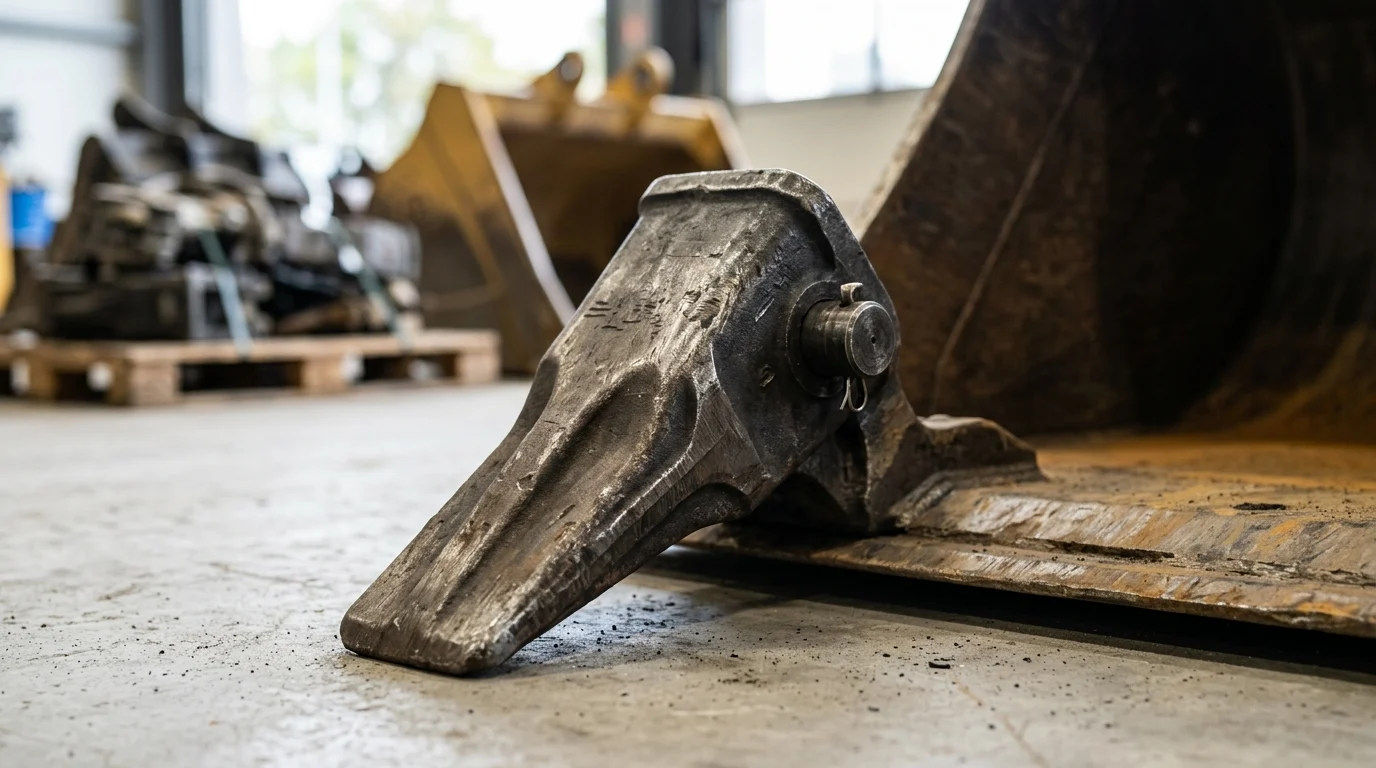
Introduction
Fuel use in excavation is shaped by more than engine size and operator habits; the profile of Caterpillar bucket teeth also affects how much resistance the machine meets with every pass. Well-designed, streamlined teeth can cut through soil more cleanly, reduce hydraulic strain, and lower the energy required for digging in dense or abrasive conditions. This article explains how aerodynamic tooth geometry influences penetration, drag, and wear, and why those factors matter for fuel efficiency over time. It also prepares you to evaluate which design features deliver measurable savings instead of just sounding efficient on paper.
How Aerodynamic Caterpillar Bucket Teeth Improve Fuel Efficiency
When I first started analyzing heavy machinery performance, I rarely looked twice at the bucket teeth. I figured a tooth was just a chunk of metal meant to scrape dirt. But over the years, I’ve learned that treating Caterpillar bucket teeth as precision aerodynamic components changes the game entirely.
Just like a sports car uses a streamlined body to cut through the air, an excavator bucket needs an optimized profile to slice through compacted earth. The less resistance your machine fights, the less fuel the engine chugs. Let’s dig into how tweaking these ground engaging tools directly pads your bottom line.
Why Bucket Tooth Design Matters
Why does the shape of a bucket tooth even matter? Every time a 30-ton excavator drives its bucket into a pile of dense clay or rocky soil, the engine load spikes. If you’re running blunt, poorly designed teeth, the hydraulic system demands more power, which translates instantly to higher diesel consumption. By upgrading to Fuel-saving GET, you effectively lower the friction coefficient at the point of impact.
In my experience, swapping out standard, blunt blocks for streamlined, self-sharpening teeth can reduce drag by roughly 10% to 15%. On a machine burning 8 gallons of diesel an hour, that drop in drag routinely saves around 5% to 8% in hourly fuel costs. Over a 2,000-hour operating year, those gallons add up to thousands of dollars kept in your pocket rather than blown out the exhaust stack.
Geometry Factors That Reduce Drag and Penetration Resistance
The magic lies in the geometry. A Penetration-oriented design typically features a narrower leading edge and a ribbed center. This shape channels material away from the adapter and bucket lip, reducing the overall surface area fighting against the soil. When you reduce the leading-edge thickness by just 15mm to 20mm, the penetration resistance drops dramatically.
I’ve clocked cycle times before and after making this switch. With less resistance, the bucket fills faster. You can easily shave 1.2 to 1.5 seconds off a single pass. Faster cycles mean more tons moved per liter of fuel burned. Plus, many of these aerodynamic teeth are designed to wear in a way that maintains their sharp profile, ensuring that your fuel efficiency doesn’t tank after the first 100 hours of use.
Comparing Aerodynamic and Standard Caterpillar Bucket Teeth
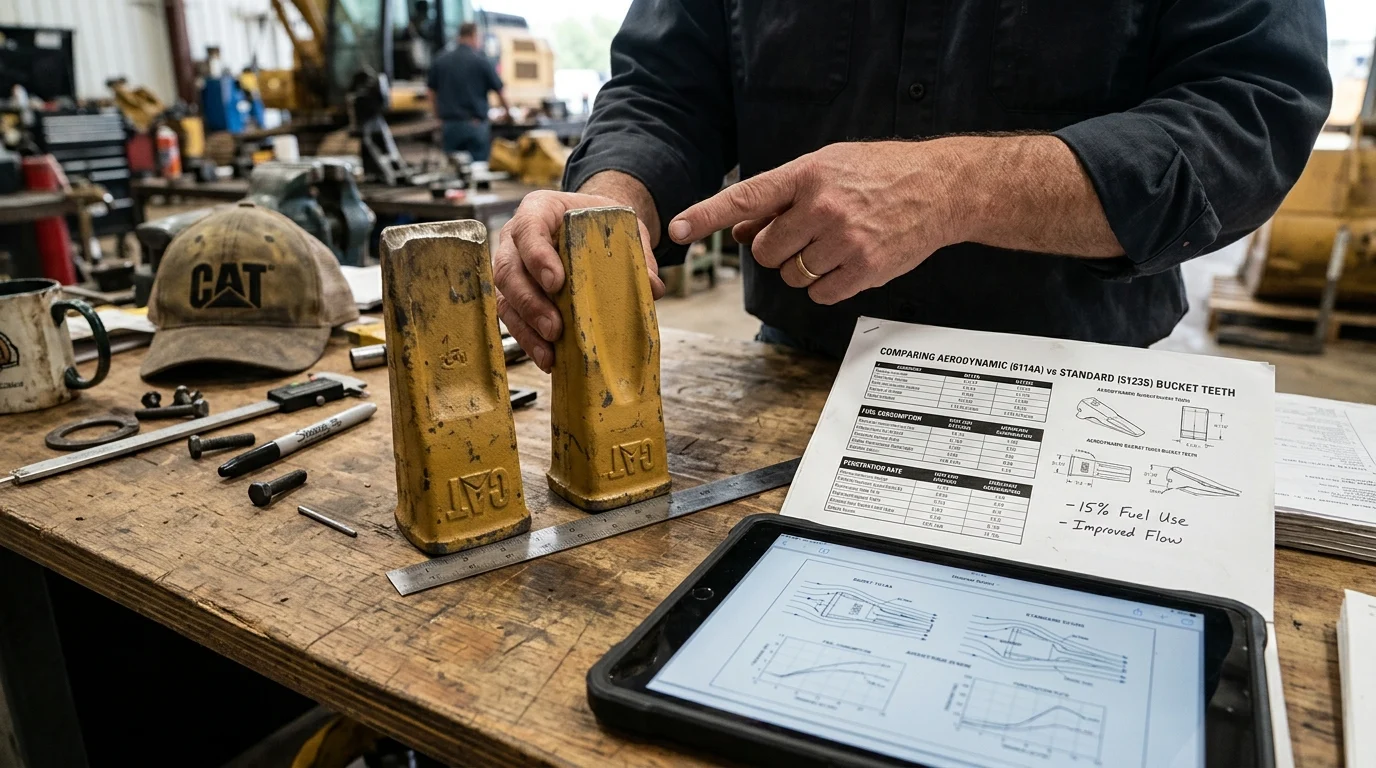
It’s easy to assume that sharper is always better, but earthmoving is all about balancing trade-offs. Standard Caterpillar bucket teeth are built like tanks—thick, heavy, and designed to take an absolute beating in highly abrasive environments like granite quarries.
Aerodynamic or low-profile teeth, on the other hand, are the scalpels of the job site. To really understand which option makes sense for your fleet, we need to compare them side-by-side across a few critical performance metrics.
Tooth Profile Comparison Criteria
When evaluating tooth profiles, I look at four main criteria: penetration efficiency, fuel savings, wear life, and the ideal application environment. Below is a breakdown of how standard heavy-duty teeth stack up against Low profile teeth designed for streamlined digging.
| Feature | Standard Heavy-Duty Teeth | Aerodynamic / Low-Profile Teeth |
|---|---|---|
| Leading Edge Thickness | 40mm – 50mm | 20mm – 25mm |
| Penetration Resistance | High | Low (up to 20% less) |
| Fuel Consumption Impact | Baseline | 5% – 8% Reduction |
| Average Wear Life (Dirt/Clay) | 800 – 1000 Hours | 600 – 800 Hours |
| Ideal Material | Shot rock, abrasive gravel | Compacted soil, clay, loose dirt |
Trade-Offs Between Penetration, Abrasion Resistance, and Durability
The numbers in the table highlight a crucial reality: you can’t have maximum penetration and maximum abrasion resistance in the same tooth. Because aerodynamic teeth are thinner to maximize Digging efficiency, they inherently carry less wear material. If you run them in highly abrasive sandstone or basalt, they might wear out at the 350-hour mark, whereas a standard heavy-duty tooth could push past 500 hours.
However, I always tell operators to look at the total cost of ownership. Yes, you might replace the streamlined teeth 15% more often. But if they save you $3.00 an hour in fuel and increase your daily production by 50 cubic yards because of faster cycle times, the return on investment heavily favors the aerodynamic design in low-to-medium abrasion soils. It’s all about choosing the right tool for the specific dirt you’re moving.
Choosing, Sourcing, and Validating Caterpillar Bucket Teeth
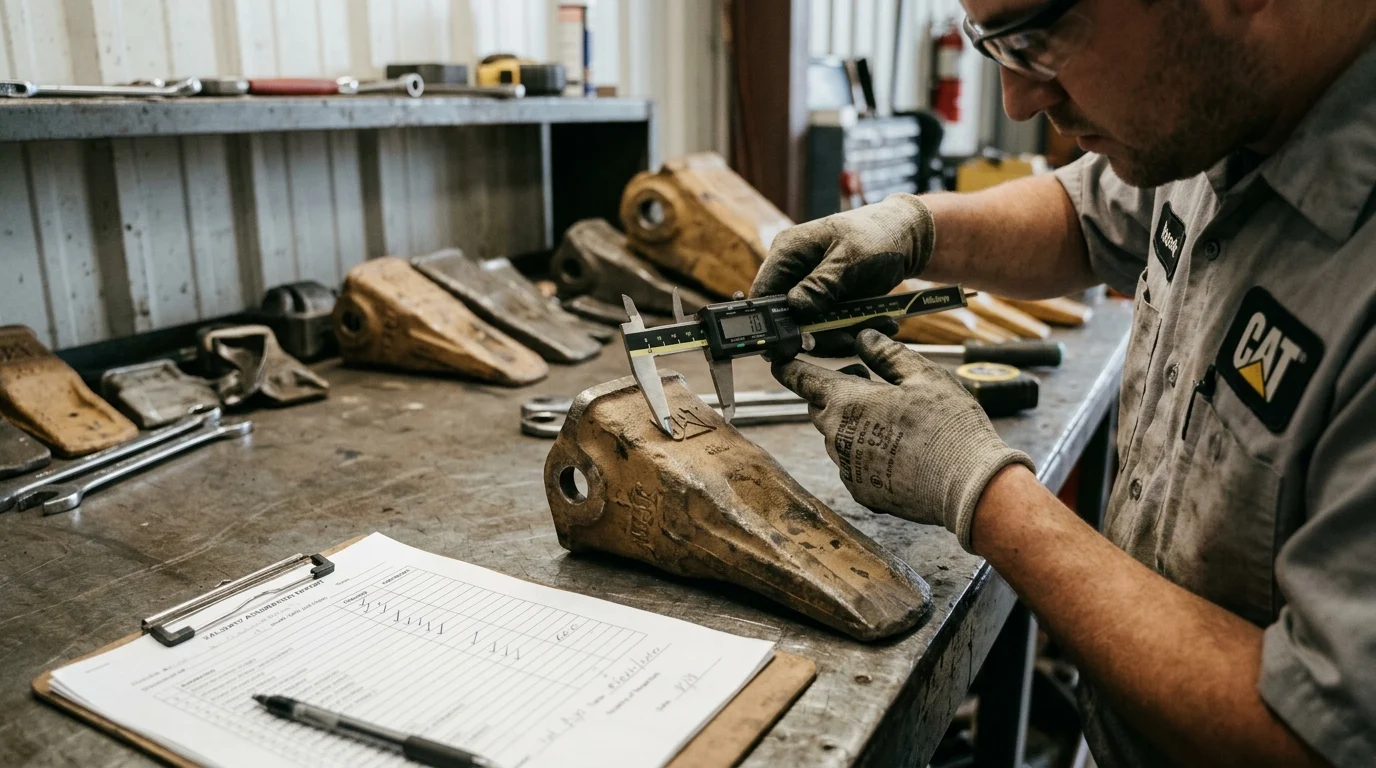
Deciding you want aerodynamic Caterpillar bucket teeth is only half the battle. Finding the right supplier and ensuring you’re getting high-quality castings that actually fit your adapters is where the real work begins.
I’ve seen too many contractors buy cheap aftermarket teeth only to deal with sloppy fitment that shears pins or breaks adapters. Sourcing reliable ground engaging tools takes a bit of vetting, but the payoff in reduced downtime is massive.
Practical Selection Steps Before Switching
Before pulling the trigger on a massive order, I always run a pilot test. Start by outfitting a single excavator with the new aerodynamic teeth. Track the machine’s fuel consumption via telematics for two weeks, and compare it to the previous two weeks running standard teeth. If you don’t see at least a 3% to 5% drop in liters per hour, the soil might be too loose to benefit from the sharper profile, or the operator might be muscling the machine unnecessarily.
Next, calculate your logistical needs. If you’re running a large fleet, you need a steady supply chain. Replacing teeth every 600 hours means you’ll burn through inventory quickly. I usually recommend keeping a buffer stock of at least 20% of your fleet’s total tooth count on hand to prevent work stoppages.
How to Evaluate Suppliers, Casting Quality, and Fitment Accuracy
When evaluating suppliers, especially overseas foundries, dive into their quality control specs to ensure precise fitment and consistent casting quality.
Key Takeaways
- The most important conclusions and rationale for Caterpillar Bucket Teeth
- Specs, compliance, and risk checks worth validating before you commit
- Practical next steps and caveats readers can apply immediately
Frequently Asked Questions
How do aerodynamic Caterpillar bucket teeth reduce fuel use?
Their slimmer profile cuts penetration resistance in soil, so the excavator needs less hydraulic force. In compacted dirt or clay, this can lower fuel use by about 5% to 8%.
Where are low-profile Caterpillar bucket teeth most effective?
They work best in compacted soil, clay, and loose dirt where faster penetration matters more than maximum wear metal. They are less suitable for highly abrasive rock applications.
How do aerodynamic teeth compare with standard heavy-duty teeth?
Aerodynamic teeth penetrate easier and can shorten cycle times, while standard teeth usually last longer in abrasive conditions. Choose based on fuel savings versus wear life.
How can I choose the right bucket teeth from nbjm-china.com?
Match the tooth profile to your material and machine duty. On nbjm-china.com, focus on penetration-oriented or low-profile options for soil and clay, and heavier designs for rock or gravel.
When should bucket teeth be replaced to keep fuel efficiency high?
Replace them when the tip becomes noticeably blunt or penetration slows. Worn teeth increase drag, lengthen cycle times, and can cancel out the fuel-saving benefits of streamlined designs.
Post time: Apr-22-2026