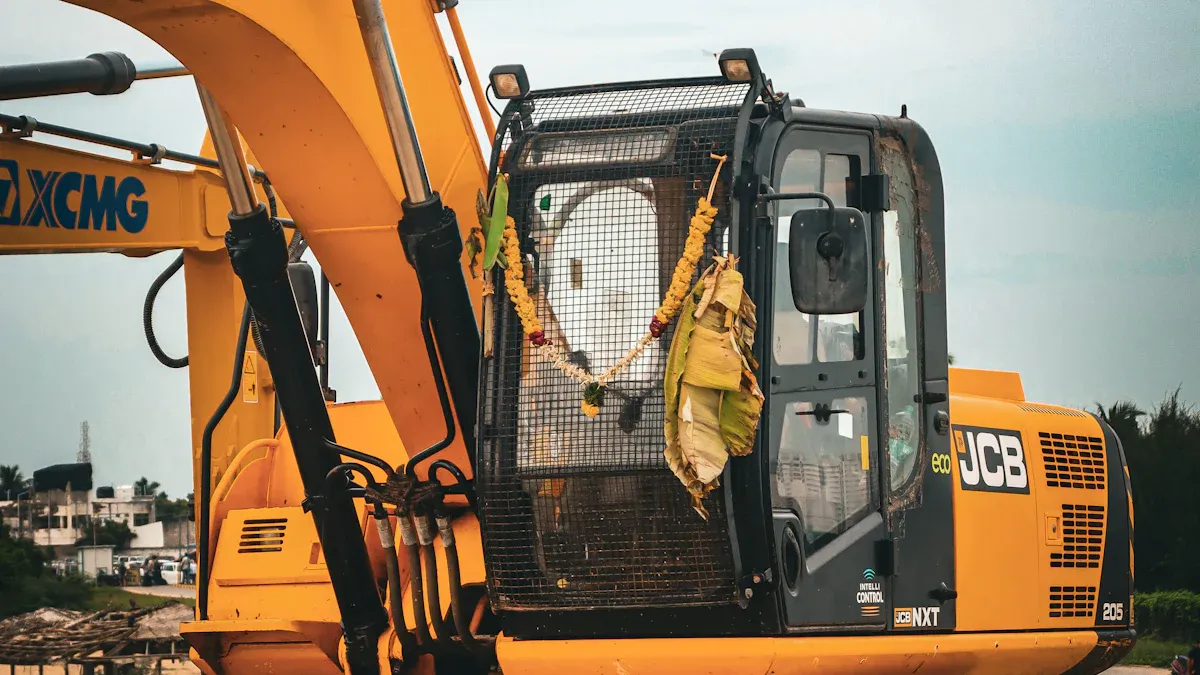
Choosing the right CAT Bucket Teeth unlocks superior digging efficiency and extends equipment life. Optimal teeth selection significantly impacts operational performance for excavators. Optimized teeth can increase digging speed by up to 20%, leading to substantial cost savings for operators. This upgrade ensures excavators perform at their peak, enhancing overall productivity and machine longevity.
Key Takeaways
- Choose the right CAT Bucket Teeth for your excavator. Match them to the material you dig. This makes your machine work better and last longer.
- Pick strong and durable CAT Bucket Teeth. Make sure they fit perfectly. This helps prevent damage and keeps your excavator running smoothly.
- Check your CAT Bucket Teeth often. Replace them when they wear out. This keeps your excavator working well and saves you money.
Understanding the Impact of CAT Bucket Teeth
What Are CAT Bucket Teeth and Their Role?
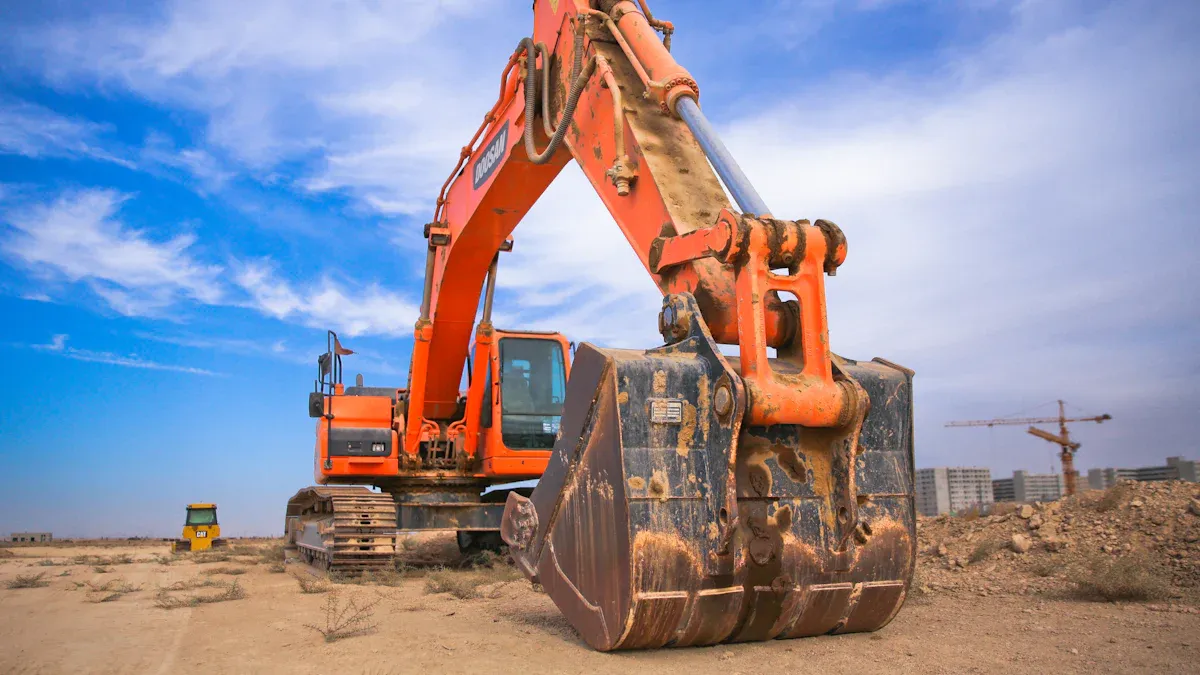
CAT Bucket Teeth are critical components attached to an excavator’s bucket. They perform the initial ground penetration, breaking up material and facilitating efficient loading. These essential parts include the teeth themselves, locks, and pins. Alternatively, some systems comprise a bucket tooth, a pin, and a keeper (retaining ring). Each component works together to secure the tooth firmly to the bucket, ensuring it withstands the immense forces encountered during digging operations. Their primary role involves maximizing the excavator’s digging force and protecting the bucket’s structural integrity from wear and tear.
Why Optimal CAT Bucket Teeth Selection Matters
Optimal selection of CAT Bucket Teeth significantly influences an excavator’s performance and operational costs. Choosing the wrong Ground Engaging Tools (GET) can lead to reduced fuel efficiency. Incorrect GET selection or allowing teeth to exceed 100% wear increases the contact surface of the bucket, adding stress to the system. This increased resistance forces the machine to work harder, demanding more horsepower and fuel. Worn bucket teeth decrease penetration effectiveness, compelling the excavator to exert more effort, which directly results in higher fuel consumption.
The long-term financial implications of using sub-optimal teeth are substantial. Caterpillar’s bucket specialist, Rick Verstegen, notes that the correct bucket on a wheeled loader or hydraulic excavator can reduce fuel consumption by up to 15% during quarry face-loading. Rob Godsell, Caterpillar’s GET specialist, highlights that Cat Advansys next-generation hammerless GET can make bucket tips last up to 30% longer. Furthermore, controlled production studies showed that merely changing the profile of bucket tips on a Cat 980 wheeled loader resulted in moving 6% more material per hour and 8% more material per liter of fuel burned. Proper selection leads to reduced fuel consumption, extended equipment lifespan, minimized repair costs, reduced downtime, and increased project profitability.
Choosing the Right CAT Bucket Teeth for Performance

Selecting the correct CAT Bucket Teeth significantly enhances an excavator’s operational efficiency and extends its service life. Operators must consider several factors to optimize performance and minimize wear.
Matching CAT Bucket Teeth to Material Type
The type of material an excavator handles directly influences the optimal bucket tooth design. Different ground conditions require specific tooth profiles for maximum penetration and wear resistance.
For instance, excavating in abrasive rock demands specialized teeth. Rock bucket teeth designed for heavy-duty penetration feature a sharp spade design and a slimmer profile. This allows for improved entry into dense material. These teeth also boast approximately 120% more material in high wear areas, ensuring superior durability. An aggressive leading edge design facilitates deep digging. Manufacturers construct these teeth from high-strength materials like hardened steel or tungsten carbide, offering greater nose strength and extended fatigue life. Other rock bucket teeth, suitable for high impact and abrasion, utilize alloy steel. This provides stable quality, longer wear life, and better reliability in conditions involving both high impact and severe abrasion. High-spec alloy steel and precise heat treatment give these teeth both wear-resistant and impact-resistant properties. This ensures endurance against constant pounding and scraping. Specialized rock bucket teeth, such as the CAT ADVANSYS™ SYSTEM and CAT HEAVY DUTY J TIPS, cater to quarry applications. These systems offer maximum penetration and superior wear life in very abrasive materials. They use proprietary alloys and heat treatments to achieve superior wear and impact resistance. Heavy-duty teeth, ideal for high impact and severe abrasion in rocky mining or demolition, are made from advanced alloy steels like Hardox 400 or AR500. These materials offer a Brinell hardness of 400-500 and a thickness of 15-20mm. Tungsten carbide-tipped teeth provide the highest wear resistance for specialized, highly abrasive tasks. Excavator abrasion teeth also feature extra wear material, making them suitable for extreme digging in abrasive materials such as sand or limestone.
Conversely, excavating loose soil and sand requires different considerations. General-purpose buckets, also known as digging buckets, are versatile and perform well on soil. They are suitable for moving materials such as dirt, sand, topsoil, clay, gravel, loam, silt, and ground with loose gravel or stones. Cat® excavator buckets are available in general-duty varieties, indicating their suitability for loose soil and sand. Chisel Teeth are also recommended for general hauling, leveling, and trenching tasks. They are ideal for use in loosely compacted soil.
Prioritizing Durability in CAT Bucket Teeth
Durability is a critical factor in bucket tooth selection. Robust teeth reduce downtime, lower maintenance costs, and increase overall productivity. The material composition of the teeth directly impacts their durability.
Advanced alloy steels, such as Hardox 400 and AR500, are used for heavy-duty CAT Bucket Teeth. These steels offer high hardness, with Hardox 400 reaching up to 600 HBW and AR400 up to 500 HBW. Forged teeth hardness often reaches 48-52 HRC, contributing to overall durability. Manganese steel is preferred for high impact applications. It absorbs significant shock without fracturing. High manganese content (10-14% by weight) provides excellent work-hardening capabilities. The surface hardens under impact while the core remains tough, offering superior resistance to impact wear. Chromium steel excels in conditions requiring high abrasive wear resistance. Chromium forms hard carbides within the steel matrix, which resist scratching and gouging from abrasive materials. Hardfacings often incorporate varying chromium percentages (e.g., 1.3% to 33.2%) to improve wear behavior. Higher chromium content generally leads to increased hardness and better abrasive resistance. Nickel-chromium steel offers balanced performance by combining the benefits of both elements. Nickel enhances toughness and resistance to cracking. When combined with chromium, it contributes to balanced strength, which is crucial for bucket teeth applications.
Ensuring Correct Size and Fit for CAT Bucket Teeth
The correct size and fit of bucket teeth are paramount for both excavator performance and operational safety. An improper fit can lead to numerous problems.
Operators may experience the loss of teeth during operation, leading to costly maintenance and downtime. Premature bucket tooth loss or breakages often occur due to incorrect matching of teeth and adaptors, or worn adaptors. Excess movement of new aftermarket teeth on the adaptor indicates worn adaptors or poor tooth design. Safety and operational efficiency are compromised if bucket teeth are too small. This leads to loss or breakage of teeth and adaptors. If teeth are too large, digging becomes difficult due to excessive metal. Frequent failures or rapid wear result in significant downtime and reduced productivity, increasing labor expenses. An improper fit can also damage the bucket’s adapters, leading to more expensive repairs. Increased wear on adapters and reduced digging efficiency result in more frequent maintenance and machine downtime. Therefore, ensuring the correct size and a snug fit for all bucket teeth components is essential for optimal operation.
Acquiring and Maintaining Your New CAT Bucket Teeth
Reputable Suppliers for CAT Bucket Teeth
Selecting a reputable supplier for your excavator’s ground engaging tools is crucial. A reliable supplier offers more than just parts; they provide expertise and assurance. They demonstrate material transparency, offering detailed metallurgical reports and specifications. This avoids vague claims about product composition. Furthermore, they possess a deep understanding of manufacturing processes and quality control measures, ensuring consistent product quality. A comprehensive inventory is another hallmark, providing a wide range of tooth styles, adapter systems, and sizes to suit various machines and applications. Their staff offers technical expertise, giving insightful recommendations based on specific application needs. This makes them a valuable knowledge source. Supply chain reliability, including robust logistics, significant stock, and demand forecasting, ensures timely delivery of parts. Finally, a clear warranty against manufacturing defects and ongoing support demonstrates a commitment to long-term customer relationships.
While OEM suppliers, such as Caterpillar, guarantee perfect fit and high quality, they often represent the most expensive option. A top-tier aftermarket supplier, however, can offer OEM-equivalent or even superior quality at a more competitive price. These suppliers often innovate faster and provide specialized designs. For aftermarket suppliers, the hallmarks of transparency, expertise, and reliability become even more critical.
Buyers should look for specific quality assurances. ISO 9001 certification for quality management systems indicates a commitment to international quality standards. Material test reports (MTRs) verify alloy composition, while heat treatment certifications confirm proper material processing. Verification of alloy composition ensures the product meets specified material properties. Suppliers with high buyer reorder rates, often exceeding 30%, demonstrate consistent quality. Strong review scores, typically 4.8 or higher, also indicate reliability. OEM-compliant teeth, often identified by matching CAT numbering systems, assure compatibility. For example, Cat Style Rock Teeth for Excavator Bucket 7T3402RC and Cat Style Excavator Bucket Teeth Adapters 9N4302 both carry ISO9001:2008 certification.
Tip: Genuine parts feature clear, precise Caterpillar logos, part numbers, and manufacturing codes, deeply stamped or cast into the metal. Counterfeit markings often appear blurry or inconsistent. High-grade steel results in a consistent, uniform, and smooth finish, with substantial weight and density. Reputable suppliers ensure their products lack rough edges, pitting, or uneven coloration. Genuine teeth exhibit precise dimensions, contours, and angles that perfectly match official specifications and corresponding adapters, ensuring optimal performance and safety.
Exploring CAT J-Series Bucket Teeth
The CAT J-Series bucket teeth represent a popular and effective choice for many excavator operators. Engineers designed these teeth for enhanced digging performance, supporting maximum excavation efficiency. Their robust and sturdy profile provides excellent breakout force and performs reliably in various digging conditions. This design also contributes to an extended lifespan, prolonging the durability of the teeth and reducing maintenance costs. The J-Series offers versatile applications, suitable for a wide range of environments and workloads.
The solid construction of J-Series teeth offers dependable wear life in general applications and effectively resists impact and abrasion. A reliable side pin retention system ensures secure tooth attachment and offers outstanding retention capabilities. Manufacturers use high-quality materials resistant to wear and tear, making them suitable for tough and extreme conditions, especially in heavy-duty construction. The optimized design allows for effortless surface penetration, facilitating swift excavation and preventing damage. This design also prevents materials from getting stuck between teeth, which improves overall performance. The J-Series system contributes to improved productivity and reduced downtime.
Operators also appreciate the practical advantages of J-Series teeth. They often have a lower initial purchase price, making them an attractive option for budget-conscious operations. Their wide compatibility with older Caterpillar equipment is another benefit, as many existing buckets are designed to accept J-Series adapters. This makes them a straightforward replacement option.
The following table outlines the compatibility of various J-Series bucket teeth with different excavator tonnage classes:
| J-Series Bucket Teeth | Compatible Excavator Tonnage Class | Example Excavator Models/Usage |
|---|---|---|
| J200 | 0-7 ton | Mini excavators, light-duty scenarios |
| J250 | 6-15 ton | Mini excavators, medium-intensity operations |
| J300 | 15-20 ton | Excavators (e.g., model 4T-1300), construction, mine stripping |
| J350 | 20-25 ton | Excavators, heavy-duty operations, large construction, open-pit mining |
| J460 | ~30 ton | Excavators, heavy-load scenarios |
| J550 | 40-60 ton | Large excavators, ultra-heavy-load applications |
| J600 | 50-90 ton | Large excavators, ultra-heavy-load applications |
| J700 | 70-100 ton | Large excavators, ultra-heavy-load applications |
| J800 | 90-120 ton | Extra-large excavators, ultra-heavy-load applications |
Installation and Maintenance of CAT Bucket Teeth
Proper installation and diligent maintenance significantly extend the life and performance of your excavator’s bucket teeth. Regular inspections of CAT Bucket Teeth are essential for monitoring wear patterns and ensuring optimal performance. Operators must consistently check for visible signs of wear, as these indicators determine when replacement becomes necessary. For medium-duty applications, such as general construction involving a mix of soft and moderately hard materials, regular inspections should occur every 100 hours. Replacement should be considered when significant wear is observed. Regular visual inspections help identify signs of wear, cracks, or other damage. Additionally, periodic measurements of tooth dimensions can help assess wear extent and predict replacement needs.
Several factors commonly cause premature wear in bucket teeth. Abrasive wear is the primary cause, involving material removal by harder particles through cutting, plowing, or rubbing. High contact pressure and friction intensify this, along with the relative hardness between the tooth material and abrasive materials like hard rock, shale, or sand. Impact and fatigue also play significant roles. High impact forces from striking hard surfaces can cause chipping, cracking, or fracturing. Cyclic loading leads to material fatigue, where repeated stress weakens the metal, eventually causing failure. Chipping and breakage are common, often exacerbated by worn adaptors, inappropriate digging conditions, aggressive operator techniques, or unsuitable tooth profiles.
Environmental factors also contribute to degradation. Moisture and chemicals can degrade material integrity and alter alloy composition, reducing wear resistance. Extreme temperatures can soften metal or make it brittle. Dust and debris accumulation contribute to three-body wear, where particles trapped between surfaces cause abrasion. Operational practices also impact tooth lifespan. Aggressive digging techniques, such as forcing the bucket or using excessive downforce, cause premature chipping and material loss. An improper angle of attack can lead to uneven wear. Lack of regular inspection and maintenance, including timely replacement and rotation of teeth, also shortens lifespan.
Proper storage of spare bucket teeth prevents degradation. Store the bucket indoors or cover it to protect it from moisture. Regularly apply anti-corrosion spray or coating on the bucket’s surface, especially if stored outdoors. Clean the bucket regularly to help prevent rust. Store bucket teeth in a dry, sheltered area. Protect them from rain and humidity to prevent rust and corrosion. Use appropriate lifting equipment when handling to avoid dropping or striking them.
Upgrading your excavator with superior CAT Bucket Teeth involves carefully matching them to material types, prioritizing durability, and ensuring a precise fit. This informed selection significantly enhances productivity and extends equipment longevity. Consistent maintenance, including regular inspections, guarantees optimal performance and maximizes your investment.
FAQ
How often should one inspect CAT bucket teeth?
Operators should inspect CAT bucket teeth every 100 hours for medium-duty applications. They must check for wear patterns and damage. This ensures optimal performance and timely replacement.
What are the benefits of using J-Series bucket teeth?
J-Series teeth offer enhanced digging performance and extended lifespan. They provide excellent breakout force and suit various workloads. Their robust design ensures reliable operation.
Can incorrect bucket teeth affect fuel efficiency?
Incorrect or worn bucket teeth reduce penetration effectiveness. This forces the excavator to work harder. Consequently, the machine consumes more fuel, increasing operational costs.
Post time: Jan-16-2026