Selecting the correct CAT tooth pin and retainer models is crucial. It maximizes equipment efficiency and minimizes downtime. Ensuring compatibility with your specific CAT bucket and tooth system is the primary factor. For instance, a 1U3302RC Caterpillar J300 pin will not fit a system needing a 4T2353RP Caterpillar J350 pin. Understanding J300/J350 pin compatibility prevents costly errors.
Key Takeaways
- Choose the right CAT tooth pin and retainer models. This helps your equipment work well and avoids problems.
- Always check your equipment model and bucket type. Then, find the correct tooth system like J-Series or Advansys.
- Use official CAT parts manuals to find exact part numbers. This makes sure parts fit and work correctly.
Understanding CAT Tooth Systems and Compatibility
Overview of CAT Ground Engaging Tools
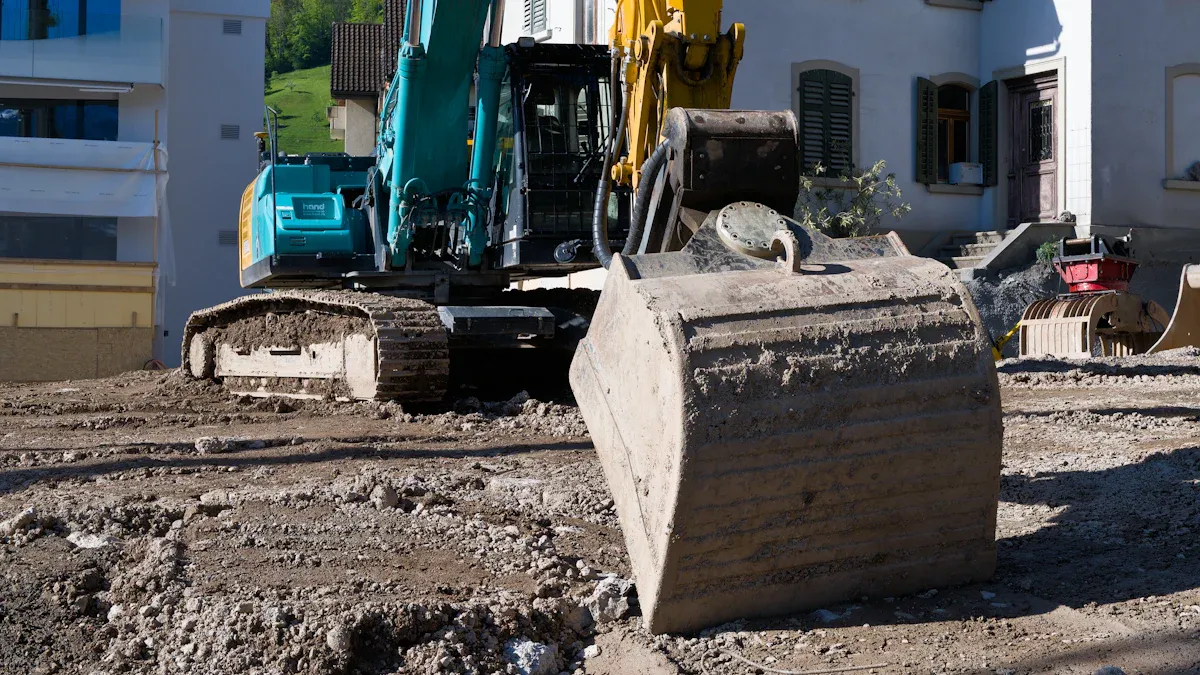
CAT Ground Engaging Tools (GET) are essential for maximizing the productivity of heavy equipment. These specialized components directly interact with the ground, performing critical tasks like digging, loading, and grading. Understanding the different types of GET helps operators select the right tools for specific jobs. CAT offers a comprehensive range of GET, including:
- Bucket Teeth: These sharp, pointed components break up and dig into hard materials. They come in various shapes and sizes for tasks like excavating and trenching.
- Cutting Edges: Located on the front of loader buckets, they cut into the ground to loosen material and create a smooth surface for scooping. They are ideal for grading or pushing loose material.
- Ripper Shanks: Designed for breaking through very hard or frozen ground, these are typically mounted on dozers and penetrate surfaces other tools cannot.
- Track Shoes: Used on tracked machinery like excavators and bulldozers, they provide traction and stability for efficient movement across diverse terrains.
- Bucket Side Cutters: Attached to the sides of a bucket, they increase width and capacity, protect the bucket sides, and enhance digging and loading.
- Adapters: These connect bucket teeth securely to the bucket, ensuring effective performance.
CAT also innovates with systems like Cat Advansys™ GET, a hammerless system for wheel loaders and excavators. It simplifies installation with integrated retention components and streamlines retrofitting. The GraderBit™ edge system offers an innovative solution for motor graders, particularly in remote or punishing applications like haul road maintenance. Its individual bits withstand significantly more punishment than standard blade edges.
Key Components: Tooth, Adapter, Pin, Retainer
Each CAT GET system relies on several key components working together seamlessly. The tooth performs the primary digging or cutting action. The adapter securely connects the tooth to the bucket. Pins and retainers then hold the tooth and adapter assembly firmly in place. Adapters offer enhanced reliability and, with exclusive features, contribute to the most productive system possible. They feature stronger noses for a 50% stress reduction and improved nose geometry to extend adapter life. A 3/4″ retainer lock enables hammerless removal and installation of tips without requiring special tools. This design ensures the quickest hammerless tip removal and installation. Integrated retention components simplify installation within the hammerless Cat system, eliminating the need for separate retainers or pins.
Matching Pins and Retainers to Tooth Systems
Correctly matching pins and retainers to your specific tooth system is paramount for safety and performance. Different CAT tooth systems, such as J-Series, K-Series, or Advansys, each require unique pin and retainer designs. A pin designed for a J-Series system, like a 1U3302RC Caterpillar J300, will not fit an Advansys system. Always consult official CAT parts manuals to verify compatibility. Mismatched components lead to premature wear, component failure, and potential safety hazards. Ensure you select the exact pin and retainer model specified for your tooth and adapter combination. This precision guarantees optimal fit, maximum retention, and extended component life.
Step-by-Step Selection for Optimal Performance
Selecting the correct CAT tooth pin and retainer models requires a systematic approach. Following these steps ensures you choose components that deliver optimal performance and longevity for your equipment.
Identify Equipment Model and Bucket Type
First, accurately identify your equipment model and the specific type of bucket it uses. Different machines and buckets have unique requirements. For example, a backhoe loader uses different buckets than an excavator. Knowing your equipment model helps narrow down compatible GET systems. Understanding your bucket type further refines the selection.
- Caterpillar Backhoe Front Buckets:
- General purpose bucket: This versatile bucket handles loading, carrying, dumping, and material handling in general construction, landscaping, and agriculture.
- Multi-purpose bucket: This bucket performs loading, dozing, grading, and clamping.
- Side dump bucket: This bucket allows efficient material handling and loading in confined spaces.
- Caterpillar Rear Buckets:
- Coral bucket: This bucket digs in rocky or coral-filled soils.
- Cribbing bucket: This bucket performs precision light-duty work like digging narrow trenches.
- Ditch cleaning bucket: This bucket cleans ditches, slopes, and drainage channels.
- Grading bucket: This bucket finishes work, levels, slopes, and cleans ditches.
- Heavy duty bucket: This bucket handles tough digging in hard soil, rock, and dense materials.
- Rock bucket: This bucket handles harsh rock conditions and abrasive materials.
- High capacity bucket: This bucket provides optimum trenching, slope-cutting, grading, and finishing work, moving large volumes quickly.
- Soil excavation bucket: This bucket efficiently removes soil and handles high-impact conditions.
- Standard duty bucket: This versatile option handles general excavation tasks in soft soil or clay.
- Aftermarket Caterpillar Backhoe Buckets:
- Grapple bucket: This bucket features a clamping mechanism for handling irregularly shaped materials.
- Trenching bucket: This bucket digs narrow trenches.
- 4-in-1 bucket: This bucket offers versatility with loading, dozing, and clamping functions.
- Thumb bucket: This bucket has an integrated thumb for gripping and handling materials.
- Clamshell bucket: This bucket handles bulk materials.
- Stump bucket: This bucket removes stumps and roots.
- Ripper bucket: This bucket combines a bucket with ripping teeth for breaking up hard soil and rock.
Other common bucket types include General Purpose Buckets, Grading Buckets, Heavy-Duty Buckets, Trenching Buckets, and Angle Tilt Buckets. Each bucket type dictates specific tooth and pin requirements.
Determine Current Tooth System (e.g., J-Series, K-Series, Advansys)
Next, identify the tooth system currently installed on your bucket. CAT offers several distinct systems, each with unique pin and retainer designs. Knowing your system prevents compatibility issues.
| Feature | J-Series | K-Series | Advansys |
|---|---|---|---|
| Design | Classic, field-proven design | Advanced, hammerless retention system | Integrated, hammerless retention system |
| Retention System | Pin and retainer | Hammerless vertical drive pin | Integrated retention |
| Installation/Removal | Requires a hammer for pin and retainer | Hammerless, vertical drive pin for quick installation/removal | Hammerless, integrated retention for quick installation/removal |
| Wear Life | Standard wear life | Extended wear life due to improved fit and greater nose engagement | Significantly extended wear life with optimized tip shapes and material distribution |
| Productivity | Good productivity | Enhanced productivity with better penetration and material flow | Maximized productivity through superior penetration and reduced loading times |
| Safety | Standard safety procedures | Improved safety with hammerless system | Highest safety with integrated hammerless system |
| Applications | General-purpose applications, wide range of machines | Demanding applications, improved reliability | Extreme mining and heavy construction, superior performance and durability |
| Cost-effectiveness | Economical initial cost | Good balance of cost and performance | Higher initial cost, but lower total cost of ownership due to extended wear life and productivity gains |
| Maintenance | Standard maintenance | Reduced maintenance due to less wear and tear | Minimal maintenance, quick and easy tip changes |
| Tip Options | Wide variety of tip shapes for different applications | Optimized tip shapes for specific applications | Advanced tip shapes designed for maximum penetration and wear |
| Adapter Options | Standard adapters | Stronger, more robust adapters | Redesigned adapters for increased strength and durability |
| Nose Protection | Standard nose protection | Enhanced nose protection | Superior nose protection with integrated wear material |
| Self-Sharpening | Some tips offer self-sharpening characteristics | Improved self-sharpening for consistent penetration | Advanced self-sharpening designs for sustained sharpness |
| Material Flow | Good material flow | Optimized for better material flow | Excellent material flow, reducing drag and fuel consumption |
| System Weight | Standard system weight | Optimized weight for strength and performance | Reduced system weight without compromising strength |
| Reliability | High reliability in various conditions | Enhanced reliability, reduced risk of tip loss | Exceptional reliability, virtually eliminates tip loss |
| Fuel Efficiency | Standard fuel efficiency | Improved fuel efficiency due to better penetration | Significant fuel efficiency gains from reduced drag |
| Operator Comfort | Standard operator comfort | Improved operator comfort with easier tip changes | Enhanced operator comfort and reduced fatigue |
| Environmental Impact | Standard environmental considerations | Reduced waste from longer-lasting tips | Minimized environmental impact with extended wear life |
| Technology Level | Conventional GET technology | Advanced GET technology | State-of-the-art GET technology |
| Market Position | Widely used, industry standard | Next-generation upgrade from J-Series | Premium, high-performance solution |
| Key Benefit | Versatility and proven performance | Enhanced safety and productivity | Unmatched productivity, safety, and durability |
The J-Series uses a traditional pin and retainer system. K-Series and Advansys systems feature hammerless designs for easier and safer installation. Each system requires specific pins and retainers.
Consult CAT Parts Manuals for Specific Part Numbers
Always consult the official CAT parts manuals for your equipment. These manuals provide precise part numbers for every component, including pins and retainers. Relying on these official resources eliminates guesswork and ensures you order the correct parts. For example, if you need a pin for a J300 system, the manual will specify the exact part number, such as a 1U3302RC Caterpillar J300. This step is critical for preventing costly errors and ensuring proper fit.
Verify Compatibility with Existing Adapters and Teeth
Even with part numbers, verifying compatibility with your existing adapters and teeth is essential. Physical inspection and measurement confirm the new pins and retainers will fit perfectly.
- Confirm compliance with ISO 9001 and ASTM A36/A572 standards for material quality.
- Ensure pins meet OEM specifications (e.g., Komatsu, Caterpillar, Hitachi) for proper fit and load capacity.
- Verify hardness levels: HRC 45–55 is ideal for high-wear applications.
- Look for corrosion-resistant coatings or chrome plating in humid or abrasive conditions.
- Evaluate fatigue life under dynamic loading using third-party test reports.
- Check load-bearing capacity (minimum 50 kN for standard excavators).
- Prioritize suppliers offering real-world field testing data or failure rate statistics.
- Ensure compatibility with existing bucket tooth adapters and shank types.
- Confirm pin diameter, length, and locking mechanism (side lock, through-pin) match current design.
- Verify that retrofitting does not require major structural modifications.
You should also:
- Evaluate the construction application and tooth design to select an appropriate tooth profile.
- Check equipment compatibility, including machine limits, size specifications, and overall equipment compatibility.
- Consider wear resistance and OEM quality, choosing teeth with a high consumption ratio.
- Seek expert advice from OEM dealers for guidance on tooth selection and maintenance.
- Verify dimensions against OEM specifications for aftermarket parts to ensure proper shank fit and adapter compatibility.
- Be wary of vendors who cannot provide material certifications or dimensional drawings.
- Inspect existing bucket teeth for part numbers, often found on the top, side, or less worn areas.
- Determine the machine’s size or model to narrow down correct options.
- Identify the type of bucket tooth locking system (side lock or through-pin).
- Take detailed measurements and photos of the tooth, focusing on the back and base, including width, height, and depth of the box section.
- Identify the machine’s make and model and note if the bucket is original or a replacement.
- Measure both the inside and outside dimensions of the tooth pocket (left-to-right and top-to-bottom).
- Provide the bucket’s lip thickness to help determine the correct adapter size.
- Supply pictures of the tooth pocket, retainer hole, and the shank itself for expert identification.
These checks prevent premature wear and potential component failure.
Considering Aftermarket Options and Quality
Aftermarket options for pins and retainers exist, offering potential cost savings. However, their quality varies significantly.
- Aftermarket Quality Variation: The quality and design of aftermarket parts can vary widely. Some high-quality components meet or exceed OEM standards, while cheaper options may not hold up well over time. This inconsistency presents a major drawback.
- Potential Downsides of Aftermarket: Low-quality aftermarket parts might not fit correctly, leading to poor connections or intermittent electrical faults. Some aftermarket parts adopt a ‘one-size-fits-many’ approach, which can lead to small compromises in fit and function compared to OEM parts designed for a specific vehicle.
- Choosing Aftermarket: For less critical systems, older equipment, or budget-conscious repairs, a high-quality aftermarket part from a reputable brand can offer good value and potentially even improvements over the original design.
Consider the following comparison:
| Feature | OEM Cat Pins | Competitors (Off-brand/Lower-cost) |
|---|---|---|
| Design Approach | Integrated into a complete system, built to exact specifications for machine and application | Not specified, implied as less integrated |
| Heat Treatment Depth | Up to three times deeper | Shallower |
| Wear Resistance | Superior, with ultra-fine surface finishes and exceptional hardness | Less resistant, prone to abrasive conditions |
| Chrome Plating Thickness | Significantly greater | Thinner |
| Testing | Rigorously tested, consistently outperform competitive options in side-by-side tests | Often have poor welds, inconsistent tolerances, weaker heat treatments |
| Tolerance & Fit | Engineered for exact loads, fits, and tolerances of Cat machines | Inconsistent tolerances, potential retention system issues |
| Durability | Greater strength & fatigue life, built for longevity | Premature failure, retention system issues |
| Application-Specific Design | Designed to meet specific demands of each machine type (e.g., excavators, wheel loaders, dozers, motor graders, backhoe loaders) | Not specified, implied as less specialized |
| Risk of Failure | Lower risk of catastrophic damage or work stoppage | Higher risk of catastrophic damage and work stoppage due to failed retention system |
| Maintenance | More resilient, easier to inspect for wear (dozers), helps maintain consistent performance (excavators), tighter fit (wheel loaders), maintains grading accuracy (motor graders), resists wear (backhoe loaders) | Not specified, implied as requiring more frequent replacement or leading to increased maintenance needs |
| Overall Quality | Consistency, durability, and safety | Inconsistent quality, potential for poor welds and weaker heat treatments |
- Quality: OEM parts are manufactured by the original equipment maker, ensuring quality assurance and compatibility. They often result in higher quality due to adherence to original specifications and rigorous quality control. Aftermarket parts vary in quality depending on the manufacturer. Some perform adequately, while others may not.
- Warranty and Support: OEM parts typically have comprehensive warranty coverage backed by the original manufacturer. Aftermarket parts may have varying warranty policies, from competitive coverage to limited or no warranty.
- Compatibility: OEM parts are designed specifically for the equipment, ensuring seamless integration and a perfect fit. Aftermarket parts require verification of compatibility with the equipment model.
- Availability: OEM parts are widely available through authorized dealerships and distributors. Aftermarket parts also have wide availability, but ensuring reputable suppliers offer the needed parts is crucial.
- Cost: OEM parts are generally more expensive due to brand recognition, reputation, significant investment in research, development, and testing, and rigorous quality assurance processes. Aftermarket parts are typically less expensive.
OEM parts guarantee meeting manufacturer’s specifications, often maintain warranty protection, ensure a perfect fit, and are designed for long-term performance. Aftermarket parts are generally more cost-effective, widely available, offer diverse options, and some may incorporate innovations that enhance performance. Reputable aftermarket suppliers like IPD specialize in providing high-quality aftermarket parts that undergo rigorous testing and quality control to meet or exceed OEM standards, offering reliability and performance at a more affordable price. Always choose reputable suppliers for aftermarket components to ensure reliability and performance.
Advanced Considerations and Avoiding Common Mistakes
Selecting the right CAT tooth pin and retainer models involves more than just basic compatibility. Operators must consider advanced factors and actively avoid common errors. These considerations ensure maximum efficiency, safety, and component longevity.
Application, Operating Conditions, and Material Composition
The specific application, operating conditions, and material composition significantly influence the best choice for pins and retainers. Different environments demand different GET configurations. For instance, harder, abrasive materials like granite or basalt require robust, specialized teeth. These teeth often feature reinforced, abrasion-resistant designs, such as the Caterpillar-style abrasion bucket tooth (J350 and J450 Series). Conversely, less abrasive materials like sand or loose soil allow for different tooth selections. Operators might choose flat or standard teeth for softer, looser soils, providing broad contact and efficient material movement. F-Type (Fine Material) teeth offer sharper tips for soft to medium soils, ensuring superior penetration.
Chisel teeth prove effective for clearing, scraping, and cleaning surfaces in loosely compacted soil. They also perform well in harder materials or challenging work environments like rocky or dense soil. Flared teeth move large volumes of loose materials quickly in soft or loose conditions, ideal for landscaping or backfilling. Ground conditions also dictate bucket and tooth configurations. Soft ground, such as clay or loam, might use a cribbing bucket for precision work or a standard duty bucket for general excavation. General Purpose Buckets excel in loam, sand, and gravel. Heavy Duty Buckets, with reinforced sides and stronger teeth, handle tough materials like dense soil and clay.
Job tasks also play a crucial role. Mining operations benefit from chisel teeth for breaking and digging through harder rocks and ores. Demolition work finds chisel teeth suitable for handling building debris and concrete. Road construction uses chisel teeth on hardened ground or soil with alternating soft and hard materials. Standard bucket teeth are ideal for general digging in materials like soil, gravel, and clay. Rock bucket teeth handle tough materials such as rocks, concrete, and hard-packed soil. Tiger bucket teeth provide aggressive digging, faster penetration, and increased efficiency in demanding tasks.
Consider the differences between J-Series and K-Series systems:
| Feature | J-Series (Side-Pin) | K-Series (Hammerless) |
|---|---|---|
| Retention System | Traditional side-pin with horizontal pin and retainer | Advanced hammerless retention system |
| Installation/Removal | Can be time-consuming, may require a hammer | Quicker, easier, and safer; no hammer needed |
| Productivity/Downtime | Proven and reliable, but changes can be slower | Maximizes productivity, reduces operational costs through faster maintenance, minimizes downtime |
| Safety | Ensures teeth remain firmly attached, but hammer use carries risk | Reduces risk of injury |
| Performance | Robust, sturdy profile; excellent breakout force; reliable wear life in general applications; resists impact and abrasion | Engineered for enhanced performance and wear life; more streamlined profiles for improved penetration and material flow |
| Compatibility | Widely compatible with older Caterpillar equipment | May require specific adapters or modifications to existing buckets |
| Cost | Typically lower initial purchase price | Aims to maximize productivity and reduce operational costs through faster maintenance and superior durability |
| Applications | Mining, construction equipment (backhoe, excavator, loader, skid steer bucket teeth) | Demanding applications |
This comparison highlights how different systems offer distinct advantages based on application and operational needs.
The Importance of Part Numbers: Example 1U3302RC Caterpillar J300
Part numbers serve as the definitive identifier for every CAT component. They eliminate guesswork and ensure perfect compatibility. Consider the 1U3302RC Caterpillar J300 as a prime example. This specific part number identifies a replacement excavator rock chisel bucket tooth. It is designed for the Caterpillar J300 series. This tooth is also known as J300 Long Teeth Tips or Replacement Caterpillar Digger Teeth for Excavators Backhoes Loaders. The 1U3302RC Caterpillar J300 directly fits the Caterpillar J300 Series, helping reduce pressure on the machine and bucket. This improves performance and extends lifespan. It matches with Pin 9J2308 and Retainer 8E6259.
The part number itself often encodes critical information about the component’s design and intended use. For instance, the “RC” in 1U3302RC signifies a Rock Chisel tip. Other variations exist:
- Standard Tips: Ideal for general digging in mixed soil conditions, offering a balance of penetration and wear life.
- Long Tips (e.g., 1U3302TL): Provide enhanced penetration for tougher, more compacted materials, increasing digging efficiency.
- Rock Chisel Tips (e.g., 1U3302RC): Designed for maximum penetration and breaking force in abrasive and rocky terrains, reducing wear on the bucket.
- Tiger Tips: Offer aggressive penetration and are excellent for hard-to-penetrate materials, often used in quarrying and frozen ground.
The 1U3302RC Caterpillar J300 is built with durable construction and high-quality materials to withstand tough working conditions. This ensures long-lasting performance and reliability. Its unique design allows for enhanced precision and control during excavation tasks. It handles challenging digging and material handling applications with ease. This attachment is user-friendly, easy to install, and features intuitive controls and ergonomic design to reduce operator fatigue and increase productivity. It also comes equipped with advanced safety features to minimize accident risks.
A detailed part number like 1U3302RC provides comprehensive specifications:
| Attribute | Value |
|---|---|
| Part No. | 1U3302RC/1U-3302RC |
| Weight | 5.2KG |
| Brand | Caterpillar |
| Series | J300 |
| Material | High Standard Alloy Steel |
| Process | Investment Casting/Lost Wax Casting/Sand Casting/Forging |
| Tensile Strength | ≥1400RM-N/MM² |
| Shock | ≥20J |
| Hardness | 48-52HRC |
| Color | Yellow, Red, Black, Green or Customer’s Request |
| Logo | Customer’s Request |
| Package | Plywood Cases |
| Certification | ISO9001:2008 |
| Delivery Time | 30-40 days for one container |
| Payment | T/T or can be negotiated |
| Place of Origin | Zhejiang, China(Mainland) |
These bucket teeth are made from high-quality raw materials, offering high standards for performance, abrasion resistance, and durability. Always rely on the exact part number to guarantee the correct fit and optimal performance for your equipment.
Common Pitfalls: Mismatched Systems and Ignoring Wear
Operators frequently encounter problems by using mismatched systems or ignoring wear. Mismatched components create significant risks. A pin designed for a J-Series system will not securely fit an Advansys system. This incompatibility leads to premature wear, component failure, and potential safety hazards. For example, using a J-Series pin in a K-Series adapter compromises the hammerless retention system, defeating its purpose and creating an unstable connection. This can result in lost teeth, damage to the bucket, and even injury to personnel.
Ignoring wear on pins and retainers also leads to costly consequences. Worn components lose their ability to hold teeth securely. This increases the risk of tooth loss during operation. A lost tooth can damage other equipment, create safety hazards, and significantly reduce productivity. Operators must perform regular inspections to identify wear, damage, or misalignment early. They should visually inspect components for cracks, breaks, deformation, corrosion, fatigue, and ensure teeth and locking mechanisms are in good condition. A functionality check confirms smooth and secure locking and unlocking, ensuring the pin stays in place. An alignment check verifies proper seating and absence of interference or binding with surrounding components. Operators must replace components immediately upon noticing signs of wear or damage, such as cracks, breaks, deformation, or excessive wear on the teeth or locking mechanism. A worn retainer poses a serious safety hazard.
Maintenance Tips for Extending Pin and Retainer Life
Proactive maintenance significantly extends the life of pins and retainers, minimizing downtime and operational costs. Implement a rigorous inspection schedule. Regularly inspect pins and retainers for any signs of wear, damage, or deformation. Look for cracks, bends, or excessive material loss. Ensure the retainer mechanism functions correctly, providing a tight, secure fit for the tooth.
Keep components clean. Dirt, debris, and rust can hinder proper seating and accelerate wear. Clean the pin and retainer pockets during tooth changes. Lubricate pins if the manufacturer recommends it, especially in corrosive environments. Proper lubrication reduces friction and prevents seizing. Always use the correct tools for installation and removal. Forcing components or using improper tools can damage pins, retainers, and even the adapter. Follow manufacturer guidelines for torque specifications and installation procedures.
Rotate teeth and pins if possible. Some systems allow for rotation, which helps distribute wear evenly across the components. This can prolong the overall life of the GET system. Finally, always replace worn components promptly. Continuing to operate with worn pins or retainers compromises the entire system. It increases the risk of tooth loss and potential damage to the bucket or machine. Adhering to these maintenance tips ensures optimal performance and longevity for your CAT GET components.
Selecting the correct CAT tooth pin and retainer models becomes a straightforward process with these guidelines. Prioritizing compatibility is essential for success. Always consult official resources for accurate information. Understanding your equipment’s specific needs ensures optimal performance. This approach guarantees longevity for your CAT GET components.
FAQ
Why does correct pin and retainer selection matter?
Correct selection maximizes equipment efficiency. It minimizes downtime. It also prevents costly damage and ensures safety. Operators achieve optimal performance.
How do operators find the right part number?
Operators consult official CAT parts manuals. These manuals provide precise part numbers. This ensures perfect compatibility and prevents errors. It guarantees a proper fit.
Can operators use aftermarket pins and retainers?
Yes, but operators must choose reputable suppliers. High-quality aftermarket parts offer good value. They meet or exceed OEM standards. This ensures reliability and performance.

Post time: Jan-04-2026