
Maximizing digging performance is a key objective for operators. The correct Caterpillar Bucket Teeth achieve this goal. They extend equipment lifespan. This also significantly reduces operational costs. Selecting the best tooth for hard digging is essential for efficiency. Optimized tooth management boosts productivity.
Key Takeaways
- Choose the right bucket teeth for your job. Different teeth work best for different materials and tasks.
- Install and check your bucket teeth often. This helps them last longer and work better.
- Use good digging habits. This makes your work easier and saves money.
Selecting Optimal Caterpillar Bucket Teeth
Understanding Caterpillar Bucket Teeth Types and Applications
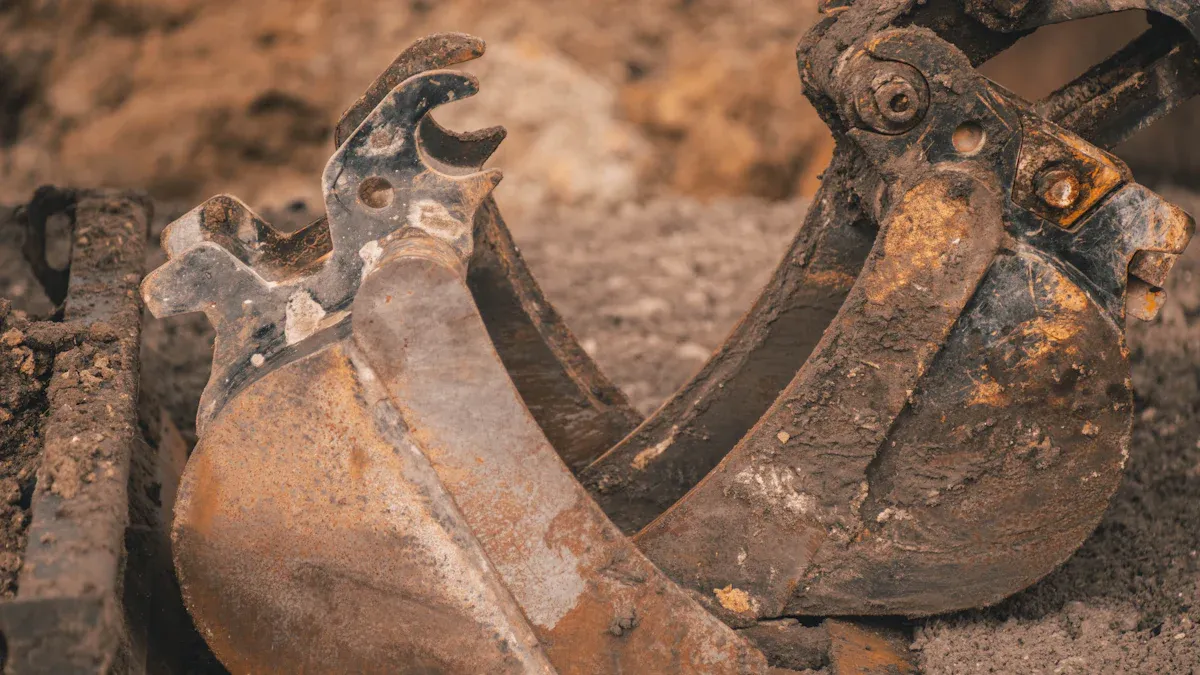
Operators choose the right Caterpillar Bucket Teeth for specific jobs. Different types exist for various tasks. The main series include the J Series and the K Series. The J Series has models like J250, J300, J350, J460, and even larger ones up to J800. The K Series includes K80, K100, K110, and K130. A specific type, the ‘Penetration Plus Tip Tooth,’ belongs to the K130 series.
Each tooth type has unique features and uses.
- Chisel Teeth: These teeth have a broad design. They narrow to a flat chisel shape. They offer a large working surface. Chisel teeth resist abrasive terrain. They leave a smooth bottom. Operators use them for clearing, scraping, and cleaning surfaces. They are good for general hauling, leveling, and trenching in loose soil. Skid steers or mini excavators often use them.
- Rock Chisel Teeth: These also have a broad design. They narrow to a flat working edge. They provide superior penetration and durability. They often have ribs for extra strength. Operators use them for clearing and scraping hard or rocky terrain. They need good penetration. Skid steers or loaders use them for these tasks.
- Single Tiger Teeth: These teeth have a spike design. They narrow to a pointed working edge. They offer superior penetration. They focus machine power onto one point. They are less durable than other types. Operators use them for digging and trenching in rocky or tightly compacted terrain. Loaders or skid steers use them for these jobs.
Different J-series teeth fit various machine sizes and tasks:
- J200: Fits 0-7 ton machines. Examples include wheel loaders 910E, 910F, and backhoe loaders 416B, 416C. They work well for light-duty jobs like small construction or landscape renovation.
- J250: Fits 6-15 ton machines. Caterpillar mini excavators in this range use them. They handle medium-intensity operations, such as urban road construction or small-scale mining.
- J300: Fits 15-20 ton machines. Caterpillar excavators, like model 4T-1300, use them. They are suitable for construction, mine stripping, and continuous operation.
- J350: Fits 20-25 ton machines. Caterpillar excavators in this range use them. They perform well in high-intensity operations, large foundation pit excavation, and open-pit mining.
- J460: Fits around 30-ton machines. Excavators, crawler loaders 953, 963, 973C, and wheel loaders 972H, 980G, 988B use them. They handle heavy-load scenarios, port loading/unloading, and large-scale earthmoving.
- J550-J800: These fit large to extra-large excavators (40-120 tons). They are for ultra-heavy-load, high-intensity applications. These include large-scale mining and major infrastructure projects.
Matching Caterpillar Bucket Teeth to Material and Task
Operators must match teeth to the material and task. This ensures efficiency and extends tooth life.
For highly abrasive materials, like granite or basalt, specific teeth perform best.
- Heavy-Duty Teeth contain extra wear material. They offer an extended service life in tough conditions. They suit rock excavation, mining, quarrying, and extremely abrasive soil.
- Caterpillar-style abrasion bucket teeth (J350 and J450 Series) are also recommended. They have a reinforced, abrasion-resistant design. Their heavy-duty construction makes them ideal for these materials.
- Chisel teeth effectively break and dig through harder rocks and ores. They work well in rocky or dense soil. They also suit high-hardness and impact-resistant environments.
For high-impact tasks, such as rock breaking, operators need different teeth.
- Rock Chisel Teeth: These are durable and versatile. They offer good penetration. Their ribbed design adds strength. They work well for clearing and scraping hard or rocky terrain.
- Single Tiger Teeth: These provide high penetration and high impact performance. They excel in hard materials and compacted soils.
- Twin Tiger Teeth: These offer superior penetration. They also provide high impact performance. They excel in hard materials. They are good for penetrating hard surfaces like rock or frost. They handle challenging surfaces needing superior penetration.
Forged Bucket Teeth are recommended for high-impact tasks like rock breaking. They are denser. They offer superior resistance and durability compared to cast teeth. Forged teeth typically work in higher stress environments. These include rock excavation and mining. Cast Iron Bucket Teeth are generally for situations where extreme stress and impact are not major concerns. They are less suitable for rock breaking.
Considering Caterpillar Bucket Teeth Size and Profile
The size and profile of a tooth greatly affect digging force and penetration. A sharp, pointed design concentrates force. This allows the tooth to break through hard ground or frozen soil.
- Penetration teeth have a pointed, slim profile. This design enhances cutting strength. It increases the force applied to the ground. For example, a streamlined shape 90mm long, with a 35mm vertical pin, maximizes power. It works well against compact ground like shale. This improves penetration.
- Tiger teeth have a noticeably sharp appearance. They have dual tips. They improve penetration. These teeth suit machines from 20 to 45 tons. They maintain a 60-degree angle for consistent optimal digging. They effectively shatter rocks and break through tough materials.
Larger excavators and loaders generate more force. They need larger, more robust teeth and adapters. These can endure higher impact and stress. Smaller machines, like mini-excavators, use lighter, more agile teeth. These prioritize precision. Matching the tooth system to the machine’s power and weight is crucial. This ensures optimal performance. It also prevents premature wear.
The design of a bucket tooth significantly influences its digging force and penetration. A sharp, pointed penetration tooth concentrates force. It enables the tooth to break through hard ground or frozen soil. Tiger teeth, with their aggressive points, excel in tough, compacted conditions. They focus the excavator’s power into a small penetration point. This design allows for efficient breaking of hard ground. It also reduces strain on the hydraulic system. This leads to faster cutting with less fuel consumption.
Sharp profiles offer distinct advantages for specific ground conditions:
- Rock Teeth: These are ideal for hard, rocky, or mixed material. They offer durability and a longer lifespan. They provide enhanced penetration. This boosts productivity and return on investment.
- Tiger Teeth: These are for extreme conditions and tough soil. They offer aggressive penetration and wear resistance. They have longer durability. They lead to faster work and fewer maintenance needs.
- Sharp Teeth: These are for trenching. They make clean cuts and improve efficiency. They work well in looser soils and topsoil.
- Rock bucket tooth CAT: This is for heavy-duty penetration. It offers superior durability and an aggressive leading edge. It is excellent for deep digging in hard rock.
Proper Installation and Maintenance of Caterpillar Bucket Teeth
Correct Installation Techniques for Caterpillar Bucket Teeth
Correct installation of bucket teeth is fundamental for their performance and lifespan. Operators must follow specific procedures. Ignoring these steps leads to premature wear and reduced efficiency. Common errors occur during installation. Operators might not follow the manufacturer’s guidelines. They may use incorrect tools. They might not tighten the retaining pins properly. Sometimes, they install the tooth at the wrong angle.
These installation mistakes have significant consequences. For instance, loose or vibrating teeth result from improperly tightened retaining pins. This accelerates wear on both the tooth and the adapter. An incorrectly angled tooth reduces cutting efficiency. This increases fuel consumption and decreases productivity. Proper installation ensures the tooth sits securely. It allows the tooth to withstand operational forces. Always use the correct tools. Ensure all pins are fully seated and tight. Verify the tooth angle matches the bucket’s design.
Regular Inspection and Wear Monitoring of Caterpillar Bucket Teeth
Regular inspection of bucket teeth is crucial for maintaining digging efficiency. It also helps prevent costly damage. Operators should establish a routine inspection schedule. This schedule depends on the application’s intensity. In high-intensity wear environments, like mines and quarries, operators should inspect bucket teeth daily. These inspections should occur both before and after each operation.
During inspection, operators look for several signs of wear or damage. They check for cracks in the tooth or adapter. They look for excessive wear on the tooth tip and sides. They also ensure all retaining pins are secure. Loose pins can cause teeth to fall off. This creates a safety hazard and leads to lost productivity. Monitoring wear patterns helps predict when replacement is necessary. It also indicates if the tooth type is suitable for the material.
Timely Replacement of Worn Caterpillar Bucket Teeth
Timely replacement of worn bucket teeth is essential. It maintains optimal digging performance. It also protects the bucket and machine from further damage. Worn teeth reduce penetration. This forces the machine to work harder. This increases fuel consumption and slows down operations. Severely worn teeth can also damage the adapter. Replacing an adapter is more expensive and time-consuming than replacing a tooth.
Operators should replace teeth when they show significant wear. Many teeth have wear indicators. These indicators help determine the optimal replacement point. Do not wait until a tooth breaks or falls off. Proactive replacement prevents unexpected downtime. It ensures the machine operates at peak efficiency. It also extends the overall life of the bucket and its components.
Operational Best Practices for Caterpillar Bucket Teeth
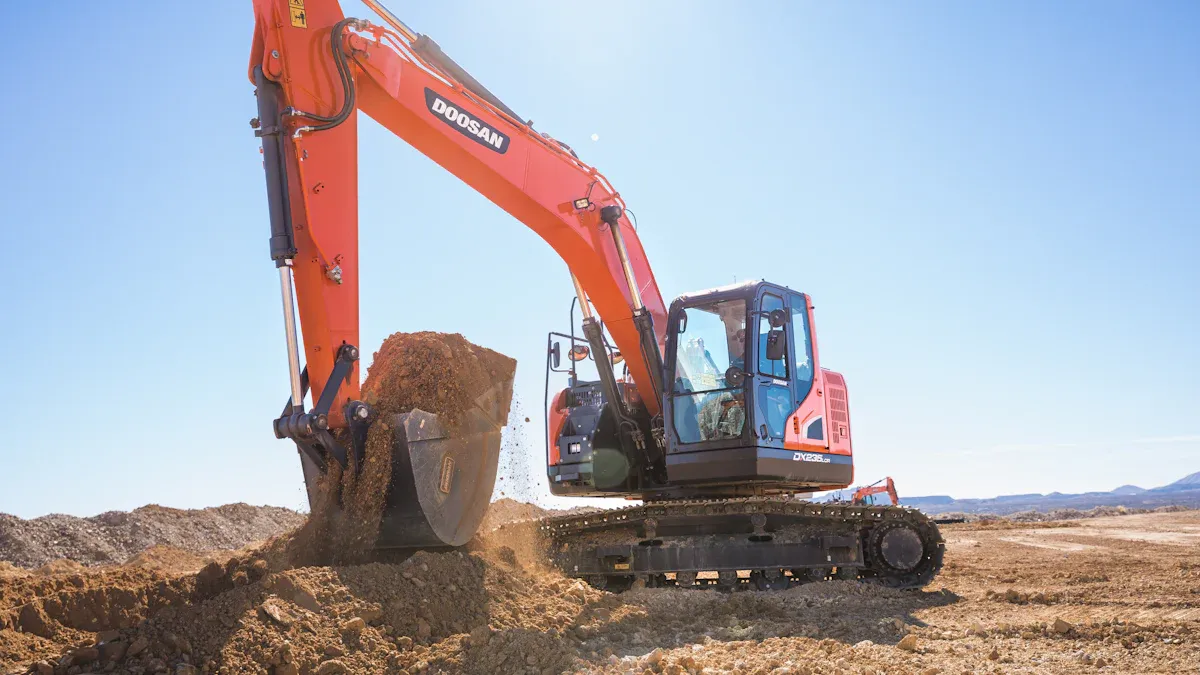
Operators play a crucial role in maximizing digging efficiency. Their techniques directly impact the performance and lifespan of digging equipment. Implementing best practices ensures optimal results.
Operator Techniques for Efficient Digging with Caterpillar Bucket Teeth
Skilled operators significantly extend the life of digging tools. They also improve overall productivity. Training operators on correct techniques is essential. Operators learn to approach material at the right angle. This avoids unnecessary stress on the teeth. They control digging speed and force. This prevents overloading the teeth. Operators monitor tooth condition during operation. They inspect immediately if unusual vibrations or performance changes occur.
Operators should fill the bucket progressively. They start from the bottom up. This avoids scooping large amounts at once. They never use the bucket to pry or lever material. Prying causes twisting forces. These forces damage the teeth. Operators position large rocks carefully in the bucket. They do not drop rocks from a height. They remain mindful of the bucket’s center of gravity during loading. This prevents instability and undue stress. Regular refresher training reinforces these best practices. Performance monitoring also helps.
Operators ensure the bucket teeth are perpendicular to the working face. This prevents breakage from excessive inclination. They avoid swinging the digging arm left and right when resistance is high. This prevents fracture of the bucket tooth and tooth seat. Excessive lateral forces cause these fractures. Operators coordinate operations. They try not to fold up the bucket when lifting the boom. This improves the utilization ratio of bucket teeth.
Minimizing Stress on Caterpillar Bucket Teeth During Operation
Several factors contribute to excessive stress on bucket teeth. Operators must understand these factors. They can then avoid them. A worn adaptor nose causes problems. It leads to a poor fit and movement between the tooth and adaptor. Using bucket teeth with an unsuitable profile for the machine or digging conditions also causes stress. Operator skill directly impacts tooth breakage.
Common operational mistakes increase stress. These include excessive impact during operation. Empty-load operations also cause stress. Incorrect digging angles put undue strain on the teeth. Operators must avoid excessive digging angles. These angles place undue stress on the bucket. They must use the appropriate digging mode for the material type. Unnecessary high-impact tasks also damage teeth. Avoiding these mistakes helps preserve the teeth.
Adapting Digging Strategy for Caterpillar Bucket Teeth to Ground Conditions
Operators must adapt their digging strategy to ground conditions. This extends the life of the bucket teeth. It also maintains efficiency. For highly abrasive sand or gravel, smart operational techniques are crucial. Operators avoid excessive digging angles. These angles put undue stress on the bucket. They use the appropriate digging mode for the material type. Avoiding unnecessary high-impact tasks minimizes wear on the teeth.
Consider these strategies for abrasive materials:
- Choose Abrasion-Resistant Teeth: Select teeth designed for abrasive materials. These include sand and gravel.
- Maintain Proper Bucket Positioning: Avoid excessive dragging. Do not use too much force. Maintain a correct digging angle.
- Use Protective Wear Parts: Install lip shrouds. These protect the leading edge. Use side cutters. These reinforce the bucket sides.
- Optimize Equipment Settings: Ensure proper hydraulic pressure. Use smooth, controlled movements during digging.
- Inspect and Rotate Teeth Regularly: Check for wear patterns. Rotate teeth to distribute wear evenly.
- Select High-Quality Wear Materials: Invest in bucket teeth made from durable alloys. Examples include hardened steel and heat-treated materials.
These practices ensure the teeth perform optimally. They also last longer in challenging environments.
A holistic approach to Caterpillar Bucket Teeth management is crucial. This ensures improved digging efficiency. It delivers long-term benefits. Proper selection, installation, and operation directly boost productivity. These practices lead to significant cost savings and extended equipment life.
FAQ
How do operators choose the correct Caterpillar bucket teeth?
Operators match teeth to the material and task. They consider tooth type, size, and profile. This ensures optimal digging performance and extends tooth life.
How often should operators inspect Caterpillar bucket teeth?
Operators inspect teeth regularly. Daily checks are necessary in high-intensity environments. They look for wear, cracks, and loose pins. This prevents damage and maintains efficiency.
What happens if operators use worn-out bucket teeth?
Worn teeth reduce digging efficiency. They increase fuel consumption. They also put more stress on the machine. This can damage the bucket and adapter.

Post time: Jan-04-2026