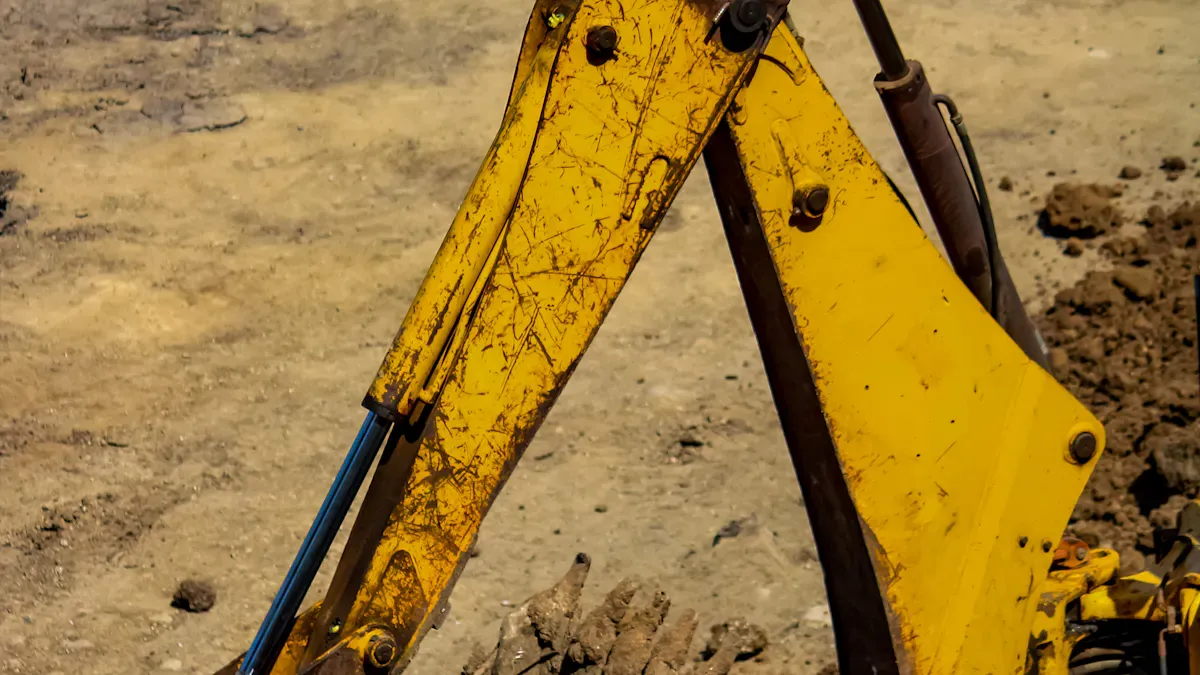
Selecting the right Caterpillar bucket teeth is crucial for optimizing jobsite performance. The Caterpillar bucket teeth selection process involves considering several factors, such as the type of work, material hardness, and compatibility with specific machines. Proper selection of Caterpillar bucket teeth leads to enhanced efficiency, reducing downtime and maximizing productivity across various tasks, from mining operations to road construction.
Key Takeaways
- Selecting the right Caterpillar bucket teeth boosts jobsite efficiency. Consider soil type and material hardness to enhance performance.
- Regular maintenance of bucket teeth is crucial. Inspect for wear and replace them to avoid operational issues and reduce costs.
- Different bucket tooth designs serve specific purposes. Match the tooth type to your job conditions for optimal results.
Understanding Caterpillar Bucket Teeth
Caterpillar bucket teeth play a vital role in the efficiency of excavation and material handling tasks. These components attach to the bucket of heavy machinery, such as excavators and loaders, and are designed to penetrate various types of soil and rock. Understanding the characteristics and applications of different bucket teeth types can significantly enhance jobsite performance.
Material Composition
Caterpillar bucket teeth are primarily made from high-quality alloy steel. This material undergoes heat treatment to improve hardness and toughness. The carbon content in the steel, typically ranging from 0.236% to 0.37%, is crucial for enhancing hardness and wear resistance. Here are some key points about the materials used:
- High-quality alloy steel ensures durability.
- Proprietary hardened alloy steel enhances performance.
- Heat treatment processes provide superior resistance to wear and impact.
Hardness Ratings and Soil Types
The hardness rating of Caterpillar bucket teeth directly affects their performance in different soil types. Choosing the right teeth based on soil conditions can lead to better digging efficiency and longer lifespan. The following table summarizes the suitability of various bucket teeth types for different soil conditions:
| Type of Bucket Teeth | Soil Type Suitability | Material Characteristics |
|---|---|---|
| General Duty Teeth | Loose soil, clay, weathered rock | Hardened alloy steel for durability |
| Heavy Duty Teeth | Compacted soil, gravel, moderately abrasive rock | 4140 alloy steel for strength and wear resistance |
Shapes and Efficiency
Different shapes of Caterpillar bucket teeth influence digging efficiency. Each design serves specific purposes, enhancing performance in various conditions. The table below outlines the key features and efficiency impacts of various bucket tooth types:
| Bucket Tooth Type | Key Features | Efficiency Impact |
|---|---|---|
| Rock Chisel Teeth | Durable, versatile, good penetration, ribbed design for strength | Effective for clearing hard or rocky terrain |
| Single Tiger Teeth | High penetration, high impact performance, excels in hard materials | Ideal for compacted soils |
| Twin Tiger Teeth | Superior penetration, high impact performance, good for hard surfaces | Efficient in penetrating tough conditions |
| Sharp Teeth | Designed for trenching, makes clean cuts, works well in looser soils | Improves efficiency in softer ground |
| Rock Bucket Tooth CAT | Heavy-duty penetration, superior durability, aggressive leading edge | Excellent for deep digging in hard rock |
Lifespan Considerations
The lifespan of Caterpillar bucket teeth varies based on application and soil conditions. General-purpose bucket teeth for trenching in soft-to-medium soil typically last between 400 to 600 hours. In light-duty applications, the lifespan ranges from 300 to 600 hours. For medium-duty applications, the lifespan can vary significantly based on conditions, while heavy-duty applications may see a lifespan of 200 to 500 hours.
Common Failure Modes
Understanding common failure modes can help operators maintain Caterpillar bucket teeth effectively. Some typical issues include:
- Impact fracture propagation: Cracks develop when the tooth strikes hard rock.
- Pin bore elongation: Deformation leads to a loose connection, causing rattling.
- Lateral cracking along the shank: Excessive impact loads can cause this issue.
By selecting the appropriate Caterpillar bucket teeth for specific jobsite conditions, operators can enhance productivity and reduce maintenance costs.
Comparing J-Series and K-Series
When comparing J-Series and K-Series Caterpillar bucket teeth, several key differences emerge that impact their usability and efficiency on the jobsite.
Installation Process
The installation process varies significantly between the two series. The J-Series bucket teeth utilize a traditional side-pin design. This design requires a hammer for installation and removal, which can be time-consuming and may pose safety risks. In contrast, the K-Series features a hammerless pin design. This allows for quick and safe installation and removal, significantly reducing maintenance time and enhancing worker safety.
| Feature | J-Series | K-Series |
|---|---|---|
| Locking Mechanism | Side-pin design | Hammerless pin design |
| Installation/Removal | Requires a hammer | Quick and safe, hammerless |
| Maintenance Time | Can be difficult to remove | Reduced maintenance time |
Performance in Retention and Fit
Both series excel in retention and fit, but they do so in different ways. The J-Series bucket teeth enhance load retention, helping to secure material and reduce spillage during transport. They also feature a hammerless retention system that allows for quick tooth changes, ensuring a secure fit during operation.
Typical Applications
The applications for J-Series and K-Series bucket teeth also differ. Here are some typical applications for each series:
| Type of Tooth | Application Description |
|---|---|
| Excavator Abrasion Teeth | Designed for abrasive conditions, featuring extra wear material for longevity. |
| Loader Abrasion Teeth | Includes additional material on the bottom to handle increased abrasion. |
| General Purpose Excavator Teeth | Suitable for varying digging conditions, tolerating abrasiveness well. |
| K Series Teeth | Ideal for hard rock excavation, quarrying, and heavy-duty construction, excelling in high-production environments. |
Matching Teeth to Job Conditions
Selecting the right Caterpillar bucket teeth for specific job conditions is essential for maximizing efficiency and performance. Different environments and tasks require distinct tooth designs to ensure optimal results. Here are some key jobsite conditions and the corresponding bucket teeth recommendations:
- Mining Operations: Chisel teeth excel in breaking and digging through harder rocks and ores. Their robust design allows for effective penetration, making them ideal for challenging mining tasks.
- Demolition Work: Heavy-duty teeth are suitable for handling building debris, concrete, and broken materials. They enhance operational efficiency by preventing chipping and breaking during intense activities.
- Road Construction: Chisel teeth perform well on hardened ground or soil with alternating soft and hard materials. Their versatility makes them a preferred choice for various roadwork applications.
- General Earthmoving Tasks: Caterpillar bucket teeth designed for general use apply effectively in most soil conditions. They are suitable for filling, excavation, and road repair tasks.
Soil composition significantly influences the choice of bucket teeth. The hardness of the material dictates the required tooth design. Here are some considerations regarding soil types:
- Harder materials necessitate more robust designs to withstand wear and tear.
- Ground conditions vary, requiring different configurations for soft versus hard terrains.
- Specific tooth shapes and materials optimize performance and minimize wear.
Rock and gravel environments also impact the selection of Caterpillar bucket teeth. Choosing the right rock bucket teeth is crucial for maximizing digging efficiency and protecting investments. Here are some important points:
- Specialized tools enhance efficiency and prolong equipment lifespan in rocky conditions.
- Rock bucket teeth are engineered to endure extreme forces and abrasive conditions, ensuring optimal machinery performance.
- They are typically made from high-chromium alloy or wear-resistant alloy steel, providing high impact and wear resistance.
Weather conditions can further affect the performance of bucket teeth. The following table summarizes how various environmental factors impact bucket teeth performance:
| Environmental Factor | Impact on Bucket Teeth Performance |
|---|---|
| Moisture | Accelerates degradation and wear due to chemical reactions and oxide chip formation. |
| Chemicals | Alters the alloy composition, reducing wear resistance. |
| Extreme Temperatures | High temperatures soften metal; low temperatures can make materials brittle. |
| Dust and Debris | Contributes to abrasive wear through three-body wear mechanisms. |
In high-impact jobsite conditions, specific types of Caterpillar bucket teeth are recommended:
- For heavy-duty or rock work, use teeth rated at 45-55 HRC.
- For extreme abrasion, opt for teeth with hardness ratings of 55-63 HRC, often featuring carbide overlays.
- For hard rock, granite, or ore, rock chisel teeth or heavy-duty teeth with hardened materials are recommended.
- For demolition work involving concrete or asphalt, heavy-duty teeth with high impact resistance are essential.
Jobsite size and equipment type also play a significant role in the selection process. Consider the following factors:
- Evaluate performance factors when choosing between cast and forged teeth.
- Each manufacturing method has distinct characteristics affecting durability and suitability for different applications.
- The type of material being excavated is crucial in determining the appropriate bucket teeth.
By carefully matching Caterpillar bucket teeth to job conditions, operators can enhance productivity and reduce maintenance costs. Proper selection leads to improved performance and longevity of equipment.
Practical Steps for Selection
Selecting the right Caterpillar bucket teeth involves a systematic approach. Operators should follow these steps to ensure optimal performance:
- Communicate Objectives: Provide your Cat dealer with production and cost objectives. This helps in aligning the selection with project goals.
- Describe Material Characteristics: Specify the density and characteristics of the material to be moved. Harder materials, like granite, require specialized teeth.
- Identify Principal Application: Clearly indicate the primary application of the bucket. Different tasks, such as mining or demolition, necessitate specific tooth designs.
- Assess Transport Distance: Consider the distance materials will be transported. This can influence the type of teeth needed for efficiency.
- Evaluate Machine Condition: Assess the condition of the machine that will use the new bucket. Compatibility is crucial for performance.
- Match Haul Trucks and Excavators: Ensure that haul trucks and excavators are compatible to avoid operational issues.
- Consider Operator Skill Levels: Factor in the skill levels of operators, as this can affect the choice of teeth.
Tip: Continuous assessment and maintenance of teeth enhance operational efficiency and equipment longevity. Recognizing wear signs, such as dullness or cracks, is essential for maintaining safety and performance.
By following these practical steps, operators can make informed decisions that lead to improved productivity and reduced costs on the jobsite.
Maintenance Tips for Caterpillar Bucket Teeth
Proper maintenance of Caterpillar bucket teeth is essential for maximizing their lifespan and ensuring optimal performance. Operators should adopt the following best practices:
- Conduct regular inspections to identify wear issues early.
- Keep buckets lubricated or greased regularly to reduce friction and wear.
- Replace worn teeth before they affect performance.
- Store bucket teeth properly to prevent damage.
- Train operators on correct techniques to maximize efficiency.
Recognizing the signs that indicate the need for replacement is equally important. Operators should be alert for the following symptoms:
- A drop in digging power, making it harder for the machine to cut into the ground.
- Longer time to fill the bucket, resulting in reduced material movement.
- Increased fuel consumption due to worn teeth, leading to higher operational costs.
- Unusual noises and vibrations during operation, indicating potential issues with the teeth.
- The bucket may feel unstable, with unexpected tooth movement or wobbling.
By following these maintenance tips, operators can enhance the performance and longevity of Caterpillar bucket teeth. Regular attention to these details can lead to significant improvements in jobsite efficiency and cost-effectiveness.
Choosing the right Caterpillar bucket teeth significantly enhances jobsite productivity. Proper selection minimizes wear and maximizes excavation efficiency. Operators should carefully assess jobsite conditions, considering factors like material quality and application needs. Consulting with equipment specialists can provide valuable insights. Ultimately, informed choices lead to improved performance and cost-effectiveness.
FAQ
What are the main types of Caterpillar bucket teeth?
Caterpillar bucket teeth primarily include general duty, heavy duty, rock chisel, and sharp teeth, each designed for specific applications and soil conditions.
How often should I replace bucket teeth?
Operators should replace bucket teeth when they show significant wear, typically every 300 to 600 hours, depending on the application and soil conditions.
Can I use J-Series teeth on K-Series buckets?
No, J-Series and K-Series teeth have different designs and locking mechanisms, making them incompatible with each other’s buckets.
Post time: Mar-12-2026