Introduction
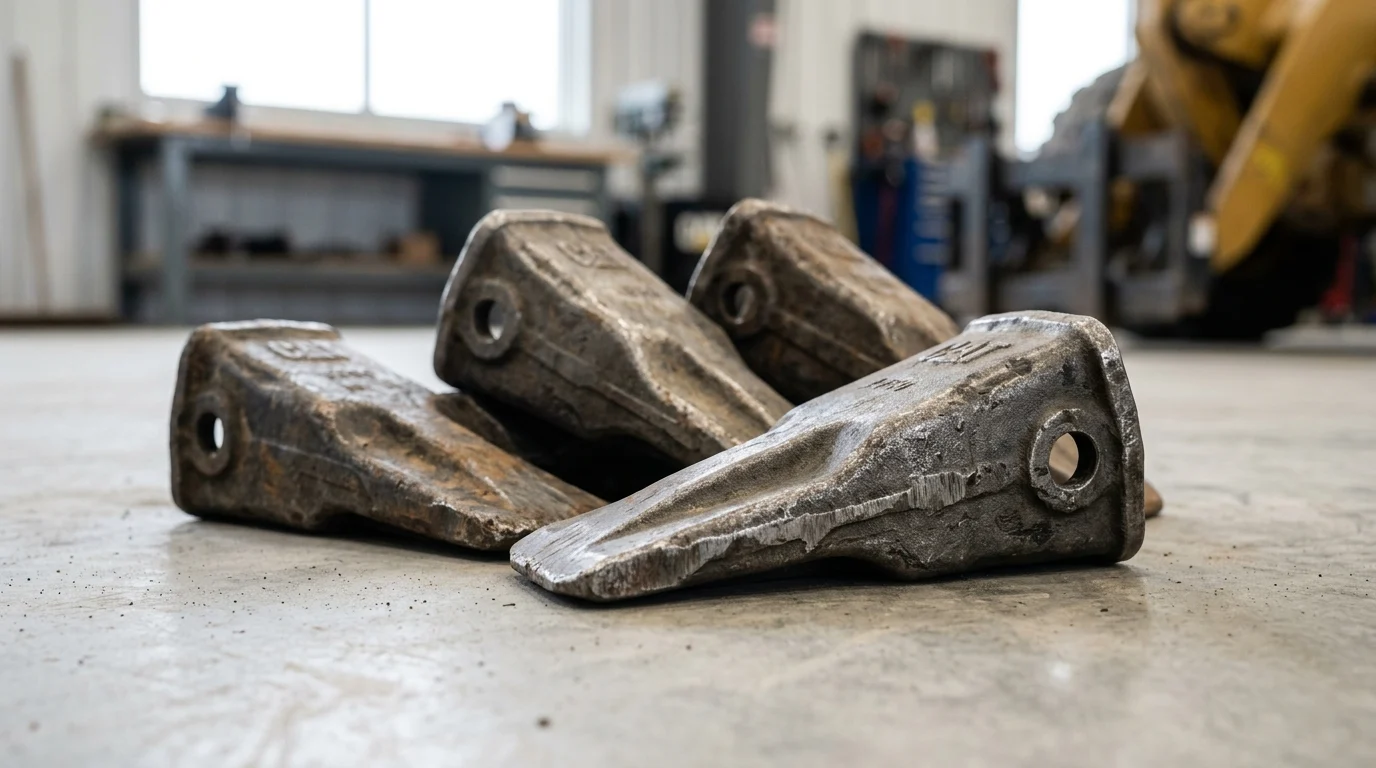
In hard rock mining, bucket teeth are not minor wear parts; they directly affect penetration, fuel efficiency, cycle times, and unplanned maintenance. Precision-cast Caterpillar rock bucket teeth are built to handle the combined impact and abrasion of granite, quartzite, and other high-strength material, where weaker teeth chip, deform, or fail early. This article explains how casting accuracy, material consistency, and tooth geometry work together to improve wear life and attachment reliability. You’ll see why those design and manufacturing details matter on the bench and at the face, and how they translate into fewer stoppages, safer changeouts, and lower downtime across demanding mining operations.
Why Precision-Cast Caterpillar Bucket Teeth Matter in Hard Conditions
I’ve spent years walking hard rock mining sites, and if there’s one thing I’ve learned, it’s that your ground engaging tools (G.E.T.) are the frontline soldiers of your operation. When you’re smashing a massive excavator bucket into solid granite or quartzite, standard off-the-shelf teeth just don’t hold up. The friction and impact generate immense heat and mechanical stress.
That’s exactly why precision-cast Caterpillar Rock Bucket Teeth have become my go-to recommendation for heavy-duty applications. We aren’t just talking about a generic chunk of metal; we’re talking about highly engineered components designed to take an absolute beating. Let’s break down why the specific manufacturing process behind these teeth is so critical when the ground fights back.
Key wear terms and operating conditions
To fully understand the value, we need to examine the key wear terms and operating conditions faced daily on site. Hard rock mining constantly battles a combination of high-impact forces and severe abrasion. Imagine your bucket slamming into rock with a compressive strength exceeding 200 MPa. That is an incredibly hostile environment for any steel component.
Under those extreme conditions, inferior metal suffers from spalling—where chunks of the tooth simply flake off—or worse, catastrophic structural breakage. You need an alloy that perfectly balances high hardness to resist sliding abrasion with enough structural toughness to absorb those massive shock loads without snapping in half at the adapter.
Value proposition for performance and service life
The value proposition of precision casting lies entirely in maximizing performance and extending service life. Unlike basic green sand casting, precision methods allow foundries to control the exact material distribution and internal geometry of the tooth. By achieving a consistent Brinell Hardness Number (BHN) of 470 to 530 throughout the entire wear profile, these teeth wear down evenly rather than failing prematurely.
In my experience, upgrading to a true precision-cast tooth yields a 30% to 40% increase in overall service life. When you work with deeply experienced manufacturers—like the joint venture network including Ningbo Yinzhou Join Machinery Co., Ltd. and Ningbo Huanan Casting Co., Ltd., which has been perfecting this since 2006—you get that dialed-in metallurgical consistency. They control the raw materials from the melt to the final heat treatment, ensuring every batch meets rigorous international standards.
How Precision-Cast Caterpillar Bucket Teeth Reduce Downtime
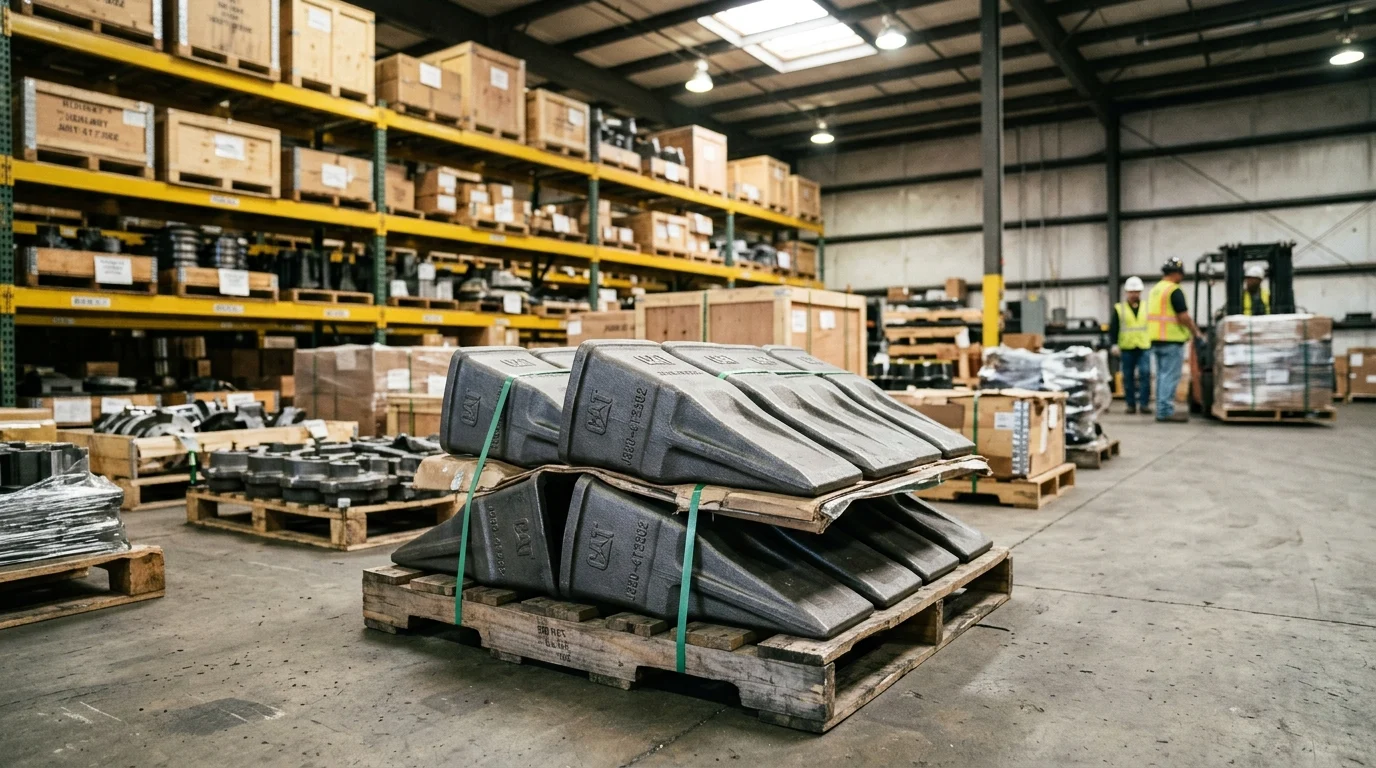
Every time an excavator is parked to swap out a broken or worn tooth, you’re bleeding money. Downtime is the ultimate profit killer in this industry, easily costing thousands of dollars an hour in lost production and idle haul trucks.
By switching to Precision Casting Teeth, we can drastically stretch out those replacement intervals. It’s not just about the tooth lasting longer; it’s about the predictability of the wear. You want to plan your maintenance during scheduled shift changes, not in the middle of a critical loading cycle.
Performance factors to compare
When comparing performance factors, I always look closely at self-sharpening profiles and defect rates. A standard cast tooth tends to blunt quickly. Once it loses its edge, penetration efficiency plummets, cycle times increase, and you end up burning significantly more diesel just to push through the muck pile.
Precision cast models, like the heavy-duty 1U3302RC, are engineered with ribbed profiles that maintain a sharp point as they wear down. This self-sharpening effect reduces the strain on your excavator’s hydraulic system and can lower fuel consumption by up to 5% per shift. Furthermore, the precision casting process drives internal defect rates down below 0.5%. By utilizing advanced casting techniques, foundries nearly eliminate the risk of those frustrating, unexpected mid-shift breakages caused by hidden air pockets or slag inclusions in the metal.
Comparison table for cast vs. standard options
If you’re still on the fence about the upgrade, let’s look at a direct, by-the-numbers comparison. The data speaks for itself when you stack up a standard sand-cast tooth against a precision-cast alternative designed specifically for hard rock environments.
| Feature | Standard Sand Cast | Precision Cast |
|---|---|---|
| Hardness (BHN) | 350 – 400 | 470 – 530 |
| Defect Rate | 2.0% – 5.0% | < 0.5% |
| Dimensional Tolerance | ± 2.0 mm | ± 0.5 mm |
| Expected Lifespan (Hard Rock) | 150 – 200 hours | 250 – 350+ hours |
As you can see from the table, the tighter dimensional tolerances of precision casting mean the pin fits perfectly every single time. This snug fit dramatically reduces the vibration and rattling that often leads to premature adapter wear.
How to Select, Source, and Standardize Caterpillar Bucket Teeth
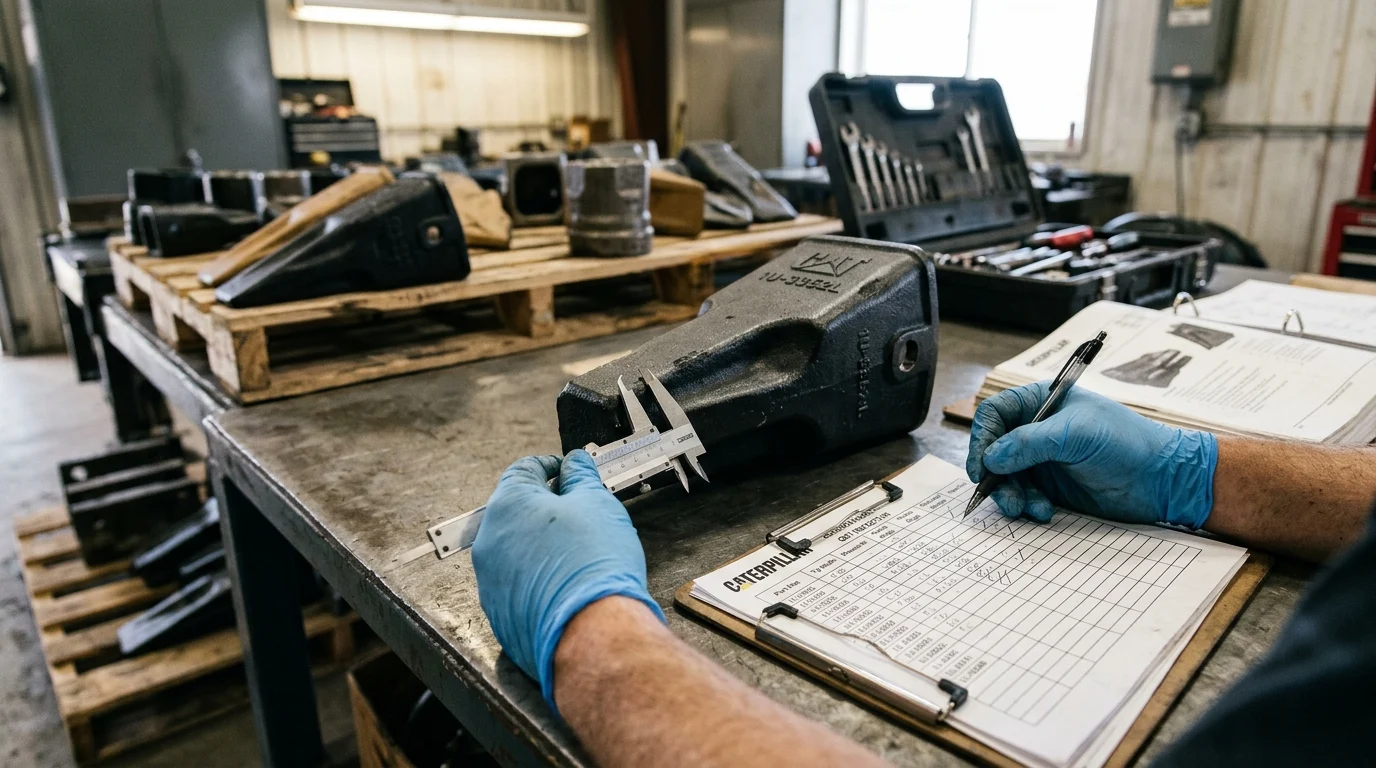
Knowing the technical specs is only half the battle. If you want to run a truly profitable site, you have to nail down your procurement strategy. Sourcing Heavy Duty Bucket Teeth shouldn’t be left to guesswork or just buying whatever is cheapest on the day.
I’ve seen firsthand how top-tier suppliers operate, and I can tell you that standardizing your G.E.T. inventory across your entire fleet is one of the smartest operational moves you can make. It simplifies everything from global purchasing logistics to the specific tools your mechanics need to carry in their trucks.
Practical selection and sourcing steps
My practical selection and sourcing steps always start with a physical audit of your current wear patterns. Are you losing tips prematurely, or is the adapter taking the brunt of the damage? Once you’ve identified the right profile—like a rock chisel versus a standard penetration tip—pay close attention to the logistics.
A reliable foundry will usually require a Minimum Order Quantity (MOQ) of around 1 to 2 tons for custom batches.
Key Takeaways
- The most important conclusions and rationale for Caterpillar Bucket Teeth
- Specs, compliance, and risk checks worth validating before you commit
- Practical next steps and caveats readers can apply immediately
Frequently Asked Questions
Why do precision-cast Caterpillar bucket teeth last longer in hard rock mining?
They combine 470–530 BHN hardness with toughness, so they resist abrasion and shock better. In hard rock, this typically delivers 30%–40% longer service life than standard cast teeth.
How do precision-cast Caterpillar teeth reduce downtime?
They wear more predictably and have lower internal defect rates, so you can replace them during planned maintenance instead of after sudden mid-shift breakage.
Which Caterpillar bucket tooth profile is suitable for granite or quartzite?
Use heavy-duty rock profiles with self-sharpening ribs, such as 1U3302RC-type options, to maintain penetration and reduce hydraulic strain in very abrasive rock.
What should buyers check before ordering Caterpillar bucket teeth from nbjm-china.com?
Confirm machine model, adapter part number, working conditions, target hardness, and required tooth profile. This helps NBJM match the right precision-cast G.E.T. for your site.
Can precision-cast Caterpillar bucket teeth help lower fuel use?
Yes. Self-sharpening teeth keep a sharper point, improving penetration efficiency and reducing digging resistance, which can cut fuel consumption by up to 5% per shift.
Post time: Apr-28-2026