TL;DR
- Manufacturers control material, casting process, heat treatment, and fitment verification. Distributors control availability, consolidation, and local stock. What you lose buying from a distributor depends entirely on which of those you actually need.
- The fitment question is decided at the factory, not in the warehouse. A bucket tooth that has not been cross-checked against the pin and adapter it mates with fails on the machine, not on the shelf.
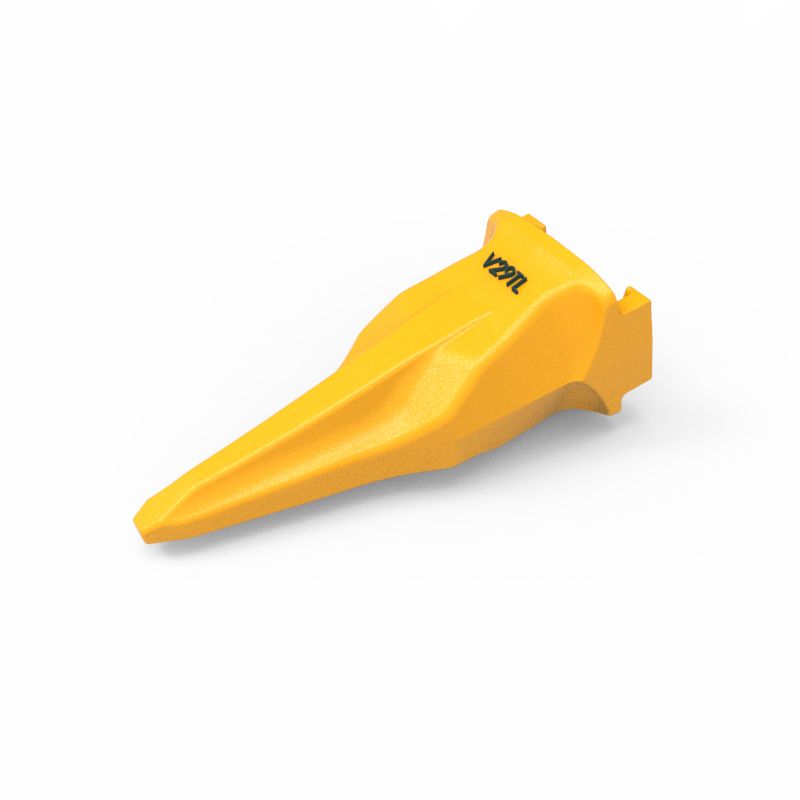
- Process specification is the honest test of any supplier. A published V29TL specification states investment or lost-wax casting, 48–52 HRC, and ISO9001:2008 — claims a distributor usually cannot make on the factory’s behalf.
- Most serious buyers use both. The workable model is a manufacturer relationship for specification-critical parts and distributors for breadth, emergency cover, and consolidation.
The manufacturer-versus-distributor question is usually framed as a commercial question, and it is not. It is a question about what you lose control of, and the honest answer depends on which parts are specification-critical and which are interchangeable.
Ground engaging tools are an unusual category to frame this way, because G.E.T. parts are largely interchangeable commodity items — a tooth from one supplier should fit the same pin as a tooth from another. That interchangeability is exactly what makes distributors viable, and it is also what makes fitment verification the real differentiator between a factory and a warehouse.
Ningbo Yinzhou Join Machinery, founded in 2006, is a representative case. Their G.E.T. product range covers replacement parts for Caterpillar, Volvo, Doosan, Komatsu, JCB, ESCO, UNI-Z, Bofors, Hensley, and Liebherr, spanning bucket teeth from 0.1 kg to over 150 kg plus complete sets of teeth, adapters, cutting edges, pins, retainers, and bolts. Here is how to decide where to buy each category.
What You Actually Give Up by Buying Through a Distributor
Buying from a distributor means buying from someone who does not specify the material, does not run the casting process, and did not qualify the fitment. For interchangeable parts, that trade is often sensible. For anything where a mismatch stops a machine, it is not.
Four things are genuinely outside a distributor’s control. Material selection is decided at the melt. Casting process — investment casting, lost wax, sand casting, or forging — determines inclusion structure and impact behaviour, and it is a factory decision. Heat treatment determines achieved hardness, and the published specification for a typical Super-V tooth states 48–52 HRC after treatment, which is a process result rather than a material label. Fitment verification requires comparing the tooth against the pin and adapter it mates with, which happens where those parts are produced.
None of that is a criticism of distributors. They are excellent at the thing they do: holding stock, consolidating mixed-brand orders, handling export logistics, and covering emergencies when a machine is down and a part is needed today. The question is simply whether your failure mode is a logistics failure or a specification failure.
What You Can Verify Before You Buy From Either
Whatever route you take, several things are checkable before any commitment. Use them to qualify a factory, and use them to qualify the factory behind a distributor.
Material and process specification
A published specification should state material, process, tensile strength, impact value, hardness, and certification. A representative published figure for the V29TL ESCO Super-V bucket tooth states high standard alloy steel, casting by investment, lost wax, sand casting, or forging, tensile strength ≥1400 N/mm², impact ≥20 J, hardness 48–52 HRC, and ISO9001:2008 certification.
Note what that specification does and does not commit to. Hardness and tensile strength are testable on incoming material. The process list is broader than a single commitment — naming four processes means the actual route should be confirmed for your order rather than assumed. That distinction is worth asking about directly, because a supplier who names four processes when asked for one has told you something real.
Fitment verification method
This is the single most useful question to ask any supplier, manufacturer or not. The answer that matters is a specific one: fitment is double-checked against established reference patterns rather than assumed from the part number. A factory that cross-checks a tooth against both a widely used open-brand pattern and a major OEM pattern is describing a verification step that a distributor cannot perform.
Design stability across orders
Because fitment failures stop machines, a supplier who commits to never changing a design between orders has removed an entire failure category. This is verifiable: ask whether each tooth carries a stable part number and mould number, and whether those persist across repeat orders. Design stability costs nothing to confirm and a great deal to discover the absence of.
Adapter replacement interval
Published guidance on when adapters should be replaced is a technical statement about system wear, not a sales claim. A representative figure is that adapters at HRC40–45 should be replaced after the teeth have been changed roughly seven to ten times. Suppliers who publish this kind of guidance are describing their own system’s wear behaviour, which tells you they understand the parts as a matched set rather than as individual items.
Consistency of the produced batch
Fitment is not the only thing that varies between shipments. Casting, heat treatment, and finishing all have process variation, and a buyer who changes supplier between orders inherits that variation at the same time as the fitment change. This is the strongest practical argument for consolidating an interface — tooth, pin, and adapter — with a single supplier rather than sourcing the three separately.
The check here is simple: ask whether the supplier treats teeth and adapters as a matched set in their own documentation, and whether they will supply the adapter to match a tooth you have already proven. A supplier who answers that question concretely is managing a system rather than a catalogue.
Where a Distributor Wins Decisively
There are situations where a distributor is the right answer and the manufacturer is the wrong one. Recognising them is what makes a mixed sourcing model workable rather than confused.
Machine-down emergencies
A machine stopped in the middle of a shift is a problem measured in hours of lost production, and no manufacturer ships a single tooth same-day internationally. If your operation cannot absorb an emergency lead time, local stock is not a convenience — it is the reason to buy through distribution.
Mixed-brand fleets
A fleet running Caterpillar, Volvo, Komatsu, and JCB has no single manufacturer covering it economically. A distributor consolidating across brands is solving a real problem that buying direct does not, and the order volume per brand may not justify factory engagement individually.
Parts outside your core usage pattern
Low-consumption items with long intervals between use are poor candidates for factory-direct attention. The teeth on your hardest-working machine deserve the attention; the bolt on a rarely-used attachment does not.
Volume below factory engagement threshold
Factories have minimum engagement levels for custom work and for holding your specification. Below that threshold, a distributor transacting at arm’s length is often a more reliable counterparty than a factory that has deprioritised your account.
How to Run a Mixed Sourcing Model That Works
The workable answer for most operations is not a single channel but a split: factory relationship for the parts that stop machines, distributor relationship for everything that does not. The split is not by brand or by value — it is by consequence of failure.
Step 1: Rank parts by the consequence of a mismatch
Sort your consumption list by what happens when the part is wrong. Tooth-to-pin and tooth-to-adapter interfaces fail as stopped machines, because they fail at fitment or break the interface. Bolts and nuts, cutting edges on low-abuse machines, and retainers on infrequent-use attachments fail as inconvenience. The first group is bought on qualification, the second on availability.
Step 2: Qualify the factory on the first group only
Qualification effort is finite and it should go where failure is costly. For the fitment-critical parts, verify material specification, the actual casting route for your order, hardness verification, design stability across orders, and the fitment cross-check method. For the rest, verification can be lighter.
Step 3: Use the distributor for what you qualified nowhere
The distributor’s role is breadth and speed. Give them the parts where your own volume is low and your failure exposure is low, and ask them to hold them. That converts their lead-time advantage into a real availability position without involving you in fitment risk.
Step 4: Keep one open factory channel for the emergency case
Even with distributor cover, the emergency case sometimes needs factory involvement — a non-standard profile, an unusual machine, a part that is discontinued upstream. Knowing which factory you would call, and that they would take the call, is worth establishing before you need it.
Questions That Separate a Factory From a Warehouse
How do I know if a G.E.T. supplier is a manufacturer or a distributor?
Ask which casting process is used for your specific order and who controls heat treatment. A manufacturer names a specific process for your part and can state hardness verification methods; a distributor typically defers to the factory. Also ask whether they can provide material and mechanical specification — a factory publishes these as its own specification, a distributor relays someone else’s.
Is buying bucket teeth from a manufacturer always better?
No. It gives you control over material, process, heat treatment, and fitment verification, which matters when a mismatch stops a machine. For parts where failure is merely inconvenient, or where your volume is too low to justify factory engagement, a distributor with local stock is frequently the better choice.
Why does fitment verification matter so much for G.E.T. parts?
Because the tooth, the pin, and the adapter form a matched interface. A tooth that does not seat correctly on its pin, or an adapter that does not accept the tooth, fails at installation or under load on the machine. That failure stops the machine and is hard to trace, which is why verification against reference patterns is the question that best separates a factory from a warehouse.
What should I check about heat treatment when buying bucket teeth?
Ask for the achieved hardness specification and how it is verified. A representative published figure for a Super-V tooth is 48 to 52 HRC after treatment, with adapter hardness specified separately at 40 to 45 HRC. The two figures being stated separately for teeth and adapters indicates the supplier treats them as a matched system with different wear roles.
How do I avoid receiving a tooth that does not fit my pin?
Give the supplier the machine model and the part number of the pin and adapter you are using, and confirm they cross-check fitment against established reference patterns rather than inferring it from the part number. A supplier committed to stable part and mould numbers across orders removes the repeat-order risk after the first fitment is proven.
When should adapters be replaced along with teeth?
Published guidance from manufacturers in this category is to replace the adapter after the teeth have been changed roughly seven to ten times, given adapter hardness around 40 to 45 HRC. The point for buyers is that teeth and adapters are a wear system, so sourcing them from one supplier avoids a mixed-batch fitment risk.
Does buying direct from a factory reduce lead times?
Rarely. Factory lead times are typically expressed in production terms — a representative published delivery figure is 30 to 40 days for one container — while distributor lead times reflect local stock. For scheduled replenishment a container order is efficient; for a machine-down emergency it is not, which is why both relationships are usually worth maintaining.
What matters most when switching G.E.T. suppliers?
Fitment continuity, above everything. Before changing suppliers for teeth you already run, verify fitment against your existing pin and adapter rather than assuming compatibility. Everything else — material, hardness, casting route — is secondary to a tooth that seats correctly on the interface you already own.
Which Route Fits Your Operation?
Buy factory-direct for the interfaces where a mismatch stops a machine — teeth, adapters, and pins on your core machines — and verify specification, casting route, and fitment method before you commit.
Buy through distribution for mixed-brand fleets, emergency cover, low-consumption parts, and any category where your volume sits below a factory’s engagement threshold.
If your operation has stopped machines from fitment problems before, that is the strongest argument for concentrating on the factory channel. If your pain is availability rather than quality, the distributor channel is where the real improvement sits, and moving the split point toward them is the faster fix.
What Changes When You Move a Part Between Channels
Switching a part from one channel to the other is rarely just a paperwork change, and the two directions have very different consequences. Understanding the difference before you move prevents the harder version of this mistake.
Moving a part from distributor to factory
This is the safer direction and the one most operations undertake when a fitment problem appears. You gain access to the process specification and, critically, to someone who can answer a fitment question with authority. What you give up is the local stock position, so you need to hold distributor cover in parallel for a period until factory supply is proven on your machines.
The risk to manage during the transition is batch variation. The first factory order establishes your fitment baseline, and subsequent orders need to match it. Confirming stable part and mould numbers before the first order is what prevents a mismatch on the second.
Moving a part from factory to distributor
This direction is easier operationally and harder to reverse. You gain availability and you lose the ability to ask why a particular batch behaved as it did. If the part is one where failure stops a machine, treat this as a deliberate risk decision rather than a sourcing convenience — the same question you would ask before removing any other single point of failure.
The case for never moving a fitment-critical part at all
There is an argument for treating teeth, pins, and adapters on core machines as qualified components that stay with their supplier for the life of the machine. The reasoning is not loyalty — it is that every change re-exposes the interface, and the interface is what actually stops machines.
Where you do want flexibility, keep a second source qualified rather than unqualified. The distinction is that a qualified second source has been run on your machines and proven to fit, while an unqualified alternative is a name in a catalogue. Only the first is a real hedge.
Xin Jack
Export Sales Manager, Ningbo Yinzhou Join Machinery Co., Ltd.
I am the Export Sales Manager at Ningbo Yinzhou Join Machinery, a manufacturer of G.E.T. parts including bucket teeth, cutting edges, and adapters for excavators and construction equipment. The company was established in 2006 and serves European and American markets, with 16 years of exporting experience.
We work with world-leading brands including BYG, JCB, and NBLF, and every product goes through quality control from raw material through finished goods. I spend most of my time on the questions this article addresses, because the fitment conversation is where most of them originate — a buyer has a tooth that does not seat correctly, and the first question is usually whether the part or the expectation is wrong.
Post time: Oct-22-2026