You might wonder if your Caterpillar Bucket Teeth impact fuel use. Yes, they do! Your bucket teeth directly influence digging efficiency. This affects how hard your engine works. Good bucket teeth and fuel efficiency go hand-in-hand. Worn aterpillar Bucket Teeth make your machine use more fuel.
Key Takeaways
- Good b help your machine dig better. This means your engine does not work as hard and uses less fuel.
- Worn-out or dull bucket teeth make your machine use much more fuel. Replacing them saves you money.
- Using the right type of bucket teeth for the ground you are digging helps your machine work smarter. This also saves fuel.
How Excavation Work Impacts Fuel Use
Engine Load and Digging Resistance
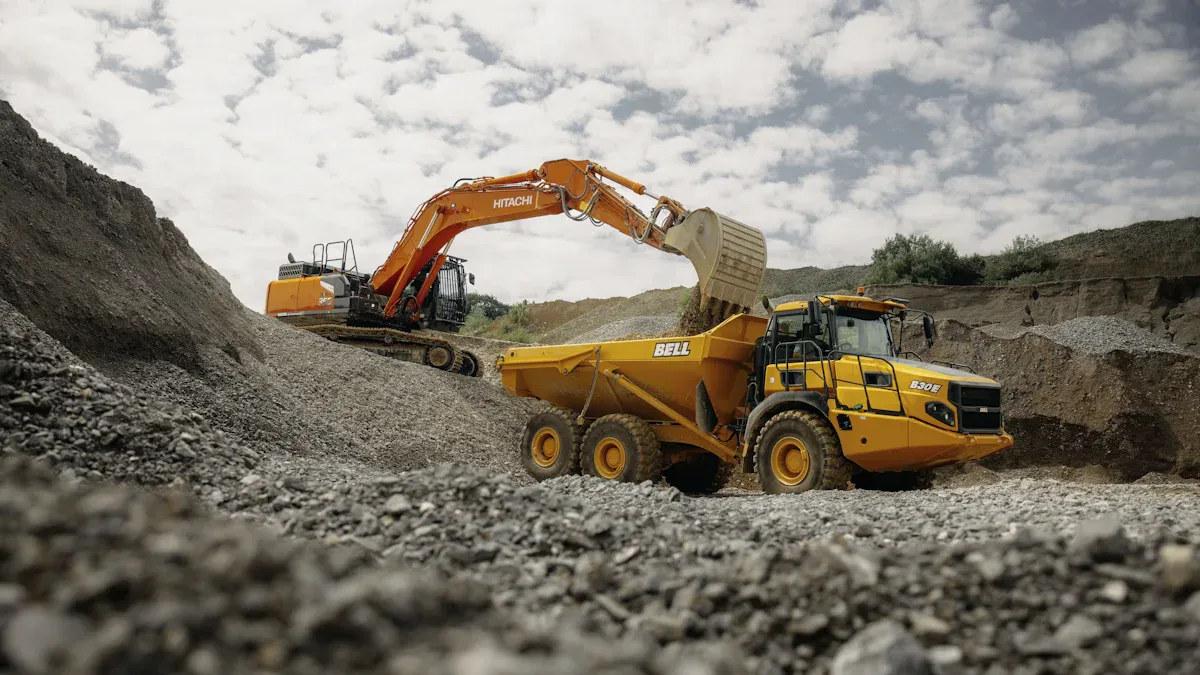
When you operate an excavator, your engine works hard. The amount of work your engine does directly affects how much fuel you use. Many things influence this engine load. For example, your engine’s power and the strength of your hydraulic systems are key. The size and design of your bucket also matter. A bigger bucket can move more material, but it also makes the engine work harder. How deep you dig and how far you reach also change the effort needed. Even the weather and ground conditions on your site play a role. Regular maintenance and inspections keep your machine running at its best, which helps with power.
The material you dig also makes a big difference. Materials like soil or rock can swell when you dig them up. This means they take up more space. For instance, if a material swells by 30%, you need 30% more volume to hold it. This “swell” and the “load factor” (how loose material compares to its original volume) directly impact how much effort your engine needs to move it.
The Mechanics of Material Penetration
Digging into the ground takes energy. The way your bucket teeth cut into the material affects how much energy you need. We call this “specific energy.” It is the energy needed to dig a certain amount of rock or soil. If you use less specific energy, your machine can dig more material. Or, you might even use a smaller machine for the same job. Engineers measure forces like normal force, rolling force, and side force to understand this. The normal force helps figure out how much thrust your cutter needs to push into the ground. The rolling force tells you about the torque needed and helps calculate specific energy.
The design of your digging tools, like your Caterpillar Bucket Teeth, is very important. The number of teeth and how far apart they are on your bucket change how the soil breaks apart. If teeth are spaced far apart, the soil breaks in a certain way. If they are close together, they act like one wide tool. Adjusting this spacing can make digging more efficient. This means you use less energy and less fuel.
The Role of Caterpillar Bucket Teeth in Fuel Efficiency
Optimized Design of Caterpillar Bucket Teeth for Penetration
You know, the way your bucket teeth are shaped makes a huge difference. Engineers design them to cut into the ground with less effort. This means your machine doesn’t have to work as hard.
- Sharp, pointed designs help you break through tough stuff like hard ground, frozen soil, or even rock. They focus all your machine’s power into a tiny spot. This makes breaking material much easier.
- Aggressive points, like those on Tiger teeth, are fantastic for really tough, packed conditions. Think compact soil, clay, or frozen ground. They give you amazing penetration, reduce stress on your hydraulic system, and let you cut faster while using less fuel.
- Specialized shapes, such as Twin Tiger teeth with their two sharp points, create neat, narrow trenches. They meet minimal resistance. This is perfect for quick, precise trenching in utility work or when you install pipelines.
- Fang teeth have an aggressive, pointed shape with extra cutting edges. This design boosts penetration and breakout force. You use them for special jobs that need more cutting power or unique ground engagement.
- Some Cat bucket tips even self-sharpen as they wear down. This keeps your digging performance high and makes them last longer. You find this feature in some Advansys™ tips, including general purpose, penetration, and penetration plus types.
These smart designs mean you get more done with less energy.
Material Strength and Durability of Caterpillar Bucket Teeth
The material your bucket teeth are made from is just as important as their shape. Strong, durable materials resist wear. This means your teeth last longer and perform better.
| Material Type | Surface Hardness | Impact Toughness | Wear Resistance |
|---|---|---|---|
| High manganese steel | HB450-550 | excellent | medium |
| Alloy steel | HRC55-60 | good | good |
| Tungsten Carbide Coating | HRA90+ | difference | excellent |
Alloy steel is a top choice for your Caterpillar Bucket Teeth. It offers superior wear resistance, which helps your teeth last longer. This resistance comes from how they make it, especially when they forge it. Forging creates a dense structure. This boosts wear resistance, toughness, and overall durability. Forged, heat-treated alloy steel pins also outperform cast pins in wear resistance and impact toughness. High-grade alloy steels, like Hardox 400 and AR500, are in heavy-duty tips. They give you excellent wear resistance and a longer life in tough conditions.
Alloy steel also provides exceptional impact strength. This is crucial for absorbing shocks from hard materials without breaking. It helps you maintain productivity and safety. You need a good balance between hardness for wear resistance and toughness to prevent breaking. Alloy steel does this well through precise manufacturing and heat treatment processes.
Some teeth are even bi-metallic. They have a tip made from a super-hard alloy, like high-chromium cast iron. This gives you extreme hardness (HRc 62-68) and amazing resistance to penetration and abrasion. This hard tip is then bonded to a tough alloy steel base. This base offers great strength and shock absorption. This design lets your teeth handle high digging forces and impacts without breaking. It significantly extends their lifespan.
Impact of Worn Caterpillar Bucket Teeth on Performance
You might not think much about worn teeth, but they really hurt your machine’s performance. When your bucket teeth get dull, they don’t cut into the ground efficiently. Instead, they scrape and drag. This makes your engine work much harder.
Operating with dull Caterpillar Bucket Teeth increases your fuel consumption by 10-20% or even more. Think about that! This big jump in fuel use shows you the real economic benefit of replacing worn teeth. You’re essentially throwing money away with every scoop if your teeth are dull. New, sharp teeth cut cleanly. They let your machine dig faster and with less effort. This saves you fuel and boosts your productivity. It’s a simple change that makes a big difference to your bottom line.
Real-World Fuel Savings with Caterpillar Bucket Teeth
Quantifiable Reductions in Fuel Consumption
You want to save money on fuel, right? Choosing the right bucket teeth directly helps you do that. When your excavator works efficiently, it uses less fuel. This means more money stays in your pocket.
Consider a construction project where an excavator dug through tough clay soil. The team used standard bucket teeth at first. Then, they switched to optimized Caterpillar bucket teeth. What happened? The excavator used much less fuel. The new CAT teeth cut into the clay better. This meant the engine did not have to work as hard. It did not constantly rev high. This change led to big fuel cost savings over just one week of digging. You can see how a simple change makes a huge difference in your operating costs.
Operational Factors Beyond Caterpillar Bucket Teeth
While your bucket teeth are super important, other things also affect how much fuel you use. You need to think about your machine’s overall condition. Worn-out bucket teeth make digging and lifting harder. This forces your machine to use more fuel for the same amount of work. It also slows down how fast you move material. This can even create safety problems.
You should also consider the type of bucket teeth you use. For example, flat-head bucket teeth stay sharp as they wear down. This design helps reduce how much resistance your machine faces when digging. Less resistance means less fuel used. Your operator’s skill also plays a big role. A skilled operator knows how to dig smoothly and efficiently. They avoid sudden movements that waste fuel. Regular maintenance, like keeping your engine tuned and hydraulics working well, also keeps your fuel consumption low.
Matching Caterpillar Bucket Teeth to Ground Conditions
You would not use a spoon to dig a hole in concrete, right? The same idea applies to your excavator. You need the right bucket teeth for the job. Matching your teeth to the ground conditions makes your machine work smarter, not harder. This saves you fuel.
Look at this table to see which teeth work best for different types of ground:
| Ground Condition | Recommended Caterpillar Bucket Teeth Type |
|---|---|
| Soft, loose soils (sand, loam, clay) | Flat or Standard Teeth |
| Soft to medium soils | F-Type (Fine Material) Teeth |
| Loosely compacted soil (clearing, scraping, cleaning) | Chisel Teeth |
| Loose materials (landscaping, agriculture, sand/gravel, backfilling) | Flared Teeth |
| Harder rocks and ores (mining) | Chisel Teeth |
| Hardened ground or soil with alternating soft and hard materials (road construction) | Chisel Teeth |
| Rocky or dense soil conditions, high-hardness and impact-resistant environments | Chisel Teeth |
| Highly abrasive materials (granite, basalt) | Caterpillar-style abrasion bucket tooth |
Choosing the correct type of Caterpillar Bucket Teeth helps your machine dig with less effort. This means your engine does not have to strain. It uses less fuel. For example, using chisel teeth in rocky ground lets you break through material easily. Using standard teeth in soft soil prevents unnecessary wear and tear. Making the right choice for your ground conditions is a simple way to boost your fuel efficiency and save money.
Proper Caterpillar bucket teeth directly cut your fuel use. You save money and get more work done. Investing in the right teeth brings big operational savings and boosts your productivity. Optimizing your Caterpillar Bucket Teeth is key. It maximizes fuel efficiency and makes your business more profitable.
FAQ
How often should I check my bucket teeth?
You should check your bucket teeth daily. Look for wear or damage. Regular checks keep your machine digging efficiently. This saves you fuel.
What kind of fuel savings can I expect with the right teeth?
You can see significant fuel reductions. Proper teeth can cut your fuel use by 10-20% or more. This means real savings for your operation.
Are all bucket teeth the same?
No, they are not! Different ground conditions need different teeth. Matching teeth to the job makes your machine work smarter. This saves you fuel.

Post time: Jan-07-2026