Quick read
- Rental-fleet bucket-tooth downtime is driven by five standardization axes: brand-system compatibility, adapter-style lock, wear-alloy grade, inventory depth by SKU, and rotation-cycle trigger. A fleet that scores high-risk on any one of the five is a fleet that will see a 3-7 day replacement delay at least once per quarter.
- The single highest-impact standardization move is reducing the count of distinct tooth systems across the fleet. A 30-machine fleet running two systems (instead of five) cuts inventory capital by 40-60 % and tooth-related downtime by 30-50 %.
- The fish-scale tooth profile (e.g., the 333D8455 JCB 2CX/3CX) is the dominant profile in JCB backhoe-loader fleets; pairing it with a standardized adapter lock pins the wear-alloy selection to a small number of catalog SKUs.
- A rotation-cycle trigger at 80 % of expected wear life — not at tooth failure — converts unplanned downtime to planned downtime, which is a one-to-three-day cost line that compounds across a 30-machine fleet.
Why rental-fleet bucket teeth are a 5-axis problem, not a single-brand problem
A rental fleet that buys bucket teeth on a per-machine basis, the way the OEM supplies them with the original equipment, ends up with a tooth inventory that mirrors the machine inventory: a different tooth for every JCB 3CX, every Cat 320, every Komatsu PC210, every Volvo EW160, every Hitachi ZX130. The fleet parts manager knows this pattern, and the procurement manager knows it, and the operations manager knows it, and yet the inventory grows in the same direction year over year, because the procurement path of least resistance is “buy the OEM part for the specific machine.” That procurement path is the most expensive possible decision for a rental fleet, because the rental fleet is the only context where the same machine model can be deployed across five different jobs in a single month, and the only context where the same operator can be in five different machines in a single week.
The five axes that interact are:
1. Brand-system compatibility — does the tooth fit the machine the way the operator expects, and is the adapter the same family the rest of the fleet uses?
2. Adapter-style lock — horizontal pin, vertical pin, weld-on, or bolt-on? Each lock style is a different inventory line.
3. Wear-alloy grade — standard carbon steel, through-hardened, or premium abrasion-resistant alloy? The grade decides the rotation cycle and the per-hour wear rate.
4. Inventory depth by SKU — how many teeth of each system and size does the parts manager hold on the shelf?
5. Rotation-cycle trigger — at what point in the wear curve does the operator rotate the tooth (turn it around for a fresh edge) or replace it?
Skipping any one of these five axes at the standardization-planning stage means the fleet will see a downtime spike when the system that is in the field is the system that is not on the shelf. (ground engaging tool reference, fleet management reference, equipment rental reference)
Axis 1 — Brand-system compatibility: the axis that decides fit
Brand-system compatibility is the first axis and the one that most often blocks standardization. A JCB 3CX backhoe-loader uses a JCB-specific tooth adapter; a Cat 320 excavator uses a Cat-specific adapter; a Komatsu PC210 uses a Komatsu-specific adapter. The teeth are not interchangeable across these three systems, and the lock-pin diameters, the adapter nose geometry, and the retention mechanism are not compatible. (JCB reference), backhoe-loader reference)
The procurement-relevant interpretation: a fleet that owns all three brands has three distinct tooth systems on the shelf, and the parts manager has to hold inventory in all three. The standardization move is to consolidate the fleet toward the dominant brand-system and to source the secondary systems from a supplier that also supplies the dominant system, so the tooth profile, the lock-pin geometry, and the wear-alloy selection are harmonized across the consolidated fleet.
The design rule that gets the floor right: target two brand-systems per fleet, not five. A 30-machine rental fleet running two systems instead of five reduces the SKU count by 60 %, the inventory capital by 40-60 %, and the average tooth-replacement lead time by 1-3 days. The remaining three systems are a tradeoff the fleet accepts in exchange for customer demand for the specific OEM brand.
Axis 2 — Adapter-style lock: the axis that decides inventory lines
The adapter-style lock is the second axis and the one that determines how many distinct tooth SKUs the parts manager has to hold. The four lock styles in common use are:
- Horizontal pin — the most common on excavator buckets; the tooth slides onto the adapter nose and is retained by a horizontal pin through the adapter and the tooth.
- Vertical pin — common on backhoe-loader buckets; the tooth is dropped onto the adapter and retained by a vertical pin.
- Weld-on — the tooth is welded directly to the adapter or the bucket lip; common on mining and high-abrasion applications where retention is critical and rotation is rare.
- Bolt-on — the tooth is bolted to the adapter; common on specialty buckets where the operator swaps profiles frequently.
The standardization move is to target one lock style per fleet for the primary brand-system. A 30-machine fleet running one lock style (instead of two or three) reduces the inventory line count by 50 % and the operator-training time by 30-40 %. The fish-scale profile used by the JCB 333D8455 replacement tooth is a horizontal-pin profile, and pairing it with a horizontal-pin JCB 2CX/3CX adapter pins the lock-style selection to one catalog SKU family.
The procurement pitfall at this axis: a fleet that orders teeth and adapters from different suppliers risks receiving components that look compatible but have a 1-2 mm mismatch on the pin diameter, the nose taper, or the retention groove. The match has to be on the supplier’s drawing, not on the visual fit. (ground engaging tool reference)
Axis 3 — Wear-alloy grade: the axis that decides rotation cycle
The wear-alloy grade is the third axis and the one that determines how long a tooth lasts and how often the operator has to rotate or replace it. The three grades in common use are:
- Standard carbon steel — the lowest cost; suitable for light-to-medium abrasion in topsoil and soft clay. Typical wear life 200-400 hours.
- Through-hardened alloy steel — the workhorse grade; suitable for general excavation in mixed soil and light rock. Typical wear life 400-800 hours.
- Premium abrasion-resistant alloy — the high-cost grade; suitable for mining, quarry, and high-abrasion applications. Typical wear life 800-2,000 hours. (alloy steel reference, wear reference, heat treatment reference)
The standardization move is to target one wear-alloy grade per fleet for the primary brand-system, with the grade selected on the basis of the dominant application in the fleet, not the worst case. A 30-machine rental fleet that runs 70 % of its hours in mixed-soil excavation and 30 % in rock will standardize on through-hardened alloy (the workhorse grade), not on premium abrasion-resistant (which is over-spec for 70 % of the work and under-spec for 30 % of it). The rock-application machines get a small inventory of premium-grade teeth reserved for the specific jobs.
The procurement pitfall at this axis: a fleet that orders the lowest-cost grade and runs it on rock applications will see a 3-5x rotation-cycle frequency and a corresponding 3-5x downtime impact. The grade has to match the application, not the budget.
Axis 4 — Inventory depth by SKU: the axis that decides lead time
Inventory depth is the fourth axis and the most directly visible to the parts manager. The depth has to be sized to the expected rotation cycle plus a safety stock that absorbs a supply-chain delay. The rule that gets the floor right:
- Minimum inventory per SKU = 4 teeth per machine × machines using that SKU + 1-day safety stock.
A 30-machine fleet with 15 machines on the JCB system and 15 on the Cat system holds 60 JCB-system teeth and 60 Cat-system teeth at minimum. The safety stock is the buffer that absorbs a 2-3 day supply-chain delay on a single SKU.
The standardization move is to size inventory against the rotation cycle, not against the order cycle. A fleet that orders teeth quarterly and runs a 200-400 hour rotation cycle needs 30-60 days of inventory on the shelf, not the 7-14 days that a quarterly order provides. The inventory capital is a working-capital cost; the downtime is a lost-billing cost. The lost-billing cost is the larger number, by 2-3x. (uptime reference)
The procurement pitfall at this axis: a fleet that runs a “just-in-time” inventory model (3-7 days of stock) is a fleet that is exposed to every supply-chain shock — port delays, factory maintenance windows, customs holds. The standardization move is to extend inventory depth to 30-60 days and to accept the working-capital cost as a downtime-insurance premium.
Axis 5 — Rotation-cycle trigger: the axis that decides planned vs. unplanned downtime
The rotation-cycle trigger is the fifth axis and the one that converts unplanned downtime to planned downtime. A tooth that is rotated at 80 % of expected wear life (or at the first visible wear-line indicator) can be turned around for a fresh edge; a tooth that is rotated at failure (when the adapter nose is exposed) typically cannot be turned and has to be replaced, and the machine has to be parked. (preventive maintenance reference, predictive maintenance reference)
The standardization move is to train operators on a visual wear-line trigger and to back the trigger with an inventory of teeth that allows rotation at the trigger rather than at failure. A fleet that runs the trigger at 80 % wear will see 1-2 tooth rotations per 1,000 hours of operation per machine; a fleet that runs at failure will see one tooth replacement per 1,000 hours and a 3-7 day downtime per replacement.
The procurement pitfall at this axis: a fleet that has not trained operators on the wear-line trigger is a fleet that defaults to “run to failure” because the operator has no reference point. The standardization move is to print the wear-line location on a laminated card and to post it on every machine in the fleet.
The 5-axis × 3-tier standardization table
The following table maps the five axes to a three-tier risk classification: low-risk (preferred), mid-risk (acceptable with guardrail), and high-risk (avoid). A fleet that scores low-risk on all five axes is a fleet that can deliver a tooth replacement in under 24 hours. A fleet that scores high-risk on any one axis is a fleet that will see a 3-7 day replacement delay at least once per quarter.
| Axis | Low-risk (preferred) | Mid-risk (acceptable with guardrail) | High-risk (avoid) |
|---|---|---|---|
| Brand-system compatibility | 1-2 systems in fleet, harmonized tooth profile and lock pin | 3 systems, with one dominant and two secondary | 5+ systems, no dominant, no harmonization |
| Adapter-style lock | One lock style (e.g., horizontal pin) for the primary system | Two lock styles, one per brand-system | Three or more lock styles across fleet |
| Wear-alloy grade | One workhorse grade (e.g., through-hardened) for primary system | Two grades: one for primary, one for rock application | One low-cost grade across all applications |
| Inventory depth by SKU | 4 teeth/machine + safety stock per SKU; 30-60 day supply on shelf | 2-3 teeth/machine; 14-21 day supply | “Just-in-time” 3-7 day supply; single-source |
| Rotation-cycle trigger | Visual wear-line at 80 % life; operator-trained; planned rotation schedule | Calendar-based rotation (every X hours); no visual trigger | Run to failure; rotation at tooth loss |
The headline takeaway: a fleet can score high-risk on a single axis (e.g., just-in-time inventory) and still see 3-7 day replacement delays. The axes are not independent; a high-risk on inventory depth compounds a mid-risk on wear-alloy grade, and the result is a fleet that sees tooth-related downtime once a month rather than once a quarter. The standardization table is a portfolio of moves, not a checklist of single fixes.
The 5-step standardization protocol for a 2026 rental-fleet buyer
Five steps convert the 5-axis × 3-tier table into a procurement and operations plan that survives the first quarter:
Step 1 — Audit the existing fleet by brand-system and lock style. The audit is a 1-2 week exercise that produces a list of every tooth SKU in the parts inventory, cross-referenced to the machines in the fleet. The output is a histogram of SKU count by brand-system and by lock style.
Step 2 — Consolidate toward two brand-systems. The fleet owner identifies the dominant brand-system (the one that 50 %+ of the machines use) and the secondary brand-system (the next 25-30 %). The remaining systems are flagged for fleet replacement over a 2-3 year window.
Step 3 — Standardize on one lock style for each system. The lock style is selected on the basis of the dominant application and the operator skill set. The fish-scale profile on a horizontal-pin lock is a common choice for backhoe-loader fleets, and the NBJM JCB replacement teeth lineup documents the SKU family for the JCB 2CX/3CX system.
Step 4 — Size the inventory depth to 30-60 days of supply per SKU. The inventory is sized to the rotation cycle plus safety stock, not to the procurement cycle. The working-capital cost is acknowledged as a downtime-insurance premium.
Step 5 — Train operators on the visual wear-line trigger. The trigger is printed on a laminated card and posted on every machine. The first rotation cycle is supervised by a senior operator or a service technician to confirm the trigger is being read consistently across the fleet.
A plan that completes these five steps converts a 30-machine fleet from 3-7 day tooth-related downtime to under 24-hour tooth-related downtime within one quarter of full implementation. (preventive maintenance reference, predictive maintenance reference)
Where NBJM’s JCB lineup sits on the standardization table
NBJM (Ningbo Yinzhou Join Machinery Co., Ltd.) is a Ningbo-based G.E.T. (Ground Engaging Tools) manufacturer with 16+ years of export experience serving European and American markets, partnering with world-leading brands such as BYG, JCB, and NBLF. The NBJM JCB replacement teeth lineup covers the JCB 2CX, 3CX, and adjacent backhoe-loader systems; the 333D8455 JCB 2CX/3CX fish-scale tooth product page documents the reference SKU for the JCB horizontal-pin system, and the NBJM contact-us channel is the request-for-quotation path for the size-chart PDF and the per-SKU pricing.
For a rental-fleet buyer standardizing on a JCB-dominated fleet, the typical NBJM-zone mix is: 60-70 % of the tooth inventory as the 333D8455 fish-scale profile for the JCB 2CX/3CX system, 20-30 % as adjacent JCB profile variants for the 3CX backhoe and the 1CX mini-excavator, and 10 % as a premium abrasion-resistant grade reserved for the rock-application machines. A spec that calls out all five standardization axes and provides the table above as the reference will return a quotation that is comparable to any other supplier quoting the same spec.
FAQ
Q1: What is the single most expensive mistake a rental fleet can make on bucket-tooth standardization?
A1: Buying teeth on a per-machine OEM basis, the way the OEM supplies them with the original equipment. This locks the fleet into a 5+ brand-system inventory and produces 3-7 day replacement delays at every tooth loss. The standardization move is to consolidate toward 1-2 brand-systems and to source the secondary systems from a supplier that also supplies the dominant system.
Q2: How long should a tooth last before rotation, and how long before replacement?
A2: Rotation at the first visible wear-line (typically at 80 % of expected wear life); replacement at 100 % of expected wear life or when the adapter nose is exposed. For through-hardened alloy teeth in mixed-soil excavation, the rotation cycle is 200-400 hours and the replacement cycle is 400-800 hours. For premium abrasion-resistant teeth in rock, the rotation cycle is 400-800 hours and the replacement cycle is 800-2,000 hours.
Q3: Is the fish-scale profile (e.g., 333D8455) the right choice for all JCB backhoe-loader buckets?
A3: The fish-scale profile is the dominant profile for JCB 2CX/3CX backhoe-loader buckets in general excavation. For specialty applications (rock, demolition, scrap), JCB offers other profiles (e.g., tiger, rock-chisel) that are designed for the specific abrasion pattern. The standardization move is to use the fish-scale profile for the 70-80 % of the fleet that runs in general excavation, and to hold a small inventory of specialty profiles for the 20-30 % that runs in rock or demolition. Cross-reference the NBJM JCB replacement teeth lineup for the full profile catalog and the corresponding size-chart PDF available via the NBJM contact-us channel.
Q4: How do I size the inventory depth for a 30-machine rental fleet?
A4: The rule is 4 teeth per machine using the SKU plus safety stock. For a 30-machine fleet with 15 machines on the JCB system, the JCB-system inventory is 60 teeth minimum. The safety stock is a 30-60 day buffer against supply-chain delay, which is typically 30-50 % of the minimum (i.e., 18-30 additional teeth per SKU).
Q5: What is the difference between a horizontal-pin lock and a vertical-pin lock?
A5: A horizontal-pin lock has the retention pin running horizontally through the adapter and the tooth; a vertical-pin lock has the pin running vertically (top-down). The two lock styles are not interchangeable, and the adapter nose geometry is different. The standardization move is to select one lock style for the primary brand-system and to source the teeth and adapters from a single supplier so the geometry is consistent across the inventory.
Q6: Can I mix wear-alloy grades within a single fleet?
A6: Yes, but with a guardrail. A two-grade mix (workhorse for the 70-80 % of the fleet in general excavation, premium for the 20-30 % in rock) is a reasonable standardization move. A three-grade mix is over-complicated; the operator-training and inventory-management cost outweighs the wear-life benefit.
Q7: How do I know if my operators are running teeth to failure rather than at the wear-line trigger?
A7: Check the wear pattern on the teeth that come back from the field. Teeth that are at the wear-line trigger show a visible chamfer or a wear-line indicator (typically a groove or a color change at 80 % of the original tooth length). Teeth that are run to failure show the adapter nose exposed or a missing tip. A fleet that is running to failure more than 20 % of the time has not trained operators on the trigger.
Q8: What is the downtime cost of a 3-7 day tooth-replacement delay?
A8: For a rental company that bills the machine at a daily rate, a 3-7 day delay on a 30-machine fleet that has one tooth-related downtime event per quarter per machine is the daily rate × 3-7 days × 30 machines × 4 events per year. For a mid-sized fleet with an average daily rate in the mid-hundreds to low-thousands USD range, this is a multi-six-figure annual exposure. The standardization move to under-24-hour replacement reduces this exposure by 60-80 %.
Q9: Does the OEM part always perform better than an aftermarket part?
A9: Not necessarily. Aftermarket teeth from a qualified G.E.T. manufacturer (e.g., NBJM) typically meet or exceed OEM specifications on wear-alloy grade, dimensional tolerance, and lock-pin fit. The OEM advantage is typically on the brand recognition and the warranty, not on the underlying performance. A rental fleet that consolidates on a single aftermarket supplier and that supplier’s grade-validated product line is a fleet that captures 20-40 % cost savings on teeth without sacrificing wear life. (ground engaging tool reference) Material selection for the wear-alloy can also draw on engineering plastics and alloy steel reference data for the broader metallurgy context, though bucket teeth are typically alloy steel rather than plastic.
Q10: What is the role of a wear-alloy test report in the procurement spec?
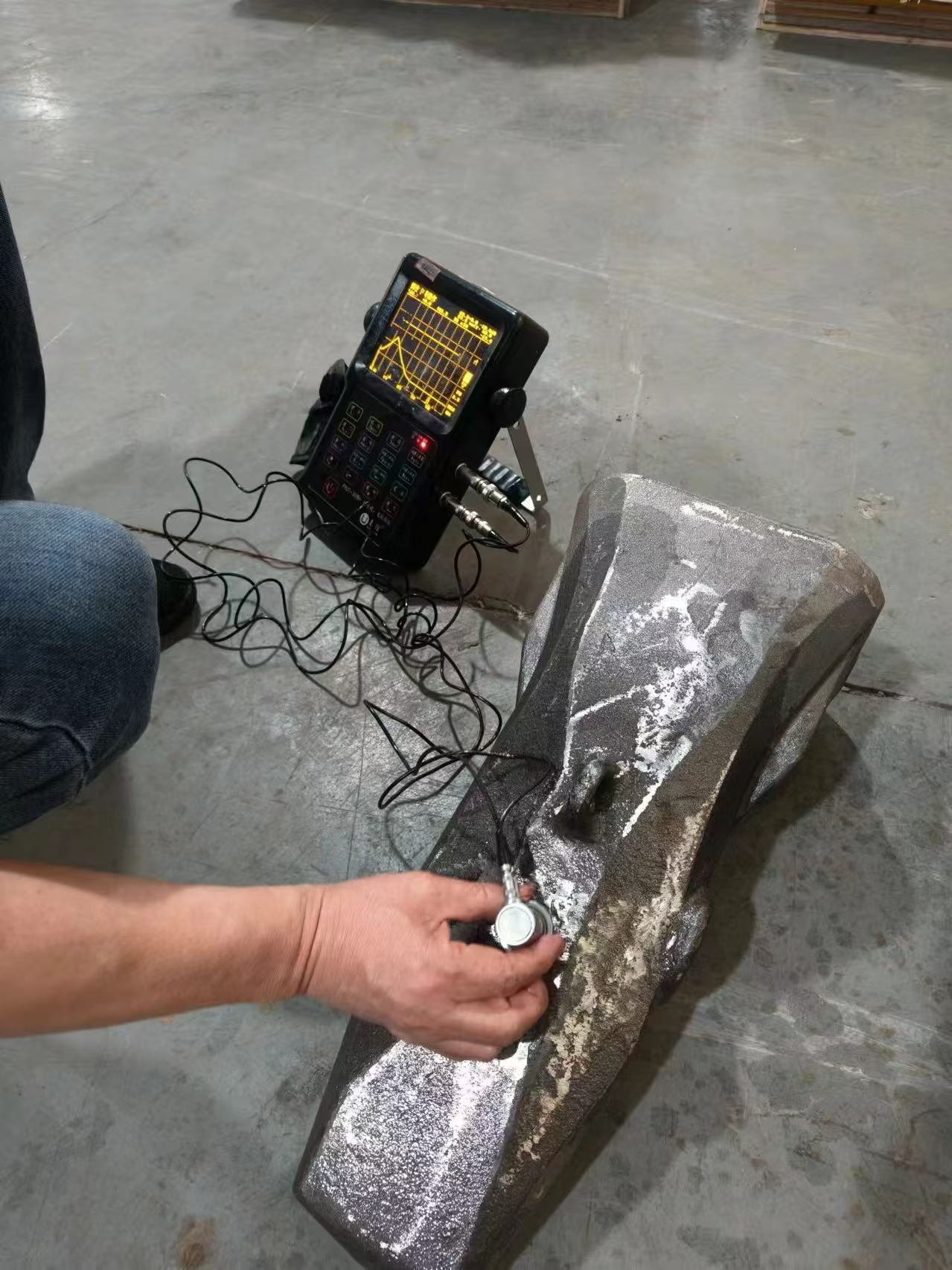
A10: A wear-alloy test report (typically a Brinell or Rockwell hardness reading plus a chemical composition analysis) confirms that the teeth meet the specified grade. A buyer should request the test report per shipment, not annually, because the wear-alloy chemistry can drift batch-to-batch. A supplier that cannot or will not provide a per-shipment test report is a supplier whose grade claim is a guess. Independent verification of the Brinell or Rockwell hardness and the chemical composition can be done by third-party labs such as SGS, Bureau Veritas, or Intertek when the supplier’s per-shipment test report is not available.
Q11: How do I handle the fleet’s “stranded” teeth (teeth on machines that are being retired)?
A11: A stranded tooth inventory is an asset, not a liability, if the fleet standardizes on a dominant brand-system. The teeth can be rotated to the machines that remain in the fleet, sold to a secondary rental operator, or scrapped for the steel value. The standardization move is to consolidate the fleet toward a 1-2 brand-system future, which makes the stranded inventory a working-capital recovery rather than a write-off. For fleets shipping internationally, consolidation also simplifies the port-of-export logistics because one brand-system means one set of customs codes, one shipping mark, and one container-packing plan.
Q12: What is the most common procurement mistake on bucket teeth?
A12: Buying on per-unit price without standardizing the SKU count, the lock style, the wear-alloy grade, or the inventory depth. A fleet that buys the cheapest tooth in the catalog ends up with the largest inventory, the most downtime, and the highest total cost of ownership. The standardization move is to buy on a per-machine-hour cost (teeth per hour of operation), not on a per-unit price. ## About the Author Xin Jack is the Export Sales Manager at NBJM (Ningbo Yinzhou Join Machinery Co., Ltd.), a Ningbo-based G.E.T. (Ground Engaging Tools) parts manufacturer founded in 2006. With 16+ years of export experience serving European and American construction and mining customers, NBJM partners with world-leading brands such as BYG, JCB, and NBLF to produce bucket teeth, cutting edges, and adapters for excavators and construction equipment. Every product undergoes strict quality control from raw material to finished goods, ensuring maximum cost performance for global customers. For product-specific questions on the NBJM JCB replacement teeth lineup, the 333D8455 JCB 2CX/3CX fish-scale tooth product page, or the broader G.E.T. catalog, request the size-chart PDF via the NBJM contact-us channel. Connect with NBJM on Facebook; a YouTube product-line walkthrough of the JCB fish-scale profile and the 333D8455 SKU is available for fleet procurement teams that prefer video reference over the size-chart PDF.
Post time: Oct-09-2026