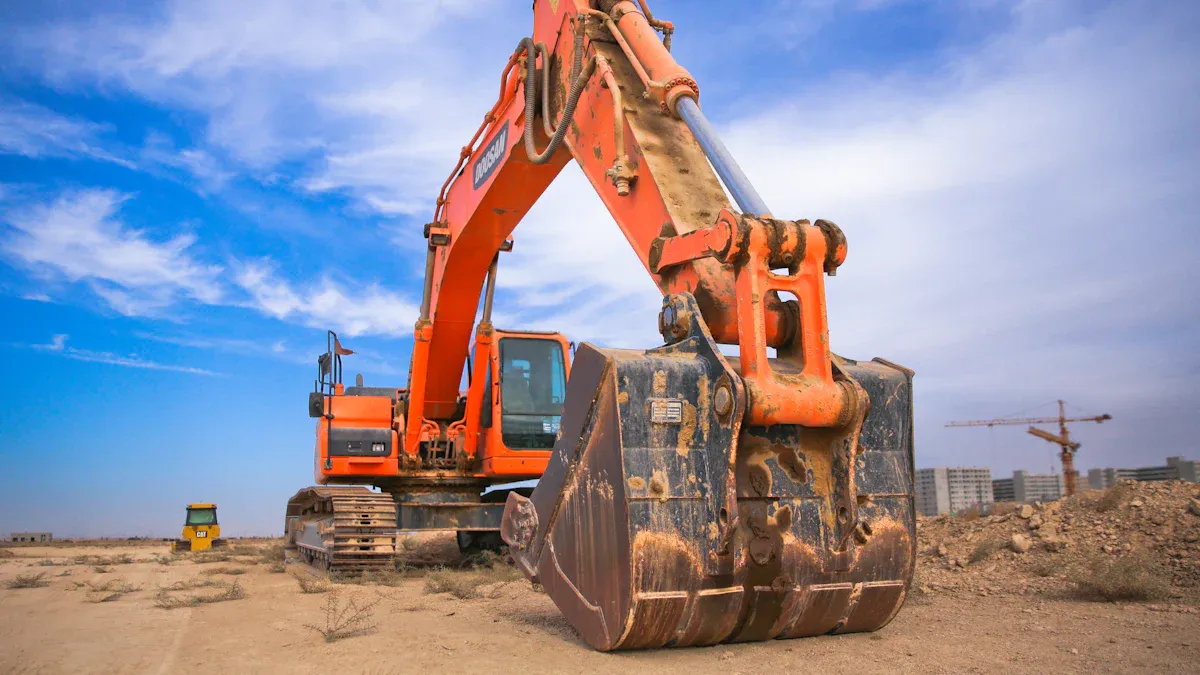
The best CAT Bucket Teeth for mining applications offer superior wear resistance, impact strength, and penetration. These attributes directly enhance operational efficiency and cost-effectiveness. Selecting the right CAT mining bucket teeth, specifically for unique ground conditions, maximizes uptime and productivity. For instance, the Best rock bucket tooth CAT provides excellent performance. Operators must choose est CAT Bucket Teeth with precision.
Key Takeaways
- Choosing the right CAT bucket teeth is important for mining. Different teeth types work best for different ground conditions and tasks.
- Consider ground conditions, machine size, and how you will use the teeth. This helps you pick the best teeth for your work.
- Proper installation and regular checks make your CAT bucket teeth last longer. This saves money and keeps your machines working well.
Understanding Best CAT Bucket Teeth Types for Mining
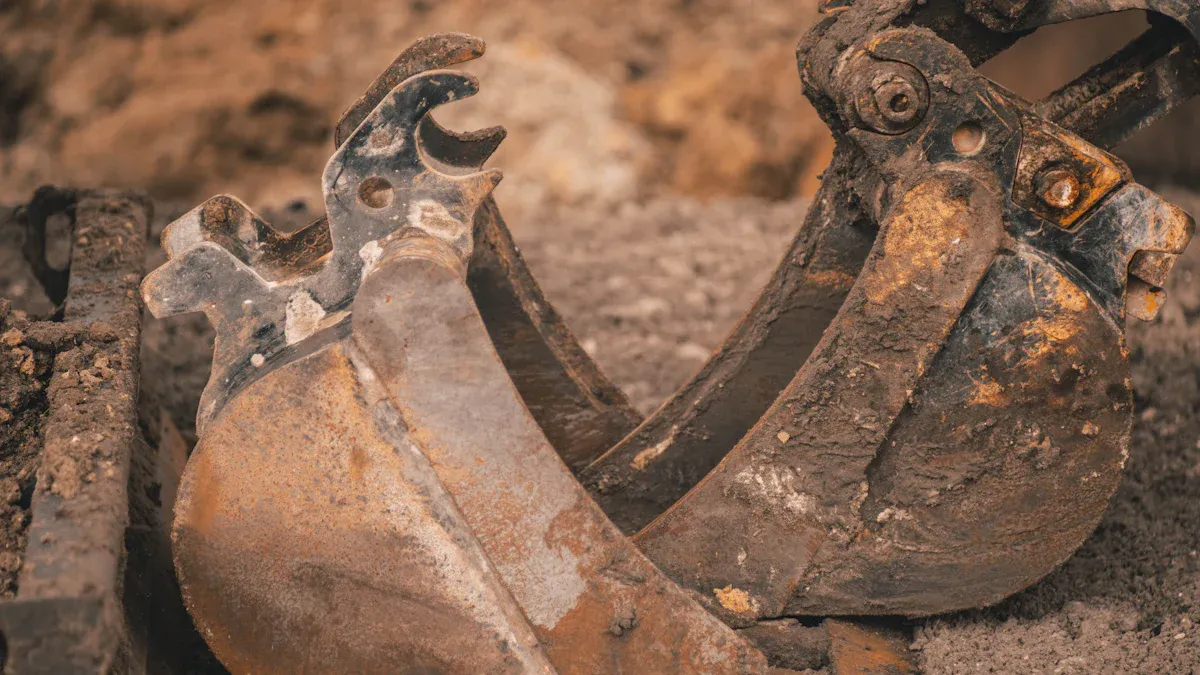
Selecting the correct CAT bucket teeth is fundamental for efficient mining operations. Different mining conditions demand specific tooth designs and material compositions. Caterpillar engineers various tooth types to meet these diverse needs. Each type offers unique advantages in terms of wear resistance, penetration, and impact strength.
General Duty Teeth for Lighter Mining Tasks
General duty teeth serve well in less demanding mining environments. These teeth handle softer materials like loose soil, clay, or weathered rock. They provide reliable performance for everyday digging and loading tasks. CAT manufactures these teeth from proprietary hardened alloy steel. This material ensures durability for their intended use. The manufacturing process involves forging and heat-treating the steel. This process creates a hard surface and a ductile core. Quenching rapidly cools the steel for surface hardness. Tempering then reheats it to adjust toughness. This combination helps the teeth resist cracking while remaining tough. Standard CAT bucket teeth often use high manganese steel or alloy steel. Manganese steel hardens from about 240 HV to over 670 HV in worn areas. Ultra-high-strength martensitic steels also contribute to high hardness, reaching nearly 500 HB. Forged CAT bucket teeth maintain a hardness range of 48-52 HRC. This specific hardness balances wear resistance with material integrity, preventing brittleness.
Heavy Duty Teeth for Abrasive Conditions
Heavy duty teeth are essential for more abrasive mining conditions. These teeth excel in environments with compacted soil, gravel, or moderately abrasive rock. Their robust construction withstands greater wear and impact. CAT uses specific alloy compositions for these teeth. Excavator bucket teeth often feature 4140 alloy steel. This steel contains approximately 0.40% carbon for strength. It also includes 1% chromium to boost hardenability and about 0.6% silicon for strengthening. Nickel, at 1.5%, improves toughness. Molybdenum, around 0.25%, refines grain structure. Sulfur and phosphorus levels remain below 0.03% for optimal hardness and performance. This alloy maintains core toughness at RC 35 and reaches 45 HRC. Its Brinell hardness can reach 500. Forged CAT bucket teeth also use heat-treated alloy steel, often a low carbon steel alloy like 4140. The heat treatment process is uniform. It includes annealing, normalizing, tempering, and quenching. After heat treatment, shot blasting and sandblasting remove oxide scale. The process concludes with oiling and baking. Heavy-duty bucket tips for abrasive mining environments also use high-grade alloy steels. Examples include Hardox 400 and AR500, which offer 400-500 Brinell hardness.
Extreme Duty Teeth for Severe Mining Environments
Extreme duty teeth are designed for the most challenging mining applications. These teeth tackle highly abrasive materials and severe impact conditions. They perform well in hard rock quarries and heavy-duty excavation. Their design maximizes material thickness in critical wear areas. This provides extended wear life and superior protection against breakage. Miners rely on these teeth for maximum uptime in harsh environments.
Penetration Plus Teeth for Tough Materials
Penetration Plus teeth specialize in breaking through tough, consolidated materials. These materials include hard rock, shale, and frozen ground. Their design focuses on maximizing penetration with minimal effort. These teeth feature approximately 120% more material in high wear areas. They also have a sharp spade design. This design offers 70% less cross-sectional area on the leading edge compared to Heavy Duty Abrasion tips. Manufacturers make them from high-strength materials. These materials include hardened steel or tungsten carbide. The teeth are engineered with a sharp and durable point. Some designs may include carbide teeth or diamond coatings for further enhancement. These features allow the teeth to slice through dense materials effectively.
Abrasion Resistant Teeth for Highly Abrasive Applications
Abrasion resistant teeth are crucial for operations involving highly abrasive materials. These materials include sand, gravel, and certain types of ore. These teeth are specifically engineered to resist material loss from friction. They counteract several primary wear mechanisms. Gouging wear is the most dominant type in construction equipment. It accounts for most wear in bucket teeth. This involves surfaces sliding under load during digging. Impact wear occurs from collisions with abrasive materials. Sharp-edged materials scratch and deform the tooth surface. Fretting wear results from slight vibrations or environmental stresses. This causes relative motion between surfaces, leading to deformation and cracks. Bucket teeth face significant wear from direct contact with ores and gravel. Common wear forms include impact, abrasion, chemical action, and fretting. Abrasive wear is the most common type. It represents a significant portion of overall wear. Researchers focus on improving resistance to this type of wear. The Best CAT Bucket Teeth in this category offer extended service life in such demanding conditions.
Key Factors for Selecting the Best CAT Bucket Teeth
Choosing the correct CAT bucket teeth is a critical decision. It directly impacts operational efficiency and overall project costs. Several key factors guide this selection process. Operators must consider ground conditions, application type, machine specifications, and economic considerations.
Ground Conditions and Material Characteristics
Ground conditions and material characteristics significantly influence tooth selection. Different geological formations require specific tooth designs. For instance, general-purpose chisel teeth work well in mixed conditions. They also perform effectively in soft soil. Tiger teeth are suitable for frozen ground and compacted soil. Heavy-duty teeth are necessary for rock and abrasive soil.
| Ground Condition | Recommended CAT Bucket Teeth Type |
|---|---|
| Mixed conditions | General-purpose chisel teeth |
| Frozen ground | Tiger teeth |
| Compacted soil | Tiger teeth |
| Rock | Heavy-duty teeth |
| Abrasive soil | Heavy-duty teeth |
| Soft soil | Standard chisel teeth |
| Rocky material | Heavy-duty or rock chisel teeth |
| Hard, compacted materials | Single Tiger Teeth |
| Extremely hard surfaces | Twin Tiger Teeth |
| Softer soils | Flare Teeth |
Chisel teeth feature a broad design. They narrow to a flat chisel shape. This design creates a large surface area. It resists abrasive terrain and wears slowly. Chisel teeth are ideal for general hauling, material loading, leveling, and trenching in loose soil, sand, gravel, and topsoil excavation. They also suit projects requiring flat-bottom trenches. Rock chisel teeth have extra material thickness for heavy-duty applications. They maintain a flat edge. These teeth are suitable for rock excavations, quarrying, breaking through hard, rocky soil, and working on mixed rock and soil. Single Tiger Teeth possess a sharp, pointed design. They concentrate excavator power for breaking through compact materials. These teeth are best for penetrating compact soil and clay, breaking through frozen ground, digging in hard, compacted materials, and trenching in tough conditions. Twin Tiger Teeth offer a two-pronged profile. They provide dual penetration points with concentrated force. Operators use them for digging ditches and narrow trenches, breaking through extremely hard surfaces, and precision trenching around utilities. Heavy-Duty Teeth contain extra wear material. This provides extended service life in tough conditions. They apply in rock excavation and breaking, mining and quarrying operations, and extremely abrasive soil conditions. Flare Teeth have a wider, flared design. This increases surface area for digging and scooping. They are used in softer soils, handling and loading loose material, and applications where bucket fill is critical.
The hardness of the tooth material is crucial for wear resistance. It also impacts abrasion resistance and impact resistance. These factors directly correlate with a longer wear life for the bucket teeth. Hardness variations between rock types directly affect penetration resistance and tooth wear rates. Abrasiveness accelerates wear on bucket components. Highly abrasive materials necessitate capacity derating. This compensates for accelerated wear that progressively alters bucket geometry and tooth profiles.
Application Type: Digging, Loading, or Ripping
The specific application type dictates the optimal tooth design. Digging, loading, and ripping each demand different tooth characteristics. For digging applications, the Cat K Series teeth offer significant advantages. Their hammerless design allows for quicker and easier tooth replacement. This reduces machine downtime and increases productivity. The K Series provides a wide range of tooth options. These include general-duty, heavy-duty, penetration, and abrasion-resistant types. This versatility matches specific applications, optimizing performance. The hammerless design also minimizes injury risk associated with traditional pin-hammering methods. K Series teeth are engineered for optimum strength, impact resistance, and wear life. This extends the life of the bucket. These teeth are designed for maximum ground penetration and material retention. This enhances digging and loading operations. Improved wear resistance, reduced downtime, and enhanced working efficiency contribute to higher overall cost-effectiveness. Manufacturers produce them with high-quality, durable materials. This ensures reliability in harsh conditions.
Matching Teeth to Machine Size and Power
Matching teeth to machine size and power is essential. The machine’s size and tonnage are critical factors. Larger machines necessitate bigger and stronger teeth. These teeth handle their increased load capacity.
| Machine Type | Tonnage | Example Models | Suitable Bucket Teeth |
|---|---|---|---|
| Small Excavators | Under 20 tons | Komatsu SK60, Caterpillar 307D, XGMA 806F | Small standard teeth, ripper teeth |
| Medium Excavators | 20-60 tons | Hitachi ZX360, Komatsu SK350, Caterpillar 336, Volvo EC360 | Standard teeth (for infrastructure), rock teeth (for mining/quarrying) |
| Large Excavators | Over 60 tons | Hitachi ZX690, Komatsu SK700, Caterpillar 374, Volvo EC700 | Mining-grade rock teeth, super wear-resistant teeth |
| Loaders | N/A | LiuGong CLG856, LongGong LG855N, Caterpillar 966M | Wide-body standard teeth, wear-resistant teeth |
Mismatching CAT bucket teeth to machine size and power has significant consequences. It affects operational efficiency and component wear. If bucket teeth are too small, it can lead to their loss or breakage. Their adaptors can also break. Conversely, if the bucket teeth are too large, their excessive metal makes digging difficult. This directly impacts operational efficiency. These fitment problems compromise both safety and overall operational effectiveness.
Balancing Wear Life with Cost-Effectiveness
Balancing wear life with cost-effectiveness is a key consideration. Teeth with longer wear life often have a higher initial cost. However, they reduce downtime and replacement frequency. This can lead to lower overall operating expenses. Operators must assess the cost per hour of operation. They should not just focus on the purchase price. Investing in Best CAT Bucket Teeth with superior wear resistance can yield significant long-term savings. This is especially true in highly abrasive environments.
Ease of Maintenance and Replacement
Ease of maintenance and replacement directly impacts productivity. Tooth systems designed for quick and safe changes minimize machine downtime. The hammerless design of modern CAT teeth, like the K Series, exemplifies this. It allows for faster tooth replacement. This reduces labor costs and increases machine availability. Simple, robust attachment mechanisms ensure secure fitment. They also facilitate efficient field maintenance.
Top CAT Bucket Teeth Series for Mining Operations
Caterpillar offers several distinct bucket teeth series. Each series addresses specific mining challenges. These series ensure optimal performance and durability in various applications.
J-Series Teeth: Versatility and Proven Performance
The J-Series teeth are a cornerstone in mining operations. They offer versatility and proven performance. Their construction uses premium alloy steel. This steel undergoes heat treatment. This process ensures optimal hardness and impact resistance. It also provides excellent penetration, extended wear life, and powerful breakout force. A variety of tooth sizes, from J200 to J800, are available. Different profiles, such as short, long, flare, penetration, rock chisel, tiger, and twin tiger, allow adaptability. This robust design and self-sharpening profiles maintain bucket efficiency. They also enhance performance throughout the tooth’s lifecycle. J-Series teeth are compatible with original Cat J Series adapters and locking systems. This guarantees a secure fit and easy, fast, and safe installation. This reduces on-site downtime. An optional tungsten coating further extends service life.
K-Series Teeth: Advanced Design for Enhanced Penetration
K-Series teeth feature an advanced design. This design enhances penetration in tough materials. Their streamlined shape reduces drag. This allows for deeper and faster digging. The K-Series also incorporates a hammerless retention system. This system simplifies tooth changes. It improves safety for operators. This design contributes to increased productivity and reduced machine downtime.
Advansys™ System: Safety and Faster Changes
The Advansys™ System represents a significant advancement in bucket teeth technology. It prioritizes safety and faster changes. Removal and installation are hammerless. This enhances safety for technicians. The system uses a 3/4″ retainer lock. This lock requires no special tools for operation. Integrated retention components simplify installation. They eliminate the need for separate retainers or pins. A simple half-turn locks and unlocks the CapSure™ retention. This eliminates loose parts. These features collectively lead to reduced downtime and improved jobsite safety. Tip replacement can be up to 75 percent faster than previous Cat GET systems.
Specific Tooth Shapes and Sizes for Mining
Mining operations demand specific tooth shapes and sizes. These choices optimize performance for various tasks. Different tooth profiles, like those found in the Best CAT Bucket Teeth, suit different ground conditions. For example, penetration tips excel in hard rock. Abrasion-resistant tips perform well in sandy or gravelly environments. Matching the tooth’s size to the machine’s power and bucket capacity ensures efficient material handling.
Maximizing Performance and Longevity of Best CAT Bucket Teeth
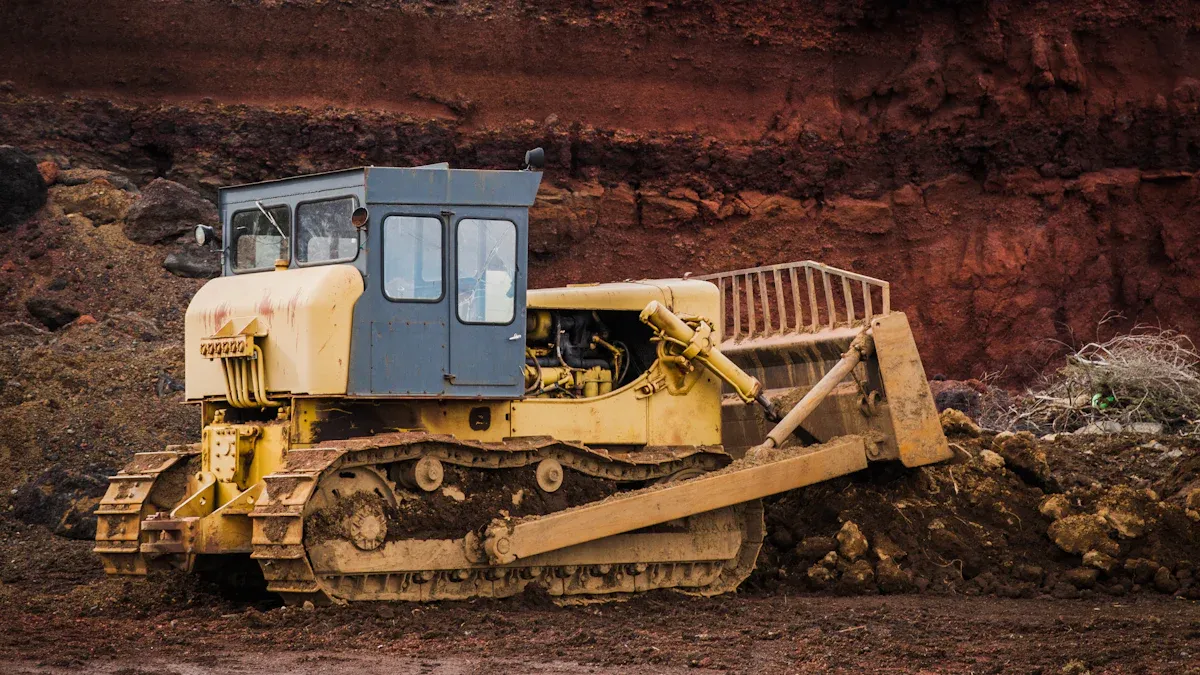
Operators maximize performance and longevity for Best CAT Bucket Teeth through careful installation, consistent inspection, optimal operating practices, and proper system integration. These steps ensure efficiency and reduce operational costs.
Proper Installation Techniques for Secure Fitment
Correct installation ensures secure fitment and prevents premature wear. First, position the bucket upwards. Ensure the teeth remain parallel to the ground. The bucket must be empty and supported by jack stands or wooden blocks. Next, clean the tooth and adapter. Apply silastic to the retainer’s back face. Position the retainer in the adapter’s recess. Place the tooth onto the adapter, ensuring the retainer stays in place. Insert the pin, recess end first, through the tooth and adapter from the side opposite the retainer. Hammer the pin until its recess engages and locks with the retainer. Always wear safety gloves, glasses, and steel-toe boots during this process. Power down the excavator and remove the ignition key to prevent accidental startup. After installation, conduct a final inspection. Check that retaining pins are fully inserted and flush. Ensure teeth are evenly aligned and fit snugly without wobbling.
Regular Inspection and Timely Replacement
Regularly inspect bucket teeth for wear, cracks, or damage. Timely replacement of worn teeth prevents further damage to the adapter and bucket. This practice maintains digging efficiency and reduces overall maintenance costs.
Optimal Operating Practices to Minimize Wear
Optimal operating practices significantly minimize wear on CAT bucket teeth. Operators assess mining conditions, including material classification and density. This helps select appropriate bucket tips. They consider material hardness, choosing tips made from alloy steel or tungsten carbide for harder, more abrasive materials. These materials offer superior wear and impact resistance. Matching the tip design to project requirements is also crucial. Applying protective coatings, such as carbide, reduces direct contact between the tooth and abrasive particles. Carbide-coated teeth show up to a 30% extended service life in large mining projects.
Integrating Teeth with the Ground Engaging Tools (GET) System
Integrating teeth with the Ground Engaging Tools (GET) system optimizes overall machine performance. This integration enhances performance through optimized tip shapes and stronger adapter noses. It reduces stress and increases durability. The hammerless retention system improves safety. It eliminates the need for special tools, allowing for safer and faster tip changes. Simplified installation and removal processes mean less downtime. High-quality materials and precise engineering result in tools that withstand the toughest conditions. This leads to lower operating costs. The Advansys™ GET system provides higher production in demanding applications. It offers easier penetration into piles and faster cycle times.
Selecting optimal CAT bucket teeth directly impacts mining productivity and operational costs. Prioritizing durability, penetration, and ease of maintenance across various CAT tooth series is essential. A careful assessment of ground conditions, application demands, and tooth features ensures maximum efficiency and reduced downtime. This strategic choice optimizes operational success.
FAQ
What are the main types of CAT bucket teeth?
CAT offers General Duty, Heavy Duty, Extreme Duty, Penetration Plus, and Abrasion Resistant teeth. Each type suits different ground conditions and mining tasks.
How do operators choose the best CAT bucket teeth?
Operators consider ground conditions, application type (digging, loading, ripping), machine size, and cost-effectiveness. Ease of maintenance also plays a role.
What is the Advansys™ System?
The Advansys™ System is a hammerless bucket teeth system. It prioritizes safety and faster changes. This system reduces downtime and improves jobsite safety.

Post time: Dec-12-2025